
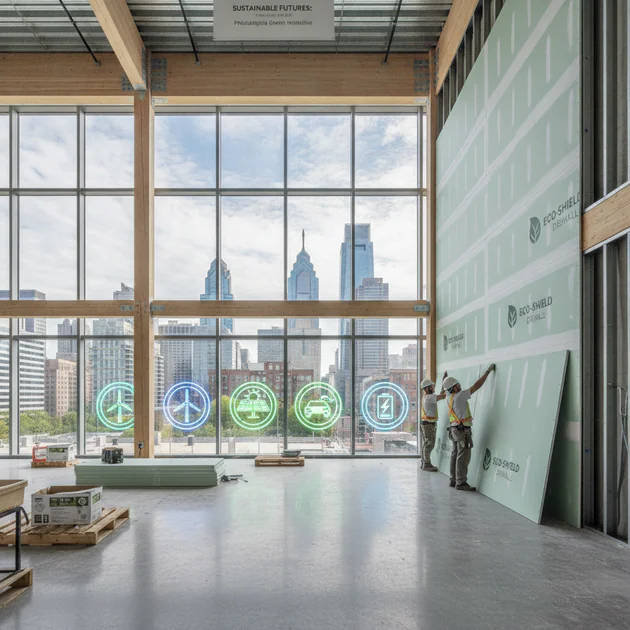
The Philadelphia skyline is in a constant state of transformation. Cranes punctuate the horizon, and new structures rise, reshaping neighborhoods from Fishtown to University City. But the most significant revolution in the city’s construction industry isn’t just about building taller or faster; it’s about building smarter, healthier, and more sustainably. This fundamental shift, driven by a confluence of regulatory pressures, market demands, and economic realities, is creating a seismic wave of opportunity and challenge. And at the epicenter of this movement is a sector often overlooked but fundamentally critical: the Philadelphia green building drywall market.
For decades, drywall was a simple commodity. Today, it’s a high-performance building component at the heart of the green building revolution. It’s no longer just about creating walls; it’s about creating healthy indoor environments, high-efficiency thermal envelopes, and resilient structures that stand the test of time. For general contractors, developers, and architects in the Greater Philadelphia region, understanding the nuances of this evolving market is no longer optional—it’s essential for profitability, compliance, and maintaining a competitive edge.
This comprehensive analysis from Philadelphia Trade Experts will delve deep into the forces shaping this dynamic market. We will explore the key drivers behind the demand for sustainable drywall solutions, dissect the innovative materials now available, examine the smart installation practices required for optimal performance, and navigate the challenges that professionals must overcome. This is your guide to understanding and capitalizing on the unprecedented growth in Philadelphia’s green drywall sector.
The “Why” Behind the Boom: Key Drivers of Green Building in Philadelphia
The surge in demand for green drywall isn’t happening in a vacuum. It’s the direct result of powerful, interconnected forces reshaping the entire Philadelphia construction landscape. Understanding these drivers is the first step for any industry professional looking to align their business with the future of building in our city.
Regulatory Push from City Hall and Beyond
Philadelphia has made significant strides in promoting sustainable construction through municipal codes and policies. The Philadelphia Green Building Standards apply to many new construction and major renovation projects, setting benchmarks for energy efficiency, water conservation, and healthy indoor environments. Furthermore, the city’s adoption of recent versions of the International Energy Conservation Code (IECC) places stringent requirements on the building envelope’s performance. Drywall, when installed correctly as part of a continuous air barrier system, is a critical component in meeting these air-tightness standards, directly impacting a building’s energy consumption. This regulatory framework effectively creates a baseline demand for higher-performance materials and installation techniques, moving green practices from a “nice-to-have” to a “must-have.”
Market Pull from Savvy Tenants and Buyers
Today’s end-users are more sophisticated and informed than ever before. This is especially true in Philadelphia’s booming commercial and multi-family residential sectors.
- Commercial Tenants: Major corporations and forward-thinking businesses are actively seeking office spaces with certifications like LEED (Leadership in Energy and Environmental Design) and WELL Building Standard. These certifications are not just plaques on a wall; they signify lower utility costs, improved employee health and productivity, and alignment with corporate ESG (Environmental, Social, and Governance) goals. The use of low-VOC (Volatile Organic Compound) drywall is a direct contributor to the Indoor Environmental Quality (IEQ) credits that are fundamental to these certifications.
- Residential Buyers and Renters: In the residential market, “green” is synonymous with “healthy” and “efficient.” Homebuyers and renters in neighborhoods like Northern Liberties and Chestnut Hill are increasingly asking about indoor air quality, utility costs, and the use of non-toxic materials. Developers who can market their properties with features like mold-resistant and low-VOC drywall have a distinct competitive advantage, often commanding premium prices and faster absorption rates.
The Inescapable Logic of Economics
Perhaps the most powerful driver is the growing recognition that green building is simply good business. The old myth of sustainable construction being prohibitively expensive is being dismantled by clear data and proven ROI. While some high-performance drywall products may have a slightly higher upfront material cost, the lifecycle value is undeniable.
Consider the long-term economic benefits:
- Reduced Operational Costs: A well-sealed building envelope, achieved with proper drywall installation and air-sealing techniques, drastically reduces heating and cooling loads. This translates into lower monthly utility bills for the building’s entire lifespan—a major selling point for both commercial and residential properties.
- Enhanced Durability and Lower Maintenance: Using moisture- and mold-resistant drywall, especially in a humid climate like Philadelphia’s, prevents costly remediation issues down the road. Abuse-resistant panels in high-traffic areas reduce repair and replacement costs, extending the life of interior finishes.
- Increased Property Value and Asset Resilience: Buildings certified as green or built to high-performance standards are increasingly valued higher by appraisers and investors. They are seen as more resilient, future-proofed assets that are less susceptible to regulatory changes and energy price volatility.
These drivers—regulatory, market, and economic—have created a perfect storm, transforming the Philadelphia green building drywall market from a niche segment into a mainstream engine of growth. Professionals who fail to adapt risk being left behind.
More Than Just Gypsum: The Evolution of Green Drywall Materials
The term “drywall” no longer refers to a single, monolithic product. The modern green building movement has spurred incredible innovation, resulting in a diverse portfolio of specialized gypsum panels designed to meet specific performance criteria. For Philadelphia contractors, knowing which product to use and why is crucial for meeting project goals, from achieving LEED points to ensuring occupant health.
Low-VOC and No-VOC Drywall: The Foundation of Healthy Indoor Air
Indoor Air Quality (IAQ) is a cornerstone of green building. Volatile Organic Compounds (VOCs) are chemicals that can off-gas from building materials, paints, and furnishings, leading to a host of health issues. Traditional drywall, and especially the joint compounds used with it, could be a source of these VOCs. The industry has responded with low-VOC and zero-VOC formulations. These products are manufactured without the harmful chemicals, ensuring that once the walls are up, they are not contributing to indoor air pollution. This is a non-negotiable feature for projects targeting WELL certification or aiming to provide the healthiest possible environment for occupants in schools, healthcare facilities, and high-end residential projects.
Mold and Moisture-Resistant Drywall: A Non-Negotiable for Philadelphia’s Climate
Philadelphia’s four-season climate, with its humid summers and potential for moisture intrusion, makes mold a persistent threat. Standard paper-faced drywall can act as a food source for mold when it gets wet. Green building practices demand a more resilient solution. This is where mold- and moisture-resistant drywall comes in. These panels typically feature a treated core and, in the most robust versions, a fiberglass mat facing instead of paper. This inorganic facing is highly resistant to mold growth, even in damp conditions. Its use is critical in:
- Basements and below-grade spaces
- Bathrooms, kitchens, and laundry rooms
- Exterior sheathing applications
- Any area where humidity or incidental moisture is a concern
Using these products not only prevents costly mold remediation but also contributes to a healthier living and working space, a key tenet of sustainable design.
Recycled Content Drywall: Closing the Loop
Sustainability is about resource management. The drywall industry has made significant strides in this area, primarily through the use of recycled content. Many green drywall products available in the Philadelphia market boast a high percentage of recycled material, which can come from two primary sources:
- Post-Consumer Recycled Paper: The paper facings on the front and back of the board are often made from 100% recycled paper products.
- Synthetic Gypsum: A significant portion of modern drywall is made not from mined gypsum, but from “synthetic gypsum,” a byproduct of the Flue Gas Desulfurization (FGD) process used at coal-fired power plants. This process “scrubs” sulfur dioxide from emissions, and the resulting calcium sulfate is chemically identical to natural gypsum. Using FGD gypsum diverts millions of tons of waste from landfills annually.
Specifying drywall with high recycled content is one of the easiest ways for a project in Philadelphia to earn points toward LEED certification under the Materials and Resources category.
Lightweight Drywall: The Unsung Hero of Sustainability
While it may not sound like a “green” feature at first, lightweight drywall offers several tangible sustainability benefits. These panels are engineered to be up to 25% lighter than traditional drywall without sacrificing performance. This seemingly simple change has a cascading effect:
- Transportation Efficiency: Lighter weight means more square footage can be shipped on each truck, reducing the number of trips, fuel consumption, and associated carbon emissions to get materials to a Philadelphia job site.
- Worker Health and Safety: Lighter boards are easier and safer for installers to carry, lift, and hang. This reduces worker fatigue and the risk of musculoskeletal injuries, a key aspect of the “Social” pillar in ESG frameworks.
- Installation Speed: Because they are easier to handle, crews can often install lightweight panels faster, leading to improved project timelines and labor efficiency.
Smart Installation Practices: Where Green Theory Meets On-the-Ground Reality
Specifying the right green drywall materials is only half the battle. To unlock their full potential for energy efficiency, durability, and indoor air quality, these materials must be installed with precision and care. For professionals in the Philadelphia green building drywall market, mastering these advanced techniques is what separates the leaders from the laggards.
Airtight Drywall Approach (ADA): The Key to Energy Efficiency
The concept of the “building envelope” is central to modern energy codes. To prevent conditioned air from leaking out and unconditioned air from seeping in, this envelope must be as airtight as possible. Drywall serves as the primary interior air barrier in most construction assemblies. The Airtight Drywall Approach (ADA) is a systematic method for ensuring this barrier is continuous and effective. Key practices include:
- Gaskets and Sealants: Applying flexible gaskets or beads of low-expansion foam or acoustical sealant at the top and bottom plates of walls, before the drywall is installed. This creates a continuous seal between the gypsum board and the wood or steel framing.
- Sealing Penetrations: Every electrical outlet, switch box, plumbing pipe, and light fixture that penetrates the drywall is a potential air leak. These must be meticulously sealed using specialized gaskets, caulk, or putty pads designed for this purpose.
- Detailing at Intersections: Special attention must be paid to complex intersections, such as where interior walls meet exterior walls or where floors meet walls, to ensure the air barrier is not compromised.
Properly executing the ADA can dramatically improve a building’s blower door test results, a mandatory performance verification for many green building certifications and Philadelphia’s energy code.
Construction Waste Management: Reducing the Landfill Footprint
LEED and other green rating systems award points for diverting construction waste from landfills. Drywall scrap, if not managed properly, can be a significant contributor to a project’s waste stream. Smart installation practices directly address this issue:
- Advanced Estimating: Using software and careful planning to order the right amount of material and the optimal board lengths for a given space. This minimizes the number of cuts required and reduces the generation of small, unusable off-cuts.
- “Design for Less Waste”: Architects and designers can contribute by planning room dimensions that align with standard drywall sheet sizes (e.g., 8, 10, 12, or 14 feet) to minimize waste.
- On-Site Segregation and Recycling: Establishing a dedicated bin for clean drywall scrap. In the Philadelphia region, there are recycling facilities that can process this scrap, grinding it down to be used as a soil amendment or as a component in new products like cement or absorbent materials. This practice not only earns LEED points but can also reduce landfill tipping fees.
Integration with Advanced Systems
A smart building is an integrated system, and drywall installation must account for this. This means coordinating closely with electricians and low-voltage contractors to ensure that wiring for smart thermostats, automated lighting, occupancy sensors, and security systems is routed cleanly and that penetrations are sealed without compromising the air barrier or acoustic performance. In some cases, specialty drywall products with higher impact resistance may be specified in areas with high concentrations of wall-mounted technology to ensure long-term durability.
Navigating the Challenges in the Philadelphia Green Drywall Market
While the opportunities are immense, the transition to a green building standard is not without its hurdles. Proactive contractors and developers in Philadelphia must be aware of these challenges and develop strategies to mitigate them effectively.
Supply Chain and Material Availability
Specialty green drywall products, such as certain types of lightweight or fiberglass-mat-faced panels, may not always be as readily available in local distribution centers as standard ½-inch board. Global supply chain disruptions can further exacerbate this, leading to longer lead times or unexpected material substitutions. The solution is proactive planning and communication. It is essential to confirm material availability and lead times with suppliers like Philadelphia Trade Experts well in advance of when they are needed on site. Building strong relationships with knowledgeable suppliers who understand the green building landscape is a significant competitive advantage.
The Cost Perception vs. Lifecycle Reality
The most common objection to green building materials remains the perception of higher upfront costs. While it’s true that a high-performance, mold-resistant board may cost more per sheet than a standard product, this view is dangerously shortsighted. The key is to educate clients and stakeholders on lifecycle cost analysis (LCA). The small initial premium is often dwarfed by long-term savings from:
- Lower energy bills due to a tighter building envelope.
- Avoidance of expensive mold remediation.
- Reduced maintenance and repair costs.
- Higher rental income or resale value.
Framing the conversation around total cost of ownership and return on investment, rather than just initial material cost, is crucial for overcoming this hurdle.
The Persistent Skills Gap
The techniques required for a high-performance green installation—like the Airtight Drywall Approach—demand a higher level of skill, attention to detail, and understanding of building science than a standard installation. There is a tangible skills gap in the labor market, with many installers unaccustomed to these meticulous methods. This can lead to improper installation, failed inspections, and compromised building performance. Successful general contractors are investing in continuous training and education for their crews and subcontractors. They are emphasizing the “why” behind these techniques, ensuring that every worker on the job site understands their role in creating a high-performance building. Partnering with suppliers and trade organizations that offer training can be an effective strategy to upskill a workforce.
Frequently Asked Questions
What is the biggest difference between standard and green drywall?
The primary differences lie in composition and performance. Green drywall often contains a higher percentage of recycled content, including synthetic gypsum and recycled paper facings. It is also formulated to be low-VOC or zero-VOC, which significantly improves indoor air quality by reducing harmful off-gassing. Furthermore, “green” often refers to enhanced performance characteristics like superior moisture and mold resistance, which are critical for building longevity and occupant health, especially in Philadelphia’s climate.
Can using green drywall help my project achieve LEED certification in Philadelphia?
Absolutely. Specifying and properly installing green drywall can contribute to LEED points in several key categories. Using panels with high recycled content contributes to the “Materials and Resources” credits. Choosing low-VOC drywall and sealants directly impacts the “Indoor Environmental Quality” credits. And implementing a robust drywall scrap recycling program helps achieve points under the “Construction and Demolition Waste Management” credit. It’s one of the most cost-effective ways to add multiple points to a project’s LEED scorecard.
Are green drywall products significantly more expensive than traditional drywall?
While some specialty green drywall products carry a modest upfront premium, the cost difference is often smaller than perceived and is narrowing over time. It’s crucial to look at the total project cost and lifecycle value. The slightly higher material cost can be offset by long-term energy savings, improved durability, lower maintenance, and the marketing advantages of a healthier, certified building. For many projects, the return on investment makes green drywall the more economical choice in the long run.
How does Philadelphia’s climate impact the choice of green drywall?
Philadelphia’s climate, with its hot, humid summers and cold, damp periods, makes moisture management a top priority. This directly influences the choice of drywall. The high humidity creates an environment where mold can thrive. Therefore, specifying mold-resistant drywall with fiberglass mats, especially for basement walls, bathrooms, and exterior-facing walls, is a critical green building strategy for our region. It’s a proactive measure that protects the building’s structural integrity and the health of its occupants.
Your Partner in Philadelphia’s Green Building Future
The transformation of the Philadelphia construction industry is undeniable. The demand for healthier, more efficient, and more sustainable buildings is no longer a niche trend—it is the new standard. As we’ve explored, this shift has placed a new level of importance on the materials and techniques used within our walls, making the Philadelphia green building drywall market a focal point of innovation and growth.
From understanding the complex web of regulatory and market drivers to selecting the right high-performance materials and implementing the precise installation techniques required, navigating this new landscape demands expertise. It requires a deep understanding not just of products, but of building science, project goals, and the local economic environment.
Success in this evolving market is about more than just hanging board. It’s about building value, resilience, and a better future for our city. Navigating this requires a partner with deep local knowledge and a commitment to excellence. Contact Philadelphia Trade Experts today to discuss how our insights, materials, and support can ensure your next project meets the highest standards of performance, sustainability, and profitability.
Leave a Reply