
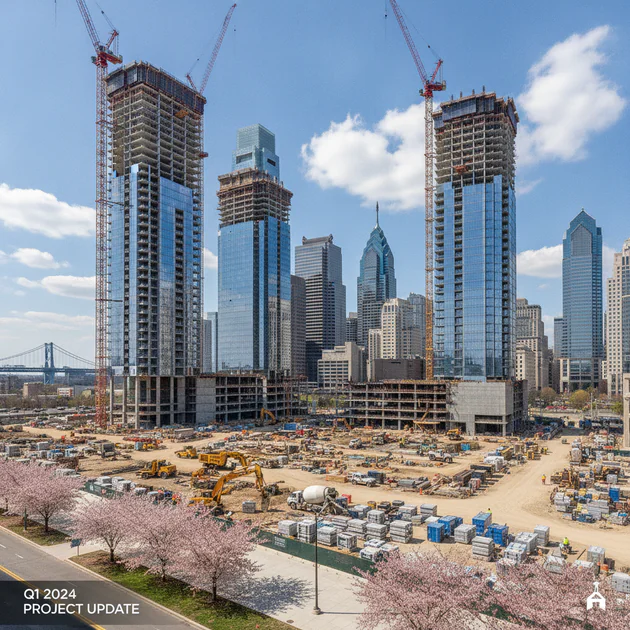
The Philadelphia skyline is a living document, a testament to the city’s resilience, innovation, and relentless drive forward. For those of us with boots on the ground, every crane in the air and every foundation poured tells a story. But to truly understand the narrative of our industry, we need more than just anecdotal evidence; we need data-driven insights. This is where Skanska’s highly anticipated Spring 2026 Construction Market Report becomes an indispensable tool for every general contractor, subcontractor, developer, and supplier in the Delaware Valley.
This comprehensive report, a cornerstone of industry analysis, provides a granular look at the forces shaping our work. It moves beyond national headlines to offer a Philly-centric perspective on everything from macroeconomic pressures to sector-specific demand. Here at Philadelphia Trade Experts, we’ve meticulously dissected the report’s findings to bring you the most critical takeaways. Our analysis isn’t just about regurgitating numbers; it’s about translating data into strategy. We’ll explore the key Philadelphia construction market trends 2026, identify the most promising growth areas, and unpack the challenges that lie ahead, providing you with the actionable intelligence needed to thrive in a dynamic and competitive landscape.
In this deep dive, we will navigate the report’s core themes: the stabilizing yet complex economic environment, the seismic shifts in sector demand, the persistent labor puzzle, the transformative impact of technology and sustainability, and the evolving risk matrix. Consider this your guide to not just surviving, but succeeding in the Philadelphia construction market for the remainder of 2026 and into the future.
The Macro-Economic Landscape: Cautious Optimism Amidst New Normals
After several years of turbulence, Skanska’s 2026 report paints a picture of a market entering a phase of “stabilized complexity.” The wild fluctuations in material costs and the aggressive interest rate hikes of the early 2020s have largely subsided, replaced by a more predictable, albeit elevated, cost environment. The report suggests that the industry should not expect a return to pre-pandemic pricing but rather adapt to a new baseline for operational and financial planning.
A key finding is the normalization of the supply chain. The report indicates that lead times for most standard materials, from structural steel to MEP components, have returned to near-historic averages. However, it cautions against complacency, highlighting potential bottlenecks for highly specialized equipment, particularly for the life sciences and advanced manufacturing sectors. Strategic procurement and early-stage collaboration between GCs, subs, and suppliers remain more critical than ever.
On the financial front, the report notes that while the Federal Reserve’s rate-hiking cycle has concluded, borrowing costs remain a significant factor in project pro-formas. This has led to a “flight to quality” among developers and investors, who are now more risk-averse and demand greater certainty in project timelines and budgets. For contractors, this means that pre-construction services, including detailed cost estimating, value engineering, and constructability reviews, have become powerful differentiators in winning bids. The projects getting the green light are those with solid financing, clear demand drivers, and experienced construction partners at the helm.
The report also shines a spotlight on the positive impact of federal and state infrastructure spending. Funds from the Bipartisan Infrastructure Law are now flowing more freely into tangible projects across the region. This government investment is acting as a crucial backstop for the industry, creating a steady pipeline of civil and institutional work that helps offset any potential softening in the private commercial sector. Key economic indicators from the report for the Philadelphia MSA include:
- Construction Cost Index (CCI): Forecasted to increase by a modest 2.5-3.5% in 2026, a significant deceleration from previous years.
- Skilled Labor Availability: Remains the primary driver of cost escalation, with wage growth outpacing material inflation.
- Architectural Billings Index (ABI): Showing positive momentum in the institutional and multifamily sectors, signaling a healthy pipeline of future work.
- Warehouse & Industrial Vacancy Rate: Ticking up slightly from historic lows but still indicating robust demand, especially for Class A facilities.
Sector-Specific Deep Dive: Where the Opportunities Lie in 2026
While the overall market outlook is one of steady growth, Skanska’s report emphasizes that the opportunities are not evenly distributed. The Philadelphia construction market trends 2026 show a clear divergence in performance across different sectors. Understanding these nuances is vital for aligning your business development strategy with the areas of highest demand.
Life Sciences and Healthcare: The Enduring Powerhouse
Philadelphia’s reputation as “Cellicon Valley” is not just a marketing slogan; it’s a construction reality. The report confirms that the life sciences sector remains the undisputed engine of growth. The demand for cGMP (current Good Manufacturing Practice) facilities, sophisticated R&D labs, and specialized biomanufacturing plants continues unabated. The report highlights a new wave of development focused on converting underutilized office buildings in University City and the Navy Yard into state-of-the-art lab spaces. This trend presents unique challenges and opportunities for contractors skilled in complex MEP systems, cleanroom construction, and vibration control. Healthcare construction is also robust, with major health systems like Penn Medicine and Jefferson Health continuing to invest in ambulatory care centers, hospital modernizations, and specialized treatment facilities.
Industrial and Logistics: Evolving for a New Era
The insatiable demand for logistics and distribution space that defined the post-pandemic boom has matured. While the frenetic pace of speculative warehouse construction has cooled, the report identifies strong, sustained demand for specific facility types. Last-mile distribution centers within or near the city limits are highly sought after as e-commerce giants race to shorten delivery times. Furthermore, there is a growing trend towards more technologically advanced facilities, including multi-story warehouses and cold storage centers, which require specialized construction expertise. Proximity to the Port of Philadelphia and major transportation arteries remains a key driver of development in this space.
Residential and Multifamily: A Shift in Focus
The luxury high-rise apartment boom in Center City is showing signs of saturation, according to the report. The new focus in the multifamily market is on “missing middle” housing and build-to-rent communities. There is significant demand for high-quality, amenity-rich apartment buildings in walkable neighborhoods like Fishtown, East Kensington, and South Philadelphia. The report also notes a surge in build-to-rent single-family home communities in the surrounding counties (Montgomery, Bucks, Chester), catering to millennials seeking more space without the commitment of a mortgage. For residential contractors, this signals a shift from large-scale concrete towers to more varied wood-frame and modular construction projects.
Institutional and Public Sector: The Infrastructure Dividend
As mentioned, public spending is a major bright spot. Skanska’s report details a significant pipeline of projects fueled by federal funds. Key areas of activity include:
- Transportation: Major upgrades to SEPTA’s regional rail lines, station modernizations, and the ongoing expansion projects at Philadelphia International Airport (PHL).
- Education: Universities like Drexel, Temple, and Penn are moving forward with new academic buildings, student housing, and research facilities. K-12 school districts are also undertaking significant renovation and new-build programs.
- Utilities and Civil: Extensive work on the city’s water and sewer systems, bridge repairs, and grid modernization projects are creating consistent opportunities for civil and heavy construction firms.
The Labor Equation: Tackling the Skilled Talent Crisis
A recurring and urgent theme in the Skanska 2026 report is the persistent shortage of skilled labor. This is no longer a future problem; it is the single greatest constraint on growth for many Philadelphia-area contractors. The report quantifies the challenge, noting that the retirement of experienced baby boomers is far outpacing the number of new entrants into the trades. This imbalance is driving up labor costs and making it increasingly difficult to staff projects adequately, leading to potential schedule delays.
The trades facing the most acute shortages, according to the report’s survey of general contractors, include electricians, welders, pipefitters, and HVAC technicians. The increasing complexity of modern buildings, with their sophisticated building automation systems and integrated technology, further exacerbates this issue, requiring a higher level of technical skill than ever before.
However, the report also highlights the proactive strategies that leading firms are employing to combat this crisis. It is no longer enough to simply post a job opening. The future of the Philadelphia construction workforce depends on a multi-pronged approach:
- Investment in Training and Apprenticeships: Successful firms are partnering directly with local trade unions, vocational schools like the Williamson College of the Trades, and community colleges to build a direct pipeline of talent. This includes sponsoring apprenticeships, funding training programs, and providing guest instructors.
- Embracing a Culture of Retention: The cost of replacing a skilled worker is immense. The report emphasizes the importance of creating a positive company culture that values its employees. This goes beyond competitive wages to include robust benefits packages, clear paths for career advancement, ongoing training opportunities, and a strong focus on job site safety and worker well-being.
- Strategic Adoption of Technology: Labor-saving technologies are becoming a necessity, not a luxury. The report details how firms are using tools like Building Information Modeling (BIM) to improve coordination and reduce rework, as well as adopting prefabrication and modular construction methods to move labor from the unpredictable job site into a controlled factory environment.
Technology and Sustainability: The Inseparable Pillars of Future Construction
The Skanska report dedicates a significant chapter to what it calls the “twin pillars” of modern construction: technology and sustainability. These are no longer niche specialties but are now fundamental to project delivery and business success. The Philadelphia construction market trends 2026 clearly show that firms failing to invest in these areas will be left behind.
The Digital Transformation of the Job Site
The pace of technological adoption has accelerated dramatically. The report indicates that Virtual Design and Construction (VDC) and BIM are now standard practice on virtually all large-scale commercial and institutional projects in Philadelphia. The value proposition is clear: improved clash detection, better cost control, enhanced safety planning, and more efficient facility management post-handover. Beyond BIM, the report identifies several other key technologies gaining traction:
- Prefabrication and Modular Construction: To combat labor shortages and compress schedules, more project components—from bathroom pods and MEP racks to entire building facades—are being built off-site. This shift requires a new level of logistical coordination but offers significant gains in quality and efficiency.
- Drones and Reality Capture: Drones are now routinely used for site surveys, progress monitoring, and safety inspections. Laser scanning and reality capture technologies create highly accurate digital twins of existing conditions, which is invaluable for complex renovation and adaptive reuse projects.
- Project Management Software: Cloud-based platforms that integrate scheduling, budgeting, document control, and field reporting are essential for managing the immense complexity of modern projects and facilitating seamless communication between the office and the field.
The Green Imperative: Building for a Sustainable Future
Sustainability has evolved from a “nice-to-have” feature to a core driver of project value and client demand. The City of Philadelphia’s own building codes and climate goals are pushing the market towards higher performance standards. The Skanska report notes that clients, especially in the institutional, life sciences, and corporate sectors, are increasingly demanding buildings that not only achieve certifications like LEED (Leadership in Energy and Environmental Design) but also demonstrate a tangible reduction in both operational and embodied carbon.
This focus on decarbonization is changing how Philadelphia builds. Key sustainable trends highlighted in the report include:
- Mass Timber: Cross-laminated timber (CLT) and other mass timber products are gaining popularity as a structural alternative to steel and concrete, prized for their lower carbon footprint and aesthetic appeal.
- High-Performance Envelopes: There is a greater emphasis on creating airtight, well-insulated building envelopes to minimize energy consumption for heating and cooling. This requires meticulous attention to detail from all trades involved in exterior wall construction.
- Electrification: A strong push to replace natural gas-fired heating and hot water systems with high-efficiency electric heat pumps is underway to reduce on-site emissions and create all-electric buildings.
- Material Transparency: Sophisticated clients are now asking for Environmental Product Declarations (EPDs) for materials like concrete, steel, and insulation to better understand and reduce the embodied carbon of their projects.
FAQ: Your Questions on the Philadelphia Construction Market Answered
What is the single biggest opportunity in the Philadelphia construction market for 2026?
Based on the Skanska report and our analysis, the most significant and durable opportunity lies in the life sciences and healthcare sectors. The convergence of world-class research institutions, a strong talent pool, and significant venture capital investment continues to fuel demand for highly specialized lab, manufacturing, and clinical facilities. Contractors with proven experience in these technically demanding environments are in an excellent position to secure a steady pipeline of high-margin work.
Are material costs expected to decrease in 2026?
The report suggests that a significant decrease in overall material costs is unlikely. The term used is “stabilization,” not “reduction.” While the extreme volatility of past years has eased, prices have settled at a new, higher plateau. The report advises against banking on price drops. Instead, the focus should be on strategic procurement, locking in prices early for critical items, and exploring alternative materials through value engineering. Pockets of volatility may still arise due to geopolitical events or specific supply chain disruptions, so maintaining strong supplier relationships is crucial.
How can smaller subcontractors and trade partners compete in this market?
For smaller firms, the key to success is not to compete on price alone but to become an indispensable partner. The Skanska report indicates that general contractors are prioritizing reliability, quality, and specialization. Smaller subs can thrive by:
- Developing a Niche Expertise: Become the go-to expert in a specific area, whether it’s cleanroom installation, mass timber erection, or high-performance building envelope work.
- Embracing Technology: Adopting tools like BIM and project management software demonstrates sophistication and makes you easier to work with.
- Building Relationships: Proactively communicate, solve problems, and consistently deliver on your promises to become a trusted partner for a select group of GCs.
What role does sustainability play in winning new projects?
Sustainability has become a critical factor in the selection process for a growing number of projects. For public-sector work and projects for large institutional or corporate clients, a contractor’s sustainability credentials and experience are heavily weighted. It’s no longer just about checking a box for LEED points. It’s about demonstrating a genuine understanding of concepts like embodied carbon, material life-cycle analysis, and waste diversion. Firms that can speak this language and provide data to back up their performance will have a distinct competitive advantage.
Conclusion: Charting Your Course for Success in 2026
Skanska’s Spring 2026 report provides a clear yet nuanced roadmap for the Philadelphia construction industry. The message is one of cautious optimism, grounded in the reality of a market that is more complex and demanding than ever before. The era of easy growth is over; success now requires strategic focus, operational excellence, and a commitment to continuous adaptation. The dominant Philadelphia construction market trends 2026 point towards sustained strength in specialized sectors like life sciences and infrastructure, a persistent need to solve the skilled labor puzzle, and the non-negotiable integration of technology and sustainability into every facet of our work.
The challenges of cost control, labor availability, and market competition are real, but so are the opportunities for firms that are prepared. By understanding these trends, investing in your people and processes, and aligning your business with the sectors of greatest demand, you can not only navigate the current landscape but build a more resilient and profitable future.
Navigating these market shifts can be daunting. At Philadelphia Trade Experts, we live and breathe this data every day. We help contractors, developers, and suppliers translate market intelligence into winning strategies. If you’re looking to position your business for growth and profitability in 2026 and beyond, we can help. Contact Philadelphia Trade Experts today for a strategic consultation and let’s build a successful future together.
Leave a Reply