
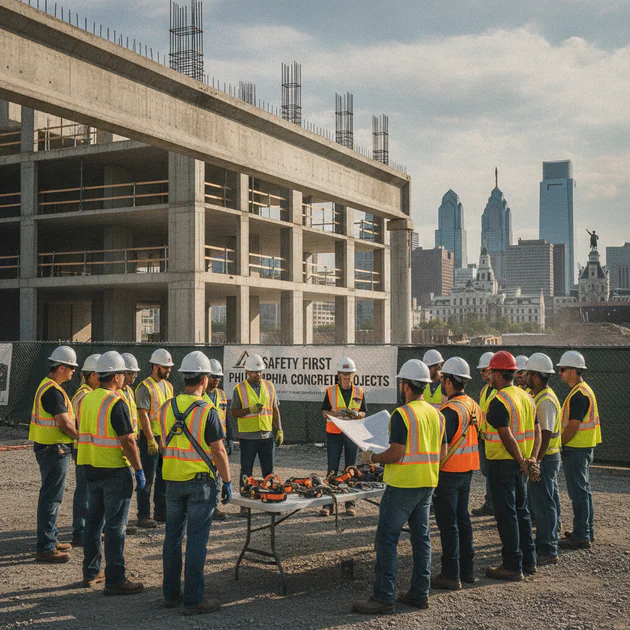
The dust has settled over the site in Grays Ferry, but for the Philadelphia construction community, the aftershocks of the tragic parking garage collapse continue to reverberate. In the wake of such a catastrophic event, the immediate focus is, rightly, on the victims and their families. The subsequent stages involve official investigations, media scrutiny, and the inevitable assignment of liability. Yet, in this complex and often contentious process, a critical voice is frequently unheard: the voice of the subcontractor on the ground. These are the men and women whose hands mix the mortar, tie the rebar, and pour the concrete—the individuals who translate architectural blueprints into physical reality.
At Philadelphia Trade Experts, we believe that understanding every facet of our industry is paramount, especially in the face of tragedy. To move forward and build a safer city, we must listen to the perspectives from every level of the project hierarchy. That is why we have engaged with a veteran concrete subcontractor, who has agreed to share their insights on the condition of anonymity. This individual was not involved in the specific Grays Ferry project but has decades of experience pouring concrete for similar multi-story structures across the Delaware Valley. Their perspective offers a raw, unfiltered look into the pressures, challenges, and potential points of failure that exist on nearly every major construction site. This is not an exercise in blame, but an essential lesson in prevention.
This article aims to pull back the curtain on the complexities faced by a Grays Ferry garage collapse subcontractor, or any subcontractor in a similar high-stakes environment. We will explore the systemic pressures, the communication gaps, and the razor-thin margins between a successful project and a catastrophic failure. For every general contractor, project manager, developer, and fellow tradesperson in Philadelphia, this is a crucial conversation. By understanding the view from the trenches, we can collectively reinforce our processes, enhance our safety protocols, and ensure that a tragedy like this never happens again on our watch.
The View from the Ground: Daily Realities of a Concrete Subcontractor
To comprehend the potential factors leading to a structural failure, one must first appreciate the daily environment of a concrete subcontractor on a large commercial project. It is a world of immense physical effort, tight deadlines, and complex coordination, all governed by the unyielding laws of physics and chemistry. The subcontractor is a critical cog in a massive machine, but a cog that often has limited control over the machine’s overall design and operation. Their primary domain is execution, and their success is predicated on the quality of the information and materials provided to them.
The day often begins before dawn, with a pre-pour meeting to review the day’s objectives. The foreman walks the crew through the specific section of the deck being poured, confirming rebar placement, verifying the integrity of the formwork and shoring, and coordinating with the testing agency that will sample the concrete. The subcontractor’s team is acutely aware that they are working against a clock. Once the first concrete truck arrives, a non-stop, high-stakes ballet begins. The pump operator, the crew spreading the concrete, the finishers—everyone must work in perfect synchrony. A delay of even 30 minutes can compromise a batch of concrete, creating a cold joint that could become a future weak point. This relentless pressure of time is a constant companion.
Moreover, the concrete subcontractor operates within a strict chain of command. They are working from plans stamped and approved by a structural engineer and managed by a general contractor (GC). If a foreman on the ground notices a discrepancy in the plans—perhaps the rebar spacing seems insufficient or the specified location for a construction joint appears problematic—their recourse is to file a Request for Information (RFI). This formal process sends the query up the chain to the GC, who then passes it to the design team. The process can take days, and in a fast-moving project, that delay can create immense pressure to “work around” the issue or proceed with reservations. A good GC will facilitate a swift response, but on a chaotic site, RFIs can get lost in the shuffle, leaving the subcontractor in a precarious position: halt a multi-million dollar operation or proceed based on an assumption. This is where the first cracks in a project’s integrity—long before any physical cracks appear—can form.
Deconstructing Failure: The “Swiss Cheese Model” in Construction
In safety and risk management, experts often refer to the “Swiss Cheese Model,” developed by James Reason. The model posits that in any complex system, there are multiple layers of defense against failure, much like slices of Swiss cheese. A catastrophe only occurs when the holes in each of these slices momentarily align, allowing a hazard to pass through all layers of protection. A structural collapse is the ultimate example of this model in action. It is rarely, if ever, the result of a single error. Instead, it is a perfect storm of smaller, often overlooked, issues that cascade into a disaster. From a subcontractor’s perspective, they are often the ones working on the final slice of cheese, with little visibility into the holes that may have already been created further up the line.
Let’s examine the potential “slices” and their “holes” in the context of a concrete parking garage project:
- The Design Slice: The first layer of defense is a sound structural design. A hole here could be a miscalculation by the engineering firm, an inadequate specification for materials (e.g., concrete PSI strength, rebar grade), or a design that is overly complex and difficult to execute correctly in the field. The Grays Ferry garage collapse subcontractor, like any sub, is expected to build to the plan, but is not qualified to second-guess the licensed engineer of record.
- The Materials Slice: The next layer is the quality of the materials themselves. A hole could be a bad batch of concrete from the supplier, steel rebar with metallurgical defects, or faulty components in a post-tensioning system. While subcontractors and third-party testing agencies inspect and test materials, subtle deficiencies can sometimes go undetected.
- The Execution Slice (Subcontractor’s Role): This is the subcontractor’s primary domain. Holes here represent workmanship errors. Examples include improper rebar placement (e.g., insufficient cover), inadequate consolidation of concrete leading to voids, or disturbing formwork before the concrete has reached sufficient strength. This is often the first place investigators look, as it is the most visible part of the process.
- The Management Slice (GC’s Role): The general contractor orchestrates the entire project. A hole in this slice could be a dangerously accelerated schedule that doesn’t allow for proper concrete curing times, poor coordination between trades (e.g., an HVAC crew cutting a core in a newly poured beam), or a failure to enforce safety protocols and quality control checks.
- The Shoring and Reshoring Slice: This is a critical and often misunderstood phase. Concrete is incredibly heavy and has very little strength for the first several days. Shoring supports the wet concrete, and reshoring supports the immature slabs as new levels are poured on top of them. A hole here could be a miscalculation of the loads, premature removal of shores, or using damaged shoring components. This responsibility is often shared between the GC and the concrete subcontractor, creating a potential for deadly miscommunication.
- The Inspection Slice: The final layer of defense is third-party and municipal inspections. These are designed to catch errors from the previous slices. A hole here could be a rushed inspection, an inspector missing a critical detail, or, in the worst cases, fraudulent reports. A subcontractor relies on these inspections as a final green light to proceed.
When a collapse occurs, it is because the trajectory of a hazard—be it a design flaw, a material defect, or an execution error—found a clear path through the holes in every single one of these slices. This is why focusing blame on a single entity, like the Grays Ferry garage collapse subcontractor, is often a gross oversimplification of a deeply systemic failure.
The Critical Role of Communication: Whispers Before the Roar
On a construction site, communication is not a soft skill; it is a structural component as critical as steel or concrete. A breakdown in the flow of information can be just as deadly as a faulty weld or a bad mix. From the subcontractor’s vantage point, they are often at the receiving end of directives, and their ability to communicate concerns back up the chain is paramount to a safe and successful project. Unfortunately, the typical project structure can create silos and barriers that impede this vital flow.
The RFI process, mentioned earlier, is the formal channel for this communication, but its effectiveness is highly variable. A subcontractor might submit an RFI questioning the constructability of a complex rebar pattern at a beam-column intersection. If the response from the design team is delayed, the GC might pressure the sub to “figure it out” to avoid falling behind schedule. This puts the subcontractor in an untenable position. Do they halt work, costing thousands of dollars and damaging their relationship with the GC? Or do they make a field-level judgment call that deviates from the plan, potentially introducing a structural risk and assuming enormous liability? This scenario plays out on job sites every single day.
Informal communication is just as important. Daily huddles, pre-pour meetings, and simple conversations between the subcontractor’s foreman and the GC’s superintendent are where potential issues are often caught. A foreman might say, “The shoring for this next deck looks a little light to me,” or “We’re having trouble getting the concrete to consolidate in these deep beams.” In a healthy project culture, that superintendent listens, respects the subcontractor’s expertise, and investigates the concern. In a toxic or high-pressure culture, that same concern might be dismissed as complaining or an attempt to slow the job down. This is where a culture of psychological safety becomes a life-or-death matter. Every worker, from the newest laborer to the most experienced foreman, must feel empowered to stop the job if they see something that is not right, without fear of retribution.
Consider the specific complexities of post-tensioned (PT) concrete slabs, which are common in parking garages. The process involves stressing high-strength steel tendons after the concrete has cured to a certain strength. The coordination between the concrete crew, the PT installation subcontractor, and the testing lab is intricate. A miscommunication about when it’s safe to stress the tendons—before the concrete is strong enough—can lead to catastrophic failure. The subcontractor pouring the concrete relies on clear, unambiguous direction from the GC and engineer about the required compressive strength (measured in PSI) before stressing can begin. Any ambiguity in that communication chain introduces a significant risk.
The Pressure Cooker: How Schedule and Budget Compromise Safety
While a structural collapse is a failure of physics, the conditions that allow it to happen are often rooted in economics. The relentless pressure to complete projects faster and for less money is arguably the single greatest threat to construction safety and quality in Philadelphia and across the country. This pressure is felt most acutely by the subcontractors, who operate on thin margins and are often selected based on being the lowest bidder.
The process starts with the project schedule. An overly aggressive schedule, dictated by a developer needing to meet a deadline for financing or leasing, forces the GC to compress every activity. For a concrete subcontractor, this is particularly dangerous. Concrete does not cure on a project manager’s timeline; it cures according to the laws of chemistry and is affected by temperature and humidity. The most critical period is the first 7 to 14 days, where it gains the majority of its design strength. A compressed schedule might lead to:
- Premature Removal of Shoring: Stripping the forms and shores from a concrete slab before it can support its own weight, plus the weight of construction activities above it.
- Inadequate Reshoring: As new floors are added, the load is transferred through reshoring posts to the floors below. If the lower floors are not mature enough, they can fail, leading to a progressive “pancake” collapse. This is a suspected factor in many garage collapses.
- Rushing Quality Control: Skipping pre-pour checks or pressuring testing labs for quicker results to avoid holding up the next phase of work.
Then there is the budget pressure. When a subcontractor wins a bid with an extremely low price, their margin for error—and for doing things the right way—is virtually zero. This can lead to a temptation to cut corners, whether consciously or unconsciously. It might mean using a less experienced crew to save on labor costs, not having an extra supervisor on-site to double-check formwork, or hesitating to reject a truck of concrete that seems borderline on its slump test because of the cost of the wasted material and the delay it would cause. The practice of “value engineering,” while sound in principle, can also be a source of risk. When a GC or developer asks a subcontractor to find cost savings, it can sometimes lead to substituting specified materials or methods with cheaper, potentially less robust alternatives without a full engineering review.
A responsible subcontractor must build the cost of safety and quality into their bid. This includes pricing for proper shoring and reshoring for the required duration, allocating time for thorough inspections, and using skilled, well-paid labor. GCs and developers, in turn, have a responsibility to recognize that the lowest bid is often not the best value. Prequalifying bidders based on their safety record, training programs, and financial stability is just as important as the bottom-line number. The failure to do so creates a system that incentivizes risky behavior, making the entire project team, from the Grays Ferry garage collapse subcontractor to the developer, vulnerable.
Moving Forward: A Pledge for a Safer Philadelphia Construction Industry
The aftermath of a tragedy like the Grays Ferry collapse must be a catalyst for meaningful change. It is not enough to simply identify a cause and assign blame. We must look at the systemic issues that created the conditions for failure and collectively commit to strengthening every link in the construction chain. From the subcontractor’s perspective, this means taking a more proactive role in project safety and quality assurance, even when it means pushing back against schedule and budget pressures.
Here are actionable steps that can be taken at every level to build a safer future:
- For Subcontractors: Empower the Front Line. Subcontractors must invest in training their foremen and crews not just on how to perform their tasks, but on how to identify red flags in engineering plans, shoring designs, and site conditions. They must cultivate a culture where any crew member can and should call a “stop work” if they feel something is unsafe, and that authority is backed by management without question. Document everything. RFIs, meeting minutes, and daily reports are a subcontractor’s best defense and a project’s best early warning system.
- For General Contractors: Prioritize Partnership Over Price. GCs must shift their subcontractor selection criteria from a low-bid-wins mentality to a best-value approach. This includes a thorough evaluation of a sub’s safety record (EMR rating), their quality control program, the experience of their proposed project team, and their financial health. GCs should also bring key subcontractors, like the concrete and structural steel subs, into the planning process earlier to leverage their field expertise and identify potential constructability issues before they become job-site problems.
- For Developers and Owners: Invest in a Realistic Schedule. The project schedule is the foundation of a safe project. Owners and developers must work with their construction managers to build realistic timelines that account for proper concrete curing, weather delays, and a robust quality control inspection process. The short-term cost of adding a few weeks to a schedule pales in comparison to the incalculable cost of a structural failure.
- For Designers and Engineers: Enhance Constructability Reviews. The design team holds immense responsibility. Before plans are issued for construction, they should undergo a rigorous constructability review, ideally with input from an experienced contractor or construction manager. Simplifying complex details, clarifying ambiguous notes, and being highly responsive to RFIs from the field can prevent countless errors and misinterpretations.
Building in a dense, historic city like Philadelphia presents unique challenges. But with those challenges comes a deep sense of pride and responsibility. Every structure we erect becomes a part of our city’s fabric for generations. The legacy of the Grays Ferry garage collapse must be a renewed, industry-wide commitment to putting safety and integrity above all else. It’s a commitment that starts with listening to the voices from the ground up.
Frequently Asked Questions (FAQ)
What is a concrete subcontractor’s biggest fear on a multi-story pour?
Beyond the obvious fear of a catastrophic collapse, a subcontractor’s biggest fear is often a formwork or shoring failure during the pour itself. A “blowout” of a formwork wall can release tons of wet concrete, endangering workers and causing massive delays and cleanup costs. Another significant fear is a “cold joint,” which occurs when a fresh batch of concrete is poured against a batch that has already started to harden. This creates a plane of weakness within the structure that can compromise its long-term integrity. Both scenarios are often linked to rushing, inadequate bracing, or poor coordination—all byproducts of the schedule and budget pressures discussed earlier.
How could the Grays Ferry garage collapse subcontractor, or any sub, have protected themselves legally and professionally?
Documentation is the single most important form of protection. A subcontractor must meticulously document every communication, every concern, and every deviation from the plan. This includes: 1) Submitting formal RFIs for any ambiguity or perceived error in the plans and not proceeding with that portion of work until a formal, written response is received. 2) Keeping detailed daily reports that note site conditions, instructions received from the GC, and any safety concerns raised. 3) Taking extensive photographs and videos of their work, especially rebar placement and shoring, before concrete is poured. This creates a visual record of compliance with the approved plans. In a litigious aftermath, the party with the most thorough documentation is in the strongest position.
What are immediate red flags a subcontractor should look for in structural plans?
Experienced subcontractors develop a keen eye for potential problems in structural drawings. Red flags include: 1) Overly congested rebar designs, where it’s physically impossible to place the steel as shown and still achieve proper concrete consolidation. 2) Ambiguous or missing details for critical connections, such as beam-to-column joints or slab edges. 3) Specifications that seem inappropriate for the application, like an inadequate concrete cover requirement in an environment exposed to de-icing salts. 4) A lack of clear instructions for construction sequencing, shoring, and reshoring loads and durations. When these red flags appear, it’s a signal to immediately stop and submit an RFI.
Does the type of concrete structure (e.g., post-tensioned vs. conventionally reinforced) add complexity for the subcontractor?
Absolutely. While both systems are safe when designed and built correctly, post-tensioned (PT) concrete adds significant layers of complexity and risk for the concrete subcontractor. The sub must coordinate precisely with a separate, specialty PT contractor. The placement of the PT tendons (sheathed steel cables) within the formwork is critical and must be exact. The concrete mix design is often more sensitive, and the timing of the stressing operation is non-negotiable and depends entirely on the concrete achieving a specific strength. A mistake in any of these areas, such as a misplaced tendon or stressing too early, can have severe consequences. It requires a higher level of supervision, coordination, and expertise from the entire project team.
Conclusion: Building a Stronger, Safer Foundation for Philadelphia
The tragic Grays Ferry garage collapse serves as a stark and painful reminder of the immense responsibilities we all share in the construction industry. As we have heard from the perspective of a veteran concrete subcontractor, a structural failure is never the fault of a single person or entity. It is a failure of a system—a system of communication, of management, and of priorities. The pressures of time and money, if not properly managed, can erode the very foundations of safety and quality, creating the conditions where the unthinkable becomes possible.
Moving forward, the path to a safer Philadelphia is paved with shared accountability. It requires developers to champion realistic schedules, general contractors to select partners based on expertise and safety, and subcontractors to feel empowered to stop work when something is not right. It demands a culture of open communication, where a concern from a laborer on the ground is given the same weight as a directive from the project executive. We must replace the culture of pressure with a culture of partnership.
At Philadelphia Trade Experts, we are dedicated to fostering this partnership. We connect developers and GCs with a network of pre-vetted, highly skilled, and safety-conscious trade professionals who understand what’s at stake. We believe that building safely is building smart. If you are a construction professional in the Philadelphia area looking to strengthen your team, improve your project management processes, or connect with partners who share a commitment to excellence and integrity, we are here to help. Let’s work together to learn from this tragedy and build a stronger, safer city for all.
Contact Philadelphia Trade Experts today to learn how we can help you build with confidence.
Leave a Reply