
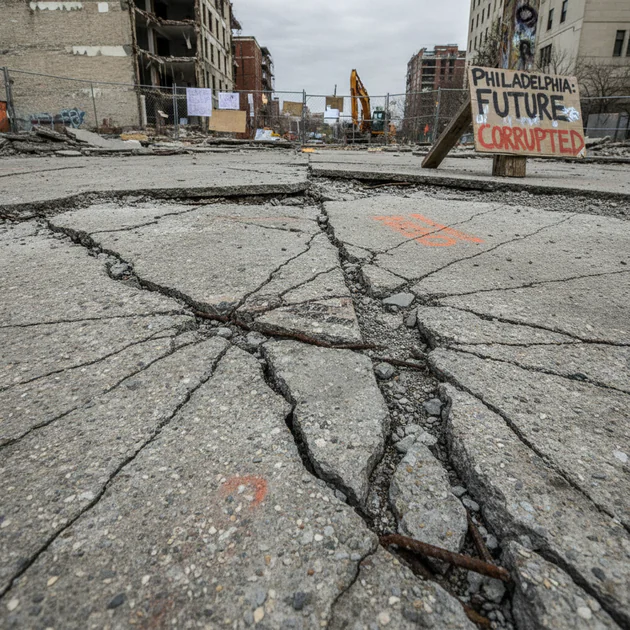
The Philadelphia construction landscape was recently shaken by an event that serves as a stark reminder of the unforgiving nature of our industry. The sudden and dramatic failure of a large, newly poured concrete slab at the high-profile Penn’s Landing Overlook project has sent ripples of concern through every level of the local trade community. What was intended to be a showpiece of modern urban development has, for now, become the center of the Philadelphia controversial concrete buckling incident—a case study in what can go wrong when precision, planning, and execution are not perfectly aligned.
This incident is more than just a localized failure; it’s a cautionary tale for every general contractor, subcontractor, engineer, and supplier in the Delaware Valley. The images of warped, fractured concrete are a powerful illustration of the immense forces at play in our work and the critical importance of getting the fundamentals right, every single time. The financial fallout, reputational damage, and inevitable regulatory scrutiny will impact not just the firms directly involved, but the broader perception of our city’s building standards.
As trusted experts with deep roots in the Philadelphia market, we believe it is our responsibility to move beyond the headlines and provide a thorough, technical analysis of this event. This article will deconstruct the potential causes of the concrete failure, explore the wide-ranging implications for our industry, and outline actionable best practices to safeguard your projects against a similar fate. Our goal is to transform this unfortunate incident into a valuable learning opportunity for the entire Philadelphia construction community.
Deconstructing the Incident: A Timeline of the Penn’s Landing Failure
To understand the lessons learned from the Philadelphia controversial concrete buckling incident, we must first examine the known facts. The failure occurred on a recently poured, multi-thousand-square-foot concrete plaza, a central feature of the Penn’s Landing Overlook redevelopment. This section of the project was poured in late spring, a period known for its significant temperature fluctuations in Philadelphia—cool nights often giving way to surprisingly hot, sun-drenched afternoons. According to initial reports, the buckling occurred rapidly during the first major heatwave of the season, roughly three weeks after the final pour.
Eyewitness accounts and preliminary photos show a classic “blow-up” or buckling failure. The massive concrete slab, under immense compressive stress, lifted upwards at its weakest point, likely a construction joint, forming a tent-like structure several feet high before fracturing. The immediate aftermath saw a complete site shutdown, the erection of safety barriers, and the swift arrival of structural engineers and city inspectors from the Department of Licenses and Inspections (L&I). The general contractor issued a brief statement acknowledging the “structural anomaly” and promising a full investigation, but the silence since has been deafening, fueling speculation and concern.
What makes this particular event so controversial is the project’s high-visibility and significant public funding component. The Penn’s Landing Overlook is a cornerstone of the city’s waterfront revitalization efforts. Questions are already being raised about the bidding process, the selection of out-of-state subcontractors for key concrete work, and whether budget or schedule pressures led to critical oversights. This public and political scrutiny elevates the incident from a mere construction problem to a major civic issue, placing every stakeholder under an intense microscope.
Potential Culprits: A Technical Deep Dive into Concrete Buckling
Concrete is deceptively complex. While its strength under compression is legendary, it is vulnerable to a host of factors, especially in its early life. A failure as dramatic as the one at Penn’s Landing is rarely due to a single error but is often the result of a perfect storm of contributing factors. Based on the visual evidence and the environmental context, here are the most likely technical culprits that Philadelphia professionals must understand and mitigate.
- Inadequate Thermal Expansion Management: This is the prime suspect. Concrete, like most materials, expands when heated and contracts when cooled. A large, continuous slab poured in cooler weather will expand significantly when exposed to the intense summer sun. If there are not enough—or properly installed—expansion joints to absorb this movement, the slab will build up massive internal compressive stress. When that stress exceeds the concrete’s strength, it has nowhere to go but up, resulting in a violent buckle. The spacing, depth, and cleanliness of control and expansion joints are not minor details; they are fundamental to the slab’s survival, especially in a four-season climate like Philadelphia’s.
- Subgrade and Base Failure: A concrete slab is only as good as the foundation beneath it. An improperly compacted subgrade or an unstable base course can lead to uneven settlement. If a portion of the slab sinks, even minutely, it can create stress points and reduce the slab’s ability to move freely, exacerbating the effects of thermal expansion. Philadelphia’s geology, with its mix of native soils, historic fill, and proximity to the river, demands meticulous geotechnical investigation and rigorous subgrade preparation. Any failure to achieve uniform, stable support is a critical flaw.
- Improper Curing and Early-Age Cracking: The curing process is when concrete develops its strength and durability. If a new slab is allowed to dry out too quickly, especially on a hot or windy day, it can lead to plastic shrinkage cracking and a weaker surface. This can compromise the integrity of saw-cut control joints, which may then fail to activate properly. Furthermore, a poorly cured slab may not have reached its designed compressive strength before being subjected to the full force of thermal expansion, making it far more susceptible to failure. Proper curing—using methods like wet curing with burlap, or applying a high-quality curing compound—is non-negotiable.
- Flawed Concrete Mix Design: The recipe for the concrete itself is a critical variable. An excessively high water-to-cement ratio can lead to a weaker, more porous final product. The type and quality of aggregates, as well as the specific admixtures used to control set time or workability, all play a role. While less likely to be the primary cause of a buckling failure, a substandard mix can contribute by lowering the concrete’s overall strength, making it less able to resist the stresses imposed upon it.
The Ripple Effect: Industry-Wide Consequences for Philadelphia Construction
The buckling at Penn’s Landing will not be an isolated event. Its consequences will be felt across the Philadelphia construction market for months and years to come, affecting how we work, how we are regulated, and how we are perceived. Every firm, from the largest GCs to the smallest specialty contractors, needs to be prepared for the fallout.
- Intensified Regulatory Scrutiny: Expect Philadelphia’s Department of Licenses and Inspections (L&I) to respond decisively. This will likely translate into more stringent plan reviews, with a specific focus on jointing plans and thermal analysis for large concrete placements. We can also anticipate an increase in the frequency and intensity of on-site inspections, with inspectors paying much closer attention to subgrade prep, rebar placement, and curing procedures. Permitting for similar projects may face delays as new checklists and requirements are implemented.
- Skyrocketing Insurance Costs and Litigation: The financial aftermath will be immense. The cost of demolition, removal, and replacement of the failed slab will run into the millions. This will trigger a complex web of insurance claims and, almost certainly, protracted litigation involving the developer, general contractor, concrete subcontractor, engineering firm, and material suppliers. This high-profile case will make insurance underwriters more cautious about covering large-scale concrete work in the region, potentially leading to increased premiums and stricter policy requirements for everyone.
- Damage to Public Trust and Project Pipelines: When a taxpayer-funded project fails so visibly, it erodes public confidence. This can make it harder to gain community support and political approval for future large-scale infrastructure and development projects. The Philadelphia controversial concrete buckling incident will be cited by project opponents as an example of waste and incompetence, creating new hurdles for the entire industry as it seeks to build and improve our city.
- A Shift in Contractor Vetting and Qualification: Developers and GCs will become far more risk-averse in their selection of concrete subcontractors. Expect more rigorous pre-qualification processes, demanding detailed proof of experience with similar projects in similar climates. There will be a renewed emphasis on hiring firms with a strong local track record and a deep understanding of Philadelphia’s unique environmental and logistical challenges.
Fortifying Your Foundations: A Best-Practice Guide for Philadelphia Contractors
The best way to navigate the post-incident landscape is to be proactive. This failure is a wake-up call to double down on quality control and fundamentals. Smart companies will use this as an opportunity to review and reinforce their procedures. Here is a comprehensive guide to preventing concrete buckling on your projects.
Pre-Construction and Design Phase
Success begins long before the first concrete truck arrives. Rigorous planning is your first line of defense.
- Commission a Thorough Geotechnical Report: Never skimp on soil analysis. Understand the subgrade conditions intimately and ensure the design engineer’s recommendations for soil stabilization and base course construction are followed to the letter.
- Scrutinize the Jointing Plan: The expansion and control joint plan is arguably the most critical document for a large slab-on-grade. Is the joint spacing appropriate for the slab thickness and the expected thermal movement in our climate? Are dowel bars or other load-transfer mechanisms specified correctly to allow movement while preventing vertical displacement?
- Demand a Climate-Specific Mix Design: Work with your ready-mix supplier to develop a concrete mix that is optimized for the season in which you are pouring. This includes considering admixtures like retarders for hot weather or accelerators for cold weather, but always with an eye on the final strength and durability.
On-Site Execution and Quality Control
On pour day and during the critical days that follow, your team’s diligence is paramount.
- Verify Subgrade and Base Preparation: Your site superintendent or quality control manager must personally verify that the subgrade has been compacted to the specified density. Use proof-rolling or nuclear density testing to document compliance. Ensure the base course is graded correctly and is free of any soft spots.
- Monitor Environmental Conditions Relentlessly: Keep a detailed log of ambient temperature, humidity, wind speed, and the concrete’s temperature at the time of placement. This data is invaluable for troubleshooting and proves you followed hot- or cold-weather concreting best practices as defined by the American Concrete Institute (ACI).
- Implement a Flawless Curing Protocol: This is a make-or-break step. For critical flatwork, water curing (using soaker hoses, burlap, or cotton mats that are kept continuously wet) for a minimum of seven days is the gold standard. If using a liquid membrane-forming curing compound, ensure it is applied at the correct rate, immediately after finishing operations are complete, to lock in moisture.
- Ensure Timely and Correct Joint Installation: Control joints must be cut at the right time—early enough to prevent random cracking but not so early that it damages the surface. They must also be cut to the proper depth (typically one-quarter of the slab’s thickness). Expansion joints must be kept completely clean of debris so they can function as designed. Debris in an expansion joint can effectively fuse the slabs together, negating the joint’s purpose.
Post-Pour Documentation and Verification
Your work isn’t done when the curing blankets come off. Meticulous records protect you and your client.
- Maintain Comprehensive Records: Keep all concrete batch tickets, material certifications, field test results (slump, air content), compressive strength test reports, and daily construction logs in an organized project file.
- Photograph Everything: Document every stage of the process with date-stamped photos: the prepared subgrade, rebar placement, the pour in progress, finishing operations, joint cutting, and the curing setup. This visual evidence is your best defense in a dispute.
Frequently Asked Questions About Concrete Failures
What is the single most common cause of concrete buckling in a climate like Philadelphia’s?
While multiple factors can contribute, the most common primary cause is inadequate management of thermal expansion. This almost always points to a failure in the design or installation of expansion joints. A large, unrestrained concrete slab exposed to Philadelphia’s summer heat will expand with incredible force. Without properly spaced and constructed joints to safely absorb this movement, a buckling failure is almost inevitable.
Who is typically held legally and financially responsible in a concrete failure incident?
Determining liability is a complex and often contentious process. Responsibility can be shared among multiple parties. The design engineer could be at fault if the jointing plan was inadequate. The general contractor holds ultimate responsibility for site supervision and quality control. The concrete subcontractor is responsible for proper installation and curing. The ready-mix supplier could be liable if the concrete did not meet specifications. This is why thorough documentation is so critical for every party involved; it’s often the only way to prove you performed your duties correctly.
As a subcontractor, how can I protect my company from issues caused by others on a project?
Your best tools are communication and documentation. If you believe the subgrade has been poorly prepared by the earthwork contractor, or if the engineering plans seem inadequate, you must formally notify the general contractor with a Request for Information (RFI). Document your concerns in writing. Before you pour, get a signed acceptance of the subgrade from the GC’s superintendent. Follow the plans and specifications to the letter, and meticulously document your entire process. This diligence can shield you from liability if another party’s error contributes to a failure.
Conclusion: Building a More Resilient Future
The Philadelphia controversial concrete buckling incident at Penn’s Landing is a sobering lesson for our entire industry. It underscores the fact that there are no shortcuts to quality and durability. The fundamental principles of good concrete practice—thorough planning, meticulous preparation, careful execution, and rigorous quality control—are not just guidelines; they are the essential pillars that prevent catastrophic and costly failures.
This event must serve as a catalyst for positive change. It’s a call for every Philadelphia construction professional to recommit to the highest standards of craftsmanship and to invest in the ongoing training and education of our teams. By learning from this failure and reinforcing our commitment to excellence, we can ensure the projects we build today will stand as proud and lasting testaments to our skill and integrity for generations to come.
At Philadelphia Trade Experts, we are dedicated to supporting the local construction community with unparalleled insight and analysis. If you are looking to review your quality control procedures, require expert consultation for an upcoming project, or need assistance navigating complex technical challenges, we are here to be your trusted partner. Contact us today to build with confidence and ensure your projects are founded on a legacy of quality.
Leave a Reply