
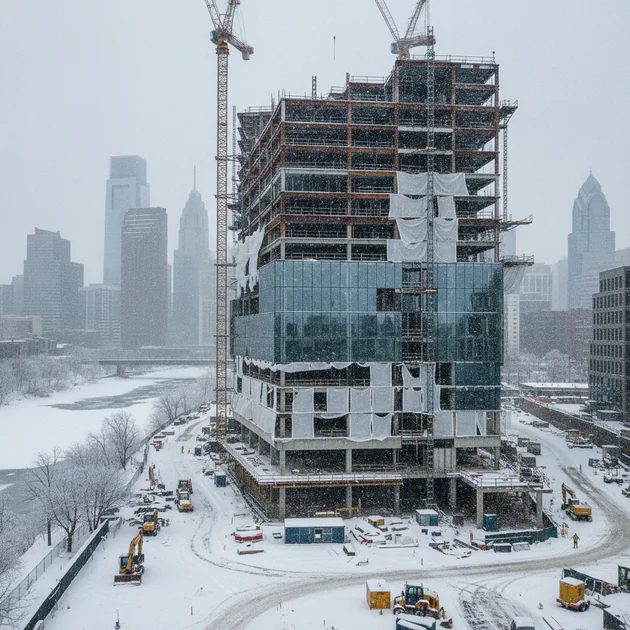
The Ultimate Guide to the Philadelphia Construction Market Outlook 2026
As we look towards the horizon, the Philadelphia skyline is poised for significant transformation. For construction professionals, developers, and investors, understanding the future landscape is not just an advantage—it’s a necessity. A recent, highly anticipated report from global construction giant Skanska has sent a clear signal: the Philadelphia construction market outlook 2026 is not just stable; it’s projected to be remarkably robust. This forecast provides a critical roadmap for navigating the opportunities and challenges that lie ahead in the City of Brotherly Love.
At Philadelphia Trade Experts, we’ve dissected this comprehensive forecast to provide you with the actionable intelligence you need. This isn’t just about reading headlines; it’s about understanding the deep currents driving growth, from the booming life sciences sector to the massive influx of infrastructure funding. We will explore the specific market segments set to explode, the emerging trends you must adopt, and the potential headwinds to watch for.
This in-depth analysis will serve as your essential guide to preparing for 2026. Whether you’re a general contractor planning your project pipeline, a subcontractor specializing in a niche trade, or a developer seeking your next big project, the insights within this article will empower you to make strategic decisions and capitalize on a period of unprecedented opportunity in Philadelphia’s construction industry.
Table of Contents
- Decoding Skanska’s 2026 Forecast: A Bullish Stance on Philly
- Sector-by-Sector Breakdown: Where is the Growth Concentrated?
- Key Philadelphia Construction Trends Shaping 2026
- Navigating the Challenges: A Realistic Outlook
- How Philadelphia Trade Experts Can Help You Capitalize
- Frequently Asked Questions (FAQ)
Decoding Skanska’s 2026 Forecast: A Bullish Stance on Philly
When a global leader like Skanska releases its market predictions, the industry listens. Their latest report paints a vibrant picture for Philadelphia, distinguishing it as a key hub for construction activity on the East Coast. The forecast moves beyond general optimism, pinpointing specific macroeconomic factors that create a fertile ground for sustained growth through 2026 and beyond.
The core of Skanska’s bullish sentiment rests on a powerful trifecta of drivers: Philadelphia’s entrenched leadership in the life sciences industry, a steady stream of federal and state infrastructure investment, and resilient private sector demand in residential and commercial real estate. Unlike markets overly dependent on a single sector, Philadelphia’s diversified economic base provides a stable foundation, mitigating risks and fostering a more predictable growth trajectory.
The report emphasizes that the city has successfully weathered recent economic uncertainties, with project pipelines refilling and new, large-scale developments gaining financial clearance. This resilience is a testament to the city’s strategic importance and its appeal to long-term institutional investors.
Key Takeaways from the Skanska Construction Forecast:
- Sustained High Demand: The forecast predicts that demand for construction services will outpace labor supply, keeping the market competitive and placing a premium on efficiency and skilled talent.
- Sector-Specific Booms: While the overall market is strong, growth is not uniform. The report highlights life sciences, advanced manufacturing, and public infrastructure as the leading sectors.
- Increased Project Complexity: Projects in 2026 will demand more technical expertise, particularly in building specialized facilities like cGMP manufacturing plants, BSL-rated labs, and data centers.
- Technology as a Differentiator: Firms that have invested in technology like BIM, prefabrication, and advanced project management software will have a significant competitive edge.
- ESG is Non-Negotiable: Environmental, Social, and Governance (ESG) criteria are no longer a “nice to have.” They are integral to securing financing and winning bids for major projects.
Sector-by-Sector Breakdown: Where is the Growth Concentrated?
A high-level view is useful, but success in 2026 will be found in the details. The Philadelphia construction market outlook 2026 shows distinct patterns of growth across different sectors. Understanding these nuances is crucial for aligning your business strategy with the market’s trajectory.

Life Sciences & Healthcare: The Unstoppable Engine
Philadelphia’s reputation as “Cellicon Valley” is not just a clever moniker; it’s the single most powerful driver of construction in the region. The city is a global epicenter for cell and gene therapy research and manufacturing. This translates into a voracious, long-term appetite for highly specialized and technically complex construction projects.
By 2026, we anticipate continued development in hubs like University City, the Navy Yard, and emerging suburban clusters. The demand is not just for generic lab space but for:
- cGMP (Current Good Manufacturing Practice) facilities: These are highly regulated, cleanroom-intensive environments required for producing commercial-scale therapies.
- Research & Development (R&D) labs: Flexible, state-of-the-art labs that can be adapted for different scientific needs.
- Modern healthcare facilities: Hospitals and clinics are continuously upgrading to accommodate new technologies and patient-centric care models, driving renovation and new-build projects.
This sector’s growth is fueled by billions in venture capital and federal research grants, making it one of the most stable and lucrative segments of the market.
Multi-Family Residential: Adapting to New Demographics
The demand for housing in Philadelphia remains robust. However, the nature of that demand is evolving. The 2026 market will see a continued shift towards high-amenity, experience-focused living. Developers are no longer just selling square footage; they are selling a lifestyle.
Key trends in the residential sector include:
- Mixed-Use Developments: Integrating residential units with retail, co-working spaces, and wellness facilities to create self-contained communities.
- Build-to-Rent (BTR): A growing interest in single-family or townhome communities built specifically for the rental market.
- Focus on Neighborhoods: While Center City remains a focal point, neighborhoods like Fishtown, Kensington, and parts of South and West Philadelphia are seeing significant multi-family investment, driven by their unique cultural appeal.
Contractors who can deliver high-quality finishes and complex amenity packages on schedule will thrive in this competitive segment.
Infrastructure & Public Works: Rebuilding Philly’s Foundation
The impact of the Bipartisan Infrastructure Law will be in full swing by 2026. This historic investment is channeling billions of dollars into long-overdue upgrades for the region’s core infrastructure. These are not small-scale projects; they are multi-year, large-scale endeavors that will provide a steady stream of work for civil engineers, heavy equipment operators, and skilled trades.
Major projects shaping the infrastructure projects Philly landscape include:
- I-95 Reconstruction: The ongoing, multi-phase project to rebuild the critical highway corridor through the city.
- SEPTA Modernization: Upgrades to stations, trolleys, and regional rail lines to improve public transit efficiency and accessibility.
- Port of Philadelphia Expansion: Projects aimed at increasing cargo capacity and improving logistics to strengthen Philadelphia’s role as a major East Coast port.
- Water and Utility Upgrades: Modernizing the city’s aging water and sewer systems to ensure safety and reliability.
These projects offer long-term stability and are less susceptible to the fluctuations of private market financing, making them a crucial pillar of the 2026 outlook.
Commercial & Office Space: A Market in Transition
The post-pandemic office market is undeniably challenging, but it’s a story of transformation, not collapse. The “flight to quality” is the dominant trend. Companies are abandoning older, less desirable Class B and C buildings in favor of modern, amenity-rich Class A properties that can entice employees back to the office.
This creates two distinct construction opportunities:
- New Class A Construction: Building new, high-performance office towers with features like advanced air filtration, collaborative spaces, and wellness amenities.
- Adaptive Reuse: The conversion of older, vacant office buildings into residential apartments, hotels, or life sciences labs is a major growth area. This requires specialized expertise in retrofitting historic or existing structures. Check out our guide to navigating Philadelphia’s permitting process for such complex projects.
The commercial real estate Philadelphia market of 2026 will be smaller but smarter, rewarding contractors who can deliver high-quality, flexible, and sustainable spaces.
Key Philadelphia Construction Trends Shaping 2026
Beyond sector-specific growth, several overarching trends will define what it takes to succeed in the 2026 Philadelphia construction market. Embracing these shifts is no longer optional; it’s essential for maintaining a competitive edge.
- Pervasive Technology Integration: The days of paper blueprints and manual processes are numbered. By 2026, proficiency in Building Information Modeling (BIM) will be a baseline expectation. Drones for site surveys, project management software for real-time collaboration, and robotics for repetitive tasks will become increasingly common, driving efficiency and safety.
- Sustainability as a Core Requirement: Green building is mainstream. Clients, investors, and regulators are demanding higher standards of energy efficiency and lower carbon footprints. Experience with LEED, Passive House, and other green building certifications, as well as expertise in sourcing sustainable materials, will be a major differentiator.
- The Skilled Labor Imperative: The construction industry’s skilled labor shortage is a persistent challenge. The firms that will win in 2026 are those actively investing in workforce development, apprenticeship programs, and creating a company culture that attracts and retains top talent. The demand for skilled labor is a key data point in the Bureau of Labor Statistics’ economic forecast for Philadelphia.
- Modular and Off-Site Construction: To combat labor shortages and accelerate project timelines, off-site and modular construction methods are gaining significant traction. From prefabricated bathroom pods to full volumetric modular units, this approach improves quality control and reduces on-site disruption, making it an attractive option for hospitality and multi-family projects.
Navigating the Challenges: A Realistic Philadelphia Construction Market Outlook 2026
While Skanska’s forecast is overwhelmingly positive, a prudent business strategy acknowledges potential risks. The path to 2026 will have its share of challenges, and preparing for them is just as important as planning for growth.
Interest Rate and Financial Volatility: While rates may stabilize, the era of near-zero financing costs is over. Developers and contractors must plan for higher capital costs, which can impact project feasibility. Securing financing early and building strong relationships with lenders will be critical.
Regulatory and Permitting Hurdles: Philadelphia’s permitting and inspection processes can be complex and time-consuming. As construction volume increases, these agencies will be under greater strain. Firms that have deep experience with local regulations and can proactively manage the approvals process will avoid costly delays. Our construction consulting services specialize in exactly this.
Material Cost and Supply Chain Issues: The extreme volatility of the pandemic era has subsided, but global supply chains remain sensitive to geopolitical events and logistical bottlenecks. A robust 2026 construction predictions model must account for potential price swings. Smart procurement strategies, sourcing alternative materials, and building redundancy into the supply chain are essential risk mitigation tactics.
How Philadelphia Trade Experts Can Help You Capitalize on the 2026 Boom
The robust Philadelphia construction market outlook 2026 presents a wealth of opportunity, but it also increases complexity. Navigating this dynamic environment requires more than just hard work; it requires expert guidance, market intelligence, and strategic partnerships.
This is where Philadelphia Trade Experts becomes your indispensable partner. We provide the specialized support and deep local knowledge necessary to turn market potential into profitable reality. Our services are designed to address the very challenges and opportunities outlined in this forecast:
- Market Feasibility and Site Selection: We help you identify high-growth areas and vet potential projects based on real-time market data and forward-looking analysis.
- Permitting and Regulatory Navigation: Our team’s deep relationships and expertise with city agencies like L&I and the Planning Commission streamline the approvals process, saving you time and money.
- Project Management and Owner’s Representation: We ensure your projects stay on schedule and on budget by implementing best practices in technology, communication, and risk management.
- Strategic Sourcing and Procurement: We leverage our extensive network to help you navigate supply chain complexities and secure the skilled labor necessary for today’s advanced projects.
Frequently Asked Questions (FAQ)
What is the biggest driver of the positive 2026 Philadelphia construction forecast?
The primary driver is the convergence of two powerful forces: the booming Life Sciences sector, earning Philadelphia the nickname ‘Cellicon Valley,’ and the significant influx of federal funding from the Bipartisan Infrastructure Law. These create massive demand for specialized lab/R&D facilities and large-scale public works projects, respectively, providing a dual-engine for market growth.
Which construction jobs will be most in-demand in Philadelphia by 2026?
Skilled trades will continue to be in high demand, especially electricians, pipefitters, and welders for specialized life sciences and data center projects. Additionally, tech-savvy roles like BIM coordinators, drone operators, and project managers with experience in integrated project delivery (IPD) will be critical for success in the evolving market.
How does Philadelphia’s 2026 construction outlook compare to other East Coast cities?
Philadelphia’s outlook is exceptionally strong, particularly due to its unique dominance in cell and gene therapy, which provides a stable, high-growth anchor not as pronounced in cities like Boston or New York. While other cities also benefit from infrastructure spending, Philadelphia’s combination of life sciences, a growing residential market, and major public works projects gives it a uniquely diversified and robust growth profile for 2026.
Your Partner for a Prosperous 2026 and Beyond
The message from Skanska’s analysis is clear and compelling: the next few years represent a period of significant opportunity for the Philadelphia construction industry. The growth forecasted in the Philadelphia construction market outlook 2026 is built on strong, diverse foundations, from world-leading innovation in life sciences to fundamental investments in our region’s infrastructure.
Success in this exciting new chapter will belong to those who are prepared, strategic, and agile. It will require a deep understanding of market trends, an embrace of new technologies, and a proactive approach to navigating challenges. Partnering with an expert who knows the local landscape is the surest way to position your firm at the forefront of this growth.
Don’t just watch the skyline change—be a part of building it. Philadelphia Trade Experts is ready to help you lay the groundwork for success.
Ready to dive deeper? Contact our team today to get our exclusive, in-depth analysis and read the full 2026 Philadelphia construction market outlook to position your business for maximum growth.
Leave a Reply