
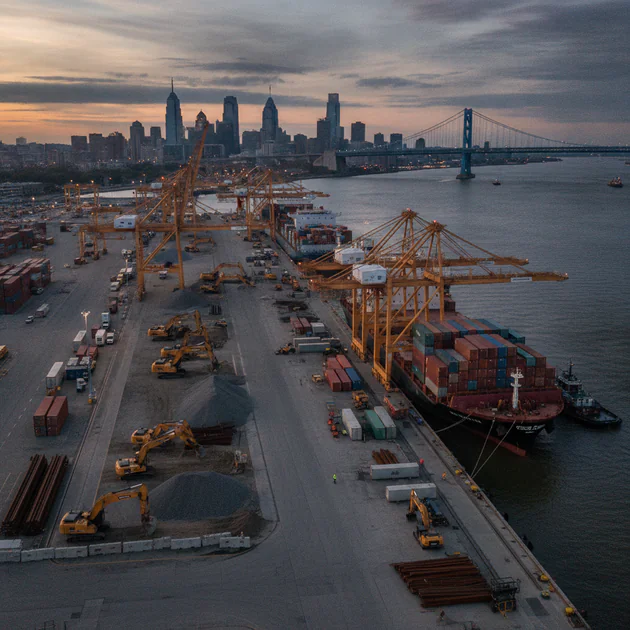
The Delaware River is humming with a new kind of energy. Beyond the steady rhythm of global commerce, a wave of construction and innovation is reshaping the Philadelphia waterfront. This transformation is driven by PhilaPort, The Port of Philadelphia, which is currently undertaking one of the most ambitious infrastructure investment programs in its 300-year history. For construction and engineering professionals in the Philadelphia region, this represents a monumental career opportunity. The surge in development is creating a critical need for skilled talent, making Philadelphia port jobs a focal point for ambitious engineers looking to make a lasting impact.
As the region’s leading connector of talent and opportunity in the trade and construction sectors, Philadelphia Trade Experts is on the front lines of this expansion. We see firsthand the unprecedented demand for civil engineers, structural specialists, and project managers who can navigate the complexities of large-scale maritime projects. This isn’t just about building bigger terminals; it’s about engineering the future of the region’s supply chain, strengthening its economic backbone, and creating legacy infrastructure that will serve generations to come.
This comprehensive guide will delve into the specifics of PhilaPort’s expansion, outline the most in-demand engineering roles, and provide actionable insights for professionals ready to seize these career-defining opportunities. Whether you’re a seasoned project manager or a specialized geotechnical engineer, understanding the scope of these projects is the first step toward building your future at the heart of Philadelphia’s commercial gateway.
Table of Contents
- The Driving Force: Understanding PhilaPort’s Strategic Expansion
- The New Frontier: In-Demand Engineering Roles in Philadelphia Maritime Infrastructure Construction
- Why PhilaPort Engineering Careers Offer a Competitive Edge
- Essential Skills and Qualifications for Landing Top Port Jobs
- How Philadelphia Trade Experts Connects You to Premier PhilaPort Career Opportunities
- Frequently Asked Questions About PhilaPort Engineering Jobs
The Driving Force: Understanding PhilaPort’s Strategic Expansion
To fully grasp the scale of the career opportunities available, it’s crucial to understand the “why” behind PhilaPort’s multi-billion-dollar investment. This isn’t a routine upgrade; it’s a strategic overhaul designed to catapult Philadelphia into the top tier of U.S. East Coast ports. The primary driver is the need to accommodate the new generation of “Post-Panamax” vessels—massive container ships that can carry more than twice the cargo of their predecessors. For years, the port’s capacity and the Delaware River’s depth were limiting factors. That is rapidly changing.
The cornerstone of this initiative is the state’s Port Development Plan, a comprehensive strategy backed by significant public and private investment. The plan focuses on several key areas of maritime infrastructure development:
- Channel Deepening: The recently completed project to deepen the Delaware River’s main shipping channel to 45 feet was a game-changer. This massive undertaking allows larger, heavier ships to call on Philadelphia, directly increasing cargo volume and the need for infrastructure to handle it.
- Terminal Modernization and Expansion: Major terminals, including the Packer Avenue Marine Terminal (PAMT), are undergoing significant redevelopment. This includes strengthening and rebuilding berths to support new super-sized cranes, expanding container storage yards, and improving gate complexes to streamline truck traffic.
- Acquisition of New Equipment: PhilaPort has invested heavily in state-of-the-art Ship-to-Shore (STS) cranes. Installing and commissioning these behemoths is a major engineering feat in itself, requiring reinforced foundations, new power infrastructure, and sophisticated logistical planning.
- Warehouse and Logistics Development: To support the increased cargo flow, there is a parallel boom in the construction of modern warehousing, cold storage facilities, and logistics centers in and around the port complex. These projects require engineers skilled in industrial construction and site development.
The numbers speak for themselves. Since the start of this investment period, PhilaPort has seen record-breaking, double-digit growth in container volumes, making it one of the fastest-growing ports in the nation. This growth directly translates into a sustained need for engineering expertise. These are not short-term projects but a long-term vision for economic vitality. For more details on the official strategy, you can review the PhilaPort Development Plan, which outlines the full scope of this transformative effort.
This strategic expansion creates a ripple effect. Every new crane requires a stronger wharf. Every additional container requires more yard space and more efficient roadways. Every new ship calling on the port demands deeper berths and more sophisticated logistics. At every step of this chain, construction engineers are the critical link, turning billion-dollar plans into tangible, operational assets. The demand for qualified professionals to manage these Philadelphia port projects is not just high; it’s foundational to the port’s success.
The New Frontier: In-Demand Engineering Roles in Philadelphia Maritime Infrastructure Construction
The sheer diversity of projects underway at PhilaPort means that opportunities exist across a wide spectrum of engineering disciplines. This is the realm of heavy civil engineering, where professionals work at the intersection of land and sea, tackling unique challenges that demand both technical mastery and creative problem-solving. These are some of the most critical PhilaPort engineering careers currently in high demand:
- Civil & Marine Engineers: These professionals are the architects of the port’s core infrastructure. Their responsibilities include designing and overseeing the construction of wharves, berths, and quay walls capable of handling immense loads from cranes and vessels. They are also integral to dredging operations, channel design, and the development of the entire port layout, ensuring efficient flow of traffic both on water and on land.
- Structural Engineers: With new, heavier cranes and denser cargo stacking, structural integrity is paramount. Structural engineers are needed to design the massive crane rail foundations, analyze the capacity of existing structures, and engineer new buildings like maintenance facilities and multi-story warehouses. Their work ensures every component can withstand the extreme forces and harsh marine environment.
- Geotechnical Engineers: The soft, alluvial soils of the Delaware River waterfront present significant challenges. Geotechnical engineers are essential for analyzing soil conditions, designing deep foundation systems (like piles and caissons), and implementing ground improvement techniques to support the immense weight of the port’s infrastructure. Their expertise prevents settlement and ensures the long-term stability of everything from container yards to towering cranes.
- Construction Project Managers: orchestrating these multifaceted projects requires exceptional leadership. Construction managers are the conductors of the symphony, responsible for managing budgets, adhering to tight schedules, ensuring stringent safety protocols, and coordinating between dozens of stakeholders, including port authorities, contractors, government agencies, and labor unions. These construction management roles are some of the most sought-after port expansion jobs.
- Environmental Engineers: Modern port development goes hand-in-hand with environmental stewardship. Environmental engineers play a crucial role in ensuring all construction activities comply with local, state, and federal regulations. They manage issues like stormwater runoff, disposal of dredged materials, habitat protection, and the implementation of sustainable building practices to minimize the port’s ecological footprint.
- Electrical and Mechanical Engineers: Powering a modern port is a complex task. Electrical engineers design the high-voltage systems for the new electric cranes, terminal lighting, and refrigerated container (“reefer”) plugs. Mechanical engineers work on HVAC systems for new buildings, fire suppression systems, and the complex machinery that keeps the port running.
For each of these roles, the work is far from standard. Engineers at PhilaPort are not just executing blueprints; they are solving real-time problems in a dynamic, 24/7 operational environment. This makes the work both challenging and incredibly rewarding.
Why PhilaPort Engineering Careers Offer a Competitive Edge
Pursuing a career in Philadelphia maritime infrastructure construction offers more than just a steady paycheck; it provides a unique professional trajectory that is difficult to replicate in other sectors of the construction industry. The complexity, scale, and long-term impact of these projects create a compelling value proposition for ambitious engineers.
First and foremost is the opportunity to work on legacy projects. The infrastructure being built today will define Philadelphia’s economic landscape for the next 50 to 100 years. Being able to point to a massive marine terminal or a critical bridge and say, “I helped build that,” offers a profound sense of professional accomplishment. These are highly visible projects that become permanent fixtures of the regional identity.

Second, the technical challenges are unparalleled. Maritime construction involves a constant battle with the elements—water, weather, and corrosion. Engineers must specify advanced materials like marine-grade concrete and specialized steel coatings. They utilize cutting-edge technology, from 3D modeling and GPS-guided construction equipment to sophisticated hydrographic surveying tools. This environment fosters continuous learning and pushes professionals to remain at the forefront of their field, developing a highly specialized and valuable skill set.
Furthermore, the career stability offered by these port jobs is a significant advantage. The Port Development Plan is a multi-decade vision. The work happening now is just one phase of a long-term modernization effort. This provides a level of job security and a clear path for career progression that is often absent in more cyclical sectors of the construction market. An engineer starting on a wharf reconstruction project today could be managing the development of an entirely new terminal in ten years.
Finally, the economic impact is a powerful motivator. Every project completed at PhilaPort directly supports thousands of jobs across the region and strengthens the supply chain for countless businesses. Engineers working on these projects are not just building structures; they are building economic opportunity. This direct link between one’s daily work and the prosperity of the community is a unique and deeply satisfying aspect of a career in port development.
Essential Skills and Qualifications for Landing Top Port Jobs
The competition for premier PhilaPort career opportunities is strong. To stand out, candidates need a blend of robust technical expertise and well-honed soft skills. While a Bachelor’s degree in Civil Engineering or a related field and a Professional Engineer (PE) license are often foundational requirements, prime contractors are looking for more specific qualifications.
Key Technical Skills:
- Heavy Civil & Marine Construction Experience: Demonstrable experience with projects like bridge construction, deep foundations, earthworks, and, ideally, marine structures like piers, wharves, or bulkheads.
- Software Proficiency: Advanced skills in industry-standard software are non-negotiable. This includes AutoCAD, Civil 3D for design, Primavera P6 or Microsoft Project for scheduling, and increasingly, Building Information Modeling (BIM) platforms for coordination.
- Knowledge of Materials Science: A deep understanding of how materials like concrete and steel perform in harsh, saline environments is critical. Experience with corrosion protection methods and advanced composite materials is highly valued.
- Regulatory Familiarity: Experience navigating the complex regulatory landscape is a major plus. This includes knowledge of standards set by the U.S. Army Corps of Engineers (USACE), the Environmental Protection Agency (EPA), and OSHA, particularly regulations pertaining to marine construction.
Essential Soft Skills:
- Complex Problem-Solving: Port projects rarely go exactly as planned. The ability to think critically, adapt to unforeseen site conditions, and develop innovative solutions on the fly is essential.
- Stakeholder Management: Engineers must effectively communicate with a diverse group of stakeholders, from port officials and government inspectors to union foremen and equipment suppliers. The ability to build consensus and manage relationships is key.
- Leadership and Teamwork: Whether leading a team of junior engineers or collaborating with other disciplines, the ability to work effectively as part of a high-performing team is crucial for success on these large-scale projects.
- Unwavering Commitment to Safety: A “safety-first” mindset is the most important trait. Heavy civil and marine construction sites are inherently hazardous, and a proven track record of prioritizing and enforcing safety protocols is a prerequisite.
For professionals looking to bolster their qualifications, pursuing certifications like the Project Management Professional (PMP) or specialized credentials from organizations like the American Society of Civil Engineers (ASCE) can provide a significant competitive advantage.
How Philadelphia Trade Experts Connects You to Premier PhilaPort Career Opportunities
Navigating the job market for these specialized port jobs can be challenging. Many of the best opportunities are not advertised on public job boards. They are filled through established relationships and industry networks. This is where Philadelphia Trade Experts provides an unparalleled advantage for engineering professionals.
As a trusted partner to the region’s leading heavy civil contractors and engineering design firms, we have a real-time understanding of the talent needs for the PhilaPort expansion. We are not just recruiters; we are industry insiders. Our deep market knowledge allows us to look beyond a resume and understand the nuanced skills and experience that will make a candidate successful in the unique environment of maritime construction.
Our process is built on partnership. We work closely with you to understand your career goals, your technical strengths, and the types of projects that excite you. We then leverage our exclusive relationships to connect you with decision-makers on projects that align perfectly with your aspirations. We provide insight into company culture, project specifics, and what hiring managers are truly looking for, giving you an inside track to land the most desirable PhilaPort engineering careers.
Don’t let your career be just another application in a stack. Partner with a team that understands the landscape and is invested in your success. Learn more about our specialized construction staffing services and see how we can help you build your future. For a broader view of the market, you can also read our analysis of the Philadelphia construction market.
Frequently Asked Questions About Engineering Port Jobs
What types of engineers are most needed for the PhilaPort expansion?
While many disciplines are involved, the highest demand is for Civil Engineers with experience in heavy civil or marine projects, Structural Engineers for designing crane foundations and buildings, Geotechnical Engineers for foundation and soil analysis, and experienced Construction Project Managers to oversee the complex logistics, schedules, and budgets of these large-scale infrastructure projects.
Are these long-term or short-term port jobs?
These are predominantly long-term career opportunities. The PhilaPort Development Plan is a multi-year, multi-phase initiative. The projects currently underway are part of a larger strategic vision that will continue to create a sustained demand for engineering and construction professionals for the next decade and beyond. This provides excellent career stability and opportunities for growth.
What is the salary potential for engineering roles at PhilaPort?
Salaries for engineering roles related to the PhilaPort expansion are highly competitive and commensurate with the specialized skills required. They often exceed averages for general construction due to the complexity and critical nature of the work. Factors influencing salary include years of experience, professional licensure (like a PE), specific expertise in marine construction, and the level of project management responsibility.
How can I make my resume stand out for these competitive positions?
To stand out, highlight any specific experience with heavy civil infrastructure. Quantify your accomplishments whenever possible (e.g., “managed a $20M pier reconstruction project,” or “designed foundations for 100-ton cranes”). Emphasize your proficiency with relevant software (AutoCAD Civil 3D, Primavera P6). Most importantly, showcase your understanding of the unique challenges of working in a marine environment. Partnering with a specialized recruiter like Philadelphia Trade Experts can also ensure your resume gets directly in front of the right hiring managers.
What are the biggest challenges in maritime construction projects?
The biggest challenges often revolve around the dynamic environment. Engineers must contend with tides, currents, and weather, which can impact schedules and safety. Working over or near water requires specialized equipment and stringent safety protocols. Furthermore, the corrosive marine environment demands careful material selection and design to ensure the long-term durability of the infrastructure.
Conclusion: Build Your Legacy at the Port of Philadelphia
The ongoing expansion at PhilaPort is more than just a construction boom; it’s a historic moment for the Philadelphia region and a golden opportunity for the engineering community. The demand for skilled, innovative, and dedicated professionals to execute this vision has never been higher. These are not just jobs; they are chances to build a lasting legacy, solve complex challenges, and play a direct role in shaping the future of global commerce on the Delaware River.
For engineers seeking to elevate their careers, the path forward is clear. The complex, large-scale, and impactful nature of these port jobs offers a unique arena to apply and grow your skills. From designing state-of-the-art terminals to managing multi-million-dollar infrastructure projects, the opportunities for professional growth and satisfaction are immense.
Ready to build the future of Philadelphia’s maritime gateway? The time to act is now. Connect with Philadelphia Trade Experts today to explore exclusive PhilaPort engineering careers and advance your career with these monumental infrastructure projects.
Leave a Reply