
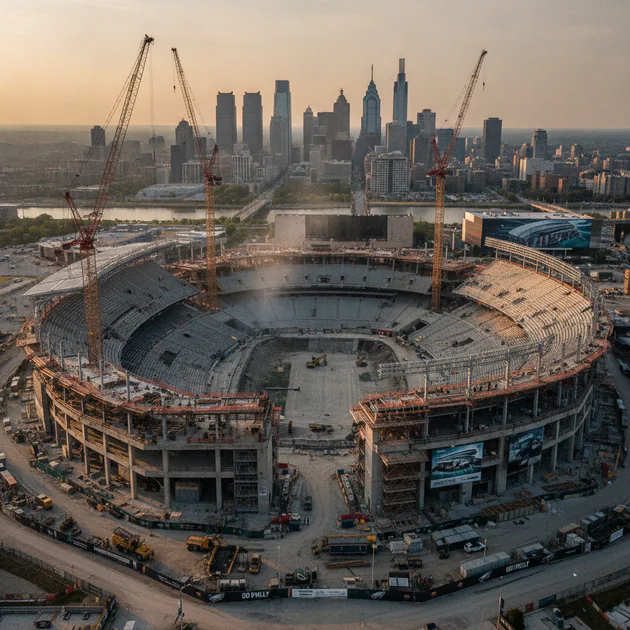
The unmistakable sounds of progress—the roar of heavy machinery, the framework of cranes against the skyline, and the steady hum of development—are echoing louder than ever across Philadelphia. Our city is on the brink of a monumental transformation, a period of intense growth and revitalization. This surge in activity is no coincidence; it’s the direct result of a once-in-a-generation opportunity. The impending arrival of two global mega-events, the 2026 FIFA World Cup and the MLB All-Star Game, is the primary catalyst for the Philly construction boom 2026, a period that promises to reshape our city’s infrastructure and redefine its future.
For construction industry professionals, this is a pivotal moment. The scale of this undertaking is immense, extending far beyond the stadiums and ballparks. It encompasses a comprehensive overhaul of our transportation networks, a significant expansion of our hospitality sector, and crucial upgrades to public spaces. This boom presents both unprecedented opportunities and significant challenges, from soaring workforce demand to complex logistical hurdles. Understanding the full scope of these projects is essential for navigating this dynamic landscape.
This comprehensive guide, brought to you by the experts at Philadelphia Trade Experts, will dissect the multifaceted nature of the Philly construction boom 2026. We will explore the specific projects driving the demand, analyze the economic forces at play, address the critical workforce and supply chain considerations, and look ahead to the lasting legacy these developments will leave on our city. Prepare to delve into the core of Philadelphia’s most significant urban development push in decades.
In This Article:
- The Twin Engines: FIFA World Cup and MLB All-Star Game
- Beyond the Stadiums: A City-Wide Infrastructure Overhaul
- The Economic Impact and Investment Fueling the Boom
- Navigating the Challenges: Workforce, Supply Chain, and Timelines
- The Lasting Legacy: Philadelphia Urban Development Post-2026
- Frequently Asked Questions About the 2026 Construction Surge
The Twin Engines: FIFA World Cup and MLB All-Star Game
In 2026, Philadelphia will achieve a rare distinction: hosting matches for the world’s biggest single-sport event, the FIFA World Cup, and celebrating America’s pastime with the MLB All-Star Game. This confluence of global sporting spectacles is the powerful engine driving the city’s current construction frenzy. Each event carries its own set of stringent requirements, mandating significant upgrades and new builds.
The FIFA World Cup Philadelphia construction requirements are particularly demanding. Lincoln Financial Field, while a world-class NFL stadium, requires substantial modifications to meet FIFA’s exacting standards. This includes a complete conversion of the playing surface to natural grass, potential adjustments to field dimensions, and the expansion of media and hospitality suites to accommodate a global audience. Furthermore, Philadelphia has been selected to host multiple matches, including a crucial Round of 16 game, amplifying the need for flawless execution. Beyond the stadium itself, FIFA requires multiple top-tier training facilities for competing national teams, sparking renovations at university and professional sports complexes across the region.
Simultaneously, the MLB All-Star game infrastructure projects are centered on Citizens Bank Park and the surrounding South Philadelphia Sports Complex. While the ballpark is relatively modern, preparations for the Midsummer Classic involve enhancing fan experiences, upgrading concession and retail spaces, and ensuring the facility can handle the influx of media and corporate sponsors. The entire complex is being evaluated for improved traffic flow, parking, and pedestrian access to create a seamless experience for the tens of thousands of visitors.
The impact of these two events creates a powerful ripple effect. The need to house, transport, and entertain hundreds of thousands of international and domestic visitors means the construction focus must extend far beyond the stadium gates, touching nearly every aspect of the city’s built environment.
Beyond the Stadiums: A City-Wide Infrastructure Overhaul
The Philly construction boom 2026 is fundamentally a story about connectivity and capacity. Getting global visitors into the city and moving them around efficiently is paramount. This necessity is triggering some of the most significant Philadelphia infrastructure projects we’ve seen in a generation, creating a cascade of work for civil, commercial, and public works contractors.
Transportation is at the forefront of this overhaul. The gateway to the city, Philadelphia International Airport (PHL), is undergoing a multi-billion dollar improvement program. Projects are aimed at modernizing terminals, improving runway efficiency, and enhancing the overall passenger experience to create a world-class first impression. As a key partner in this development, you can learn more about these critical upgrades directly from the source on the PHL improvement program website.
On the ground, the circulatory system of the city, SEPTA, is receiving crucial investment. Key projects include:
- Broad Street Line Enhancements: Upgrades to stations along the primary transit artery connecting Center City to the Sports Complex are essential for moving massive crowds on game days.
- Regional Rail Modernization: Investments in signaling and station accessibility will improve reliability for visitors and daily commuters alike.
- Bus Fleet and Route Optimization: Ensuring efficient surface transit to key hospitality zones and event venues.
The hospitality sector is also experiencing a massive surge. To accommodate the influx of fans, teams, and media, Philadelphia is witnessing a boom in hotel construction and renovation. New high-rise hotels are changing the Center City skyline, while existing properties are undergoing extensive upgrades to expand capacity and modernize amenities. This creates a massive demand for skilled trades in everything from framing and drywall to electrical and high-end finishing.
The Economic Impact and Investment Fueling the Boom
The sheer scale of the Philly construction boom 2026 is backed by a powerful combination of public and private investment. This influx of capital is not just about preparing for a party; it’s a strategic investment in the city’s long-term economic health. Projections from various civic and economic groups forecast a staggering economic impact, creating a virtuous cycle of spending, job creation, and increased tax revenue.
The economic benefits can be broken down into several key areas:
- Direct Job Creation: The most immediate impact is the creation of thousands of high-paying construction jobs. From project managers and engineers to skilled laborers like electricians, plumbers, and ironworkers, the demand is surging across the board.
- Indirect Economic Activity: Every construction site is a mini-economy. The boom supports a vast network of suppliers, manufacturers, and logistics companies providing everything from raw steel and concrete to architectural glass and interior fittings.
- Induced Impact: Construction workers and other employees spend their wages in the local economy, supporting restaurants, retail stores, and other small businesses, further multiplying the economic benefit.
- Long-Term Tourism and Business Growth: The infrastructure left behind after 2026 will make Philadelphia a more attractive destination for future conventions, major events, and corporate relocations, ensuring a lasting return on investment.
This period of intense development is a testament to the confidence investors have in Philadelphia’s future. The official Philadelphia FIFA World Cup 2026 Host Committee website highlights the collaborative effort between city government and private enterprise to secure this bright economic future. This public-private partnership model is crucial for funding these large-scale Philadelphia infrastructure projects and ensuring they are completed on time and on budget.
Navigating the Challenges: Workforce, Supply Chain, and Timelines
While the opportunities presented by the Philly construction boom 2026 are immense, they are accompanied by a set of formidable challenges that the industry must proactively address. The most pressing of these is the skyrocketing construction workforce demand Philly is currently experiencing.
There is a critical need for skilled labor across all trades. The competition for qualified project managers, electricians, HVAC technicians, and general laborers is intense. This environment puts a premium on effective workforce management and strategic staffing. For companies looking to scale up, partnering with a trusted provider of skilled labor is no longer a luxury but a necessity for meeting project deadlines. At Philadelphia Trade Experts, we specialize in connecting projects with the vetted, reliable talent they need to succeed. Explore our skilled labor staffing solutions to see how we can help you build your team.
Beyond labor, supply chain logistics present another significant hurdle. The global demand for construction materials, coupled with inflationary pressures, requires sophisticated procurement strategies. Securing materials like structural steel, specialized electrical components, and even basic commodities like concrete requires long-term planning and strong supplier relationships. Delays in the supply chain can have a domino effect, pushing back timelines on projects with immovable 2026 deadlines.
Finally, navigating the regulatory landscape is a constant challenge. The permitting and inspection process in a major city can be complex. Successful firms will be those that have a deep understanding of local codes and a collaborative relationship with city agencies. Adherence to complex Philadelphia building codes is non-negotiable and requires expert oversight throughout the project lifecycle.
The Lasting Legacy: Philadelphia Urban Development Post-2026
The true measure of success for the Philly construction boom 2026 will not be the flawless execution of the events themselves, but the enduring benefits left for the city and its residents. This is more than just a temporary facelift; it’s a foundational investment in long-term Philadelphia urban development.
After the last fan has gone home, Philadelphians will be left with a significantly improved city. A more modern and efficient international airport will welcome travelers for decades to come. An upgraded public transit system will make daily commutes easier and more reliable. The thousands of new and renovated hotel rooms will bolster our tourism and convention industries, attracting new business and revenue to the city year after year.
Moreover, these mega-events are acting as catalyst projects, spurring development in adjacent areas. The revitalization around the Sports Complex and along key transit corridors will likely continue long after 2026, creating new residential, retail, and commercial opportunities. The global spotlight will enhance Philadelphia’s reputation on the world stage, cementing its status as a city capable of hosting premier international events and a dynamic place to live, work, and invest.
This legacy of progress—of a more connected, accessible, and modern city—is the ultimate prize. The hard work and investment of today are laying the groundwork for a more prosperous and vibrant Philadelphia for future generations.
Frequently Asked Questions About the 2026 Construction Surge
What are the biggest types of construction projects for 2026?
The largest projects fall into three main categories. First is stadium and venue renovation, including major upgrades to Lincoln Financial Field for FIFA standards and enhancements to Citizens Bank Park. Second is transportation infrastructure, focusing on modernizing Philadelphia International Airport (PHL) and upgrading key SEPTA lines and stations. Third is hospitality construction, which involves building several new hotels and renovating existing ones to drastically increase the city’s room capacity.
How is the city addressing the demand for skilled labor?
The city and private industry are tackling the construction workforce demand Philly faces through a multi-pronged approach. This includes partnerships with local trade unions and vocational schools to ramp up apprenticeship programs, targeted recruitment campaigns to attract skilled workers to the region, and an increased reliance on specialized staffing agencies like Philadelphia Trade Experts to provide project-based, on-demand skilled labor to contractors facing shortages.
Will these infrastructure improvements benefit residents after the events?
Absolutely. This is a core goal of the entire initiative. The legacy of the Philly construction boom 2026 will be a more modern and efficient city for its residents. Long-term benefits will include a world-class airport, a more reliable public transportation system, improved roadways, and an enhanced hospitality sector that will continue to drive economic growth and job creation long after 2026.
What is the estimated economic impact of the Philly construction boom 2026?
While exact figures are still being modeled, preliminary economic impact studies project a multi-billion dollar boost to the regional economy. This includes direct spending on construction labor and materials, indirect spending in the supply chain, and induced spending from the newly created jobs. The events themselves are projected to generate hundreds of millions in visitor spending, creating a massive return on the initial infrastructure investment.
Conclusion: Building Philadelphia’s Future
The Philly construction boom 2026 represents a historic convergence of opportunity, investment, and ambition. Driven by the dual engines of the FIFA World Cup and the MLB All-Star Game, our city is undergoing a period of transformative growth that will touch every corner of the construction industry. From massive public infrastructure projects to the intricate details of stadium renovations, the demand for skilled craftsmanship and expert project management has never been higher.
For professionals in the field, this is a time to build—not just structures, but careers and a lasting legacy for Philadelphia. Navigating the challenges of workforce demand and supply chain complexities will require strategic partnerships and a deep understanding of the local market. The coming years will be demanding, but the reward will be a stronger, more vibrant, and globally recognized city. The world is coming to Philadelphia in 2026, and the construction industry is leading the charge to ensure we are ready.
See how Philadelphia is preparing its infrastructure for the world stage in 2026.
Leave a Reply