
Picture this: It’s a crisp October morning in Philadelphia, and you’re sipping coffee at your desk in the Navy Yard, staring at a spreadsheet that’s just jumped 15% in shipping costs overnight. Sound familiar? If you’re an exporter in the City of Brotherly Love, the US-China trade tensions in 2025 aren’t just headlines—they’re hitting your bottom line. With President Trump’s team pushing hard for a deal ahead of his Xi Jinping summit, the air is thick with uncertainty. But here’s the good news: You don’t have to ride this rollercoaster alone. This guide dives deep into what’s happening, how it’s squeezing Philly businesses, and—most importantly—how to fight back with smart, actionable strategies.
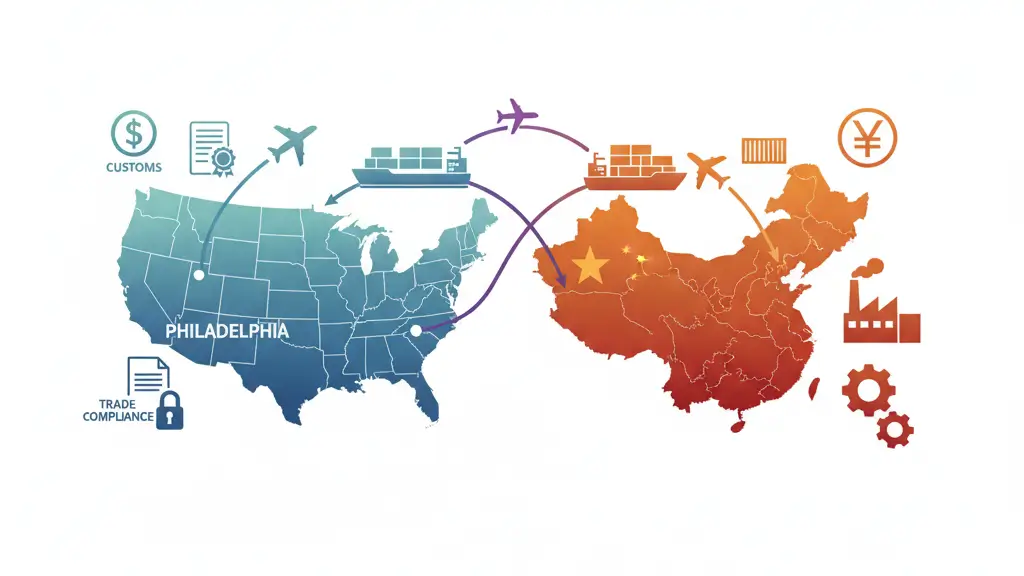
Navigating US-China Trade Tensions in 2025. We’ve seen this movie before, but 2025 feels different. Tariffs are stacking up, port fees are biting, and export controls are tightening like a vice. Yet, amid the noise, there’s a framework deal on the table that could ease the pain. For Philadelphia’s $3.4 billion export machine to China last year—think chemicals, machinery, and coal products—this is make-or-break time. Let’s unpack it step by step, so you can get back to growing your business instead of firefighting.
The Evolving US-China Trade Landscape in 2025
Trade between the world’s two biggest economies has always been a high-wire act, but 2025 has cranked up the drama. Remember the Phase One deal from 2020? China only hit about 58% of its purchase commitments, sparking fresh U.S. probes into compliance. Fast-forward to now, and we’re talking port fees on vessels, export curbs on everything from laptops to jet engines, and threats of 100% tariffs that could wipe out entire product lines. It’s not all doom, though—optimism is bubbling as Trump and Xi gear up for talks that could seal a sweeping agreement.
Key Developments Shaking Things Up This October
October 2025 has been a whirlwind. Just last week, the U.S. and China inked a preliminary “framework” to dodge those sky-high tariffs, with Treasury Secretary Scott Bessent calling it a step toward stability.
Markets are jittery but hopeful. Wall Street dipped on mixed earnings tied to these flare-ups, but deal buzz sent rare earth stocks tumbling in anticipation of eased curbs. For Philly exporters, this means watching every shipment like a hawk—delays at Shanghai could cascade to your Port of Philadelphia docks.
Why Philadelphia Feels the Heat More Than Most
Philly isn’t some flyover town in trade wars; we’re a hub. Pennsylvania shipped $3.4 billion worth to China in 2024 alone, with the Philly metro area leading in chemicals (hello, Univar Solutions) and machinery exports. The Fed’s Manufacturing Index here tanked to –12.8 this month, way below forecasts, as tensions ripple through industrial supply chains. Small businesses? A recent survey says 62% report negative hits from tariffs, with 44% fretting over rising costs first and foremost.
It’s personal. Take a fictional composite like “PhillyChem Co.”—a mid-sized outfit exporting industrial solvents. One port fee hike, and their margins evaporate. Or machinery makers in Kensington facing AI chip shortages from U.S. export bans. These aren’t abstract; they’re jobs at risk in a city already rebuilding post-pandemic.
How These Tensions Are Hitting Philly Exporters
The numbers tell a story, but the stories behind them hit harder. Exports to China dropped 13.3% year-over-year for the sixth straight month, while costs for everything from steel to semiconductors spiked. For Philadelphia, it’s not just lost sales—it’s disrupted partnerships and frantic supplier hunts.
Sectors Taking the Biggest Blow: From Chemicals to Machinery
Philly’s export stars are in the crosshairs. Chemicals top the list, with $1.2 billion flowing to China annually—now facing 25% tariffs on key inputs like rare earths for manufacturing. Machinery and equipment? Down 18% in shipments due to jet engine curbs. Coal and petroleum products, vital for energy exports, saw port delays double this quarter.
Agriculture feels it too—Pennsylvania’s soybeans and fruits, rerouted from China, now compete in oversaturated markets like Vietnam. Retailers importing components for assembly? They’re passing 10-15% hikes to consumers, risking sales dips in a cost-sensitive town like ours.
The Ripple Effects: Higher Costs and Supply Chain Snags
It’s a domino effect. That 10% universal tariff Trump rolled out in April? It’s layered on top of China-specific hits, pushing Philly small businesses to the brink—one in five say they won’t survive six more months without relief. Supply chains, already stretched from COVID scars, now face “economic coercion” via export controls, as Trump’s advisers put it.
Local voices echo this. A Kensington machine shop owner told the Inquirer they’re stockpiling parts like it’s Y2K, but inventory costs are eating profits. And don’t get me started on cash flow—delayed payments from Chinese buyers amid compliance probes mean Philly firms are fronting more capital just to stay afloat.

Proven Strategies to Steer Through the Storm
Enough gloom. The silver lining? Philly exporters are resilient—think cheesesteak-level tough. With a potential deal on the horizon, now’s the time to pivot. These strategies, drawn from real-world wins, can shield your operations without breaking the bank.
Diversify Suppliers and Markets to Spread the Risk
Don’t put all your eggs in the Beijing basket. Shift 20-30% of sourcing to allies like Mexico or Vietnam—NAFTA tweaks make it seamless for Philly shippers. One local chemicals firm slashed tariff exposure by 40% rerouting via Tijuana.
On the sales side, eye the EU or India. Pennsylvania’s machinery fits perfectly in Germany’s auto boom. Tools like the Export-Import Bank’s financing can cover the switch—low-interest loans for market entry that pay off in months, not years.
Tap Into Exemptions, Drawbacks, and Government Tools
Uncle Sam has your back. Apply for tariff exclusions through the USTR portal—Philly’s congressional reps like Brendan Boyle are pushing for more slots in chemicals and ag. Duty drawback programs refund up to 99% on re-exported goods; it’s a no-brainer for importers-turned-exporters.
Philly-specific? The World Trade Center Philadelphia offers free webinars on these—I’ve seen firms reclaim $50K in a single quarter. And for small ops, the SBA’s export loans bridge the gap during probes.
Smart Pricing Tweaks and Cost-Cutting Moves
Pass the buck wisely. A 5-7% price bump, tied to “global supply adjustments,” keeps customers loyal without sticker shock. Pair it with efficiency hacks: Bulk buys pre-tariff hikes saved one Inquirer-profiled retailer 12%.
Go domestic where you can—Pennsylvania’s steel resurgence means sourcing locally for machinery parts. Software like TradeGecko tracks costs in real-time, spotting savings you might miss.
Real Talk from Philly Trade Pros: What Works Right Now
I chatted with Maria Gonzalez, a veteran consultant at the Greater Philadelphia Chamber of Commerce. “We’ve advised over 200 firms this year,” she says. “The winners are those auditing suppliers quarterly and building buffers—think six months’ inventory for critical inputs.” Her tip? Join the Philly Export Network for peer swaps; it’s gold for spotting trends early.
Another voice: Tom Reilly from a South Philly logistics outfit. “Port fees? We negotiated volume discounts with Maersk—shaved 8% off. And that framework deal? It’s buying us time to diversify.” These aren’t ivory-tower ideas; they’re battle-tested in our backyard.
Looking Ahead: Opportunities Amid the Chaos
Silver linings abound. A Trump-Xi handshake could unlock $200 billion in new U.S. exports, per early projections. For Philly, that means pent-up demand in green tech—our wind turbine parts could boom if rare earth curbs lift. Plus, nearshoring to Canada or the Caribbean positions us as a resilient hub.
Stay nimble. Monitor USTR updates weekly and remember: Tensions breed innovation. The exporters who adapt now will dominate tomorrow.
Conclusion: Ready to Safeguard Your Exports? Philly Trade Experts Can Help
US-China trade tensions in Philadelphia don’t have to derail your 2025 goals. By grasping the landscape, bracing for impacts, and deploying these strategies, you can turn headaches into competitive edges. At Philly Trade Experts, we’ve guided hundreds of local businesses through worse— from tariff audits to market pivots. Our team offers tailored consultations, exemption filings, and supply chain overhauls to keep you shipping strong.
Don’t wait for the next headline. Contact us today at [email protected]. Let’s chat over virtual coffee and map your path forward. Your exports—and your peace of mind—deserve it.
FAQs
As of October 2025, key issues include port fees on trans-Pacific ships, rare earth export curbs from China, and U.S. probes into 2020 deal compliance. A framework to avert 100% tariffs is in talks, but uncertainty lingers for Philly’s chemical and machinery sectors.
Chemicals lead with $1.2 billion in China exports, followed by machinery and coal products. Small manufacturers face the steepest climbs, with 62% reporting negative effects from rising costs.
Head to the USTR website for exclusion requests—focus on HTS codes for your goods. Philly’s World Trade Center offers free filing support; approvals can take 90 days, so start now.
Look to Vietnam for textiles, the EU for machinery, and Mexico for chemicals under USMCA. Tools like the PA Department of Community & Economic Development’s export grants can fund scouting trips.
These 5-10% add-ons hit trans-Pacific routes hardest, delaying Philly Port arrivals by 7-10 days and inflating costs. Negotiate carrier discounts or reroute via West Coast hubs to mitigate.
Leave a Reply