
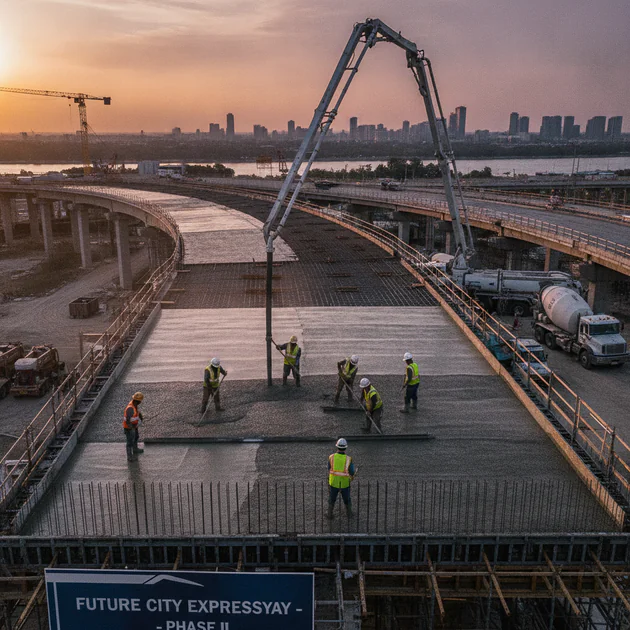
Walk through any major artery of Philadelphia today, and the signs are impossible to ignore: the silhouette of cranes against the skyline, the hum of heavy machinery, and the unmistakable sight of fresh concrete being poured. The City of Brotherly Love is in the midst of a transformation, a foundational shift driven by a wave of massive infrastructure and development projects. This isn’t just a fresh coat of paint; it’s a complete overhaul of the city’s bones. And at the very core of this renaissance is concrete. This unprecedented activity has created a seismic shift in the local labor market, resulting in a critical, urgent demand for skilled professionals to fill a wide array of Philly concrete jobs. For those with the right skills, this moment represents more than just a job; it’s a career-defining opportunity.
From the revitalization of the I-95 corridor to the expansion of our public transit systems and the rise of new commercial hubs, the scale of construction is staggering. General contractors and subcontractors across the five-county area are scrambling to build their teams, finding that the supply of qualified concrete specialists is not keeping pace with the explosive demand. This has created a candidate-driven market where experienced cement masons, form carpenters, and finishers are in the driver’s seat. The construction labor demand in PA has reached a fever pitch, with Philadelphia at its epicenter.
At Philadelphia Trade Experts, we are on the front lines of this hiring surge. We see the project pipelines and hear directly from hiring managers about their critical needs. This article serves as your comprehensive guide to understanding this dynamic market. We will delve into the specific projects fueling this demand, break down the most sought-after roles, outline the skills that will get you hired, and provide a realistic look at salary expectations and career pathways. Whether you are an experienced pro looking for your next challenge or a skilled tradesperson considering a specialization in concrete, now is the time to act.
The Driving Force: Unpacking Philadelphia’s Unprecedented Infrastructure Investment
The current boom in Philadelphia construction hiring isn’t a random occurrence; it’s the result of a perfect storm of federal funding, private investment, and long-overdue municipal projects. The primary catalyst is the Bipartisan Infrastructure Law, which has injected billions of dollars into Pennsylvania for improving highways, bridges, public transit, and water systems. Philadelphia, as the state’s economic and logistical hub, is a major beneficiary of these funds.
These large-scale civil projects are concrete-intensive by nature, requiring vast quantities of material and a highly skilled workforce to place, finish, and cure it. Let’s look at some of the key drivers:
- The I-95 “Revive” Project: This multi-billion dollar, multi-decade project to rebuild and widen the I-95 corridor is arguably the single largest driver of demand. Every new overpass, support column, retaining wall, and mile of roadway requires an army of concrete professionals. The complexity of the pours, which often happen under tight deadlines and traffic constraints, necessitates a top-tier skilled trades workforce in Philly.
- SEPTA and Transit Upgrades: Modernizing the city’s aging public transit infrastructure is another major focus. This includes station renovations, platform extensions to comply with ADA standards, and the construction of new maintenance facilities. These projects involve everything from pouring structural foundations to intricate architectural concrete work.
- The Schuylkill Yards and uCity Square Development: This massive, multi-phase development is reshaping West Philadelphia with new life sciences, residential, and commercial towers. The foundations for these high-rises are monumental engineering feats, requiring thousands of cubic yards of concrete and highly specialized teams for deep foundations, post-tension slabs, and vertical forming systems.
- Penn’s Landing Redevelopment: The project to “cap” a portion of I-95 and create a new 11.5-acre park will be a landmark achievement in civil engineering and urban design. The structural cap itself is a massive concrete structure that will support the park above, demanding incredible precision from form setters, rebar workers, and finishers.
These are just the headline projects. Countless other municipal works, commercial developments, and private projects are happening concurrently. This sustained, high-volume demand is why we’re seeing such a critical need for anyone with concrete experience. It’s not a short-term blip; it’s a long-term trend shaping the future of infrastructure projects in Philadelphia and the careers of those who build them.
In High Demand: The Most Sought-After Philly Concrete Jobs Right Now
While the demand is broad, contractors are urgently hiring concrete specialists in Philly for several key roles. Each position requires a distinct skill set, but all are integral to the success of a project. If your experience aligns with one of these roles, you are in an exceptionally strong position in today’s market. Here’s a breakdown of the most in-demand concrete worker jobs in Philadelphia:
- Concrete Finisher / Cement Mason:These are the artisans of the concrete world. After the concrete is poured, finishers are responsible for smoothing, leveling, and texturing the surface to exact specifications. Their work is the most visible part of the job. A great finisher can make the difference between a durable, functional surface and a costly failure.Key Responsibilities: Screeding (leveling), floating, troweling (by hand or with power trowels), edging, jointing, and applying curing compounds. They must understand how temperature and humidity affect curing times.
- Concrete Form Carpenter (Formsetter):Before a single drop of concrete is poured, the form carpenters build the mold that will give it shape. This is a role that blends carpentry with engineering. Precision is paramount; an error of a fraction of an inch in the formwork can compromise the structural integrity of the entire element.Key Responsibilities: Reading and interpreting blueprints, building and setting forms for foundations, walls, columns, and slabs, bracing and reinforcing forms to withstand the pressure of wet concrete, and safely stripping forms after the concrete has cured.
- Rebar Worker / Rodbuster:These are the professionals who build the steel skeleton inside the concrete, providing the tensile strength that makes modern structures possible. It’s physically demanding work that requires an eye for detail and a commitment to safety.Key Responsibilities: Placing, spacing, and securing steel rebar and mesh according to engineering drawings. They use a variety of hand tools to tie the rebar together, creating a rigid cage that will be encased in concrete.
- Concrete Laborer / Skilled Laborer:The backbone of any concrete crew. While often an entry-point, a good skilled laborer is invaluable. They are involved in every stage of the process, from site preparation to the final cleanup. This is where many great careers in concrete begin.Key Responsibilities: Site prep, assisting with form setting, guiding concrete chutes, operating vibrators to eliminate air pockets, shoveling and raking concrete, cleaning tools and the job site, and assisting other craftspeople as needed.
- Concrete Pump Operator:A highly skilled and often certified role. These operators control the massive pumps that deliver concrete from the truck to the pour site, often over long distances or to great heights. It’s a position of immense responsibility, requiring technical knowledge and a deep understanding of safety protocols.Key Responsibilities: Safely setting up and operating the concrete pump, maintaining the equipment, communicating with the crew and truck drivers, and ensuring a smooth, consistent flow of concrete.
The Skills That Pay the Bills: What Contractors are Looking for in Concrete Specialists
Having a job title on your resume is one thing; possessing the tangible skills that hiring managers are desperate for is another. In this competitive market for Philly concrete jobs, demonstrating a mastery of both hard and soft skills will set you apart and command a higher salary. Contractors need people who can hit the ground running and contribute to a safe, productive worksite from day one.
Essential Technical (Hard) Skills:
- Blueprint and Plan Reading: The ability to read, understand, and execute based on architectural and structural drawings is non-negotiable, especially for form carpenters and rebar workers.
- Tool and Equipment Proficiency: Mastery of the tools of the trade is expected. This includes everything from hand tools like trowels and edgers to heavy equipment like power screeds, vibrators, and walk-behind power trowels.
- Knowledge of Concrete Mixes: Understanding different mix designs, the role of admixtures (like plasticizers or accelerators), and slump requirements is a huge plus. This shows you’re not just a laborer, but a craftsman.
- Safety Certifications: An OSHA 10 certification is the bare minimum. An OSHA 30 is highly preferred, especially for lead or foreman roles. Additional certifications, like those from the American Concrete Institute (ACI), can significantly boost your profile.
- Layout and Measurement Skills: Precision is key. You must be proficient with tape measures, laser levels, and transits to ensure everything is square, level, and plumb.
Crucial Professional (Soft) Skills:
- Reliability and Punctuality: A concrete pour is a tightly scheduled, all-hands-on-deck event. A single missing person can delay the entire operation, costing thousands of dollars. Contractors value reliability above almost all else.
- Strong Work Ethic: Concrete work is physically demanding and often performed in challenging weather conditions. A positive attitude and the drive to see a tough job through are essential.
- Teamwork and Communication: No one pours concrete alone. You must be able to communicate clearly and effectively with your foreman, fellow crew members, and equipment operators using both verbal commands and hand signals.
- Problem-Solving Ability: Things can go wrong on a job site. A form might spring a leak, or a mix might be too wet. The ability to think on your feet and find a quick, safe solution is a highly valued trait.
The Financial Foundation: Salary Expectations and Career Growth in Philadelphia’s Concrete Sector
The intense construction labor demand in PA has a direct and positive impact on compensation. Wages for skilled concrete professionals in the Philadelphia region are strong and rising. While exact figures vary based on experience, union affiliation, and the specific contractor, we can provide a general overview of what you can expect.
It’s important to note that joining a local union (like the Operative Plasterers’ and Cement Masons’ or the Laborers’ District Council) typically offers higher base wages, comprehensive benefits packages (health, pension), and structured apprenticeship programs. Non-union or “open shop” contractors offer competitive wages but benefits can vary more widely.
- Entry-Level Concrete Laborer: Typically starts in the $18 – $25 per hour range, with opportunities for overtime. This role is the gateway to higher-paying positions.
- Experienced Concrete Finisher/Cement Mason: A skilled finisher with 5+ years of experience can expect to earn between $30 – $45+ per hour. Highly specialized finishers (e.g., decorative or high-tolerance floors) can command even more.
- Form Carpenter: Journeyman-level form carpenters often earn in a similar range to finishers, typically $32 – $48+ per hour, due to the high level of skill and precision required.
- Foreman/Lead: Taking on a leadership role comes with a significant pay increase. A concrete foreman can expect to earn $45 – $60+ per hour, or be on a salary ranging from $85,000 to over $120,000 per year, depending on the size of the projects they manage.
Beyond the hourly wage, the career path in concrete is clear and attainable. A dedicated individual can progress from a laborer to a finisher or formsetter, then to a foreman, and eventually to a superintendent overseeing multiple crews and entire projects. The current boom provides an accelerated path for this kind of growth. The skills you hone on today’s infrastructure projects in Philadelphia will build the foundation for a prosperous, long-term career in the skilled trades.
Frequently Asked Questions About Philly Concrete Jobs
What are the most urgent Philly concrete jobs contractors are hiring for?
Right now, the most critical needs are for experienced Concrete Finishers and Form Carpenters. These two roles require a high level of skill and precision, and there is a significant shortage of qualified individuals to meet the demands of the current infrastructure projects. Skilled laborers with a strong work ethic and a willingness to learn are also in very high demand as contractors look to build their talent pipeline from the ground up.
Do I need a specific certification to get a concrete job in Philadelphia?
While not always mandatory for entry-level positions, certifications will make you a much more attractive candidate. The OSHA 10-Hour Construction certification is considered a minimum safety requirement by most reputable contractors. An OSHA 30 is even better. For more specialized roles, an ACI (American Concrete Institute) Flatwork Finisher Certification can significantly increase your earning potential and job prospects. For operators, a NCCCO (National Commission for the Certification of Crane Operators) certification for concrete pumps may be required.
What is the typical salary range for concrete worker jobs in Philadelphia?
Salaries vary widely based on skill, experience, and union status. Entry-level laborers can expect to start around $18-$25/hour. Skilled, journeyman-level finishers and form carpenters typically earn between $30 and $48+ per hour. Leadership roles like a foreman can command salaries well over $100,000 annually. The current high demand is consistently pushing these wages upward.
How long is this construction boom expected to last in PA?
Experts and project timelines suggest this is not a short-term boom. Major projects like the I-95 Revive initiative have timelines stretching out for another decade or more. The Bipartisan Infrastructure Law has a five-year funding outlook, and institutional projects like those in University City are part of long-range master plans. This indicates a sustained period of high demand for the skilled trades workforce in Philly for the foreseeable future, making it an excellent time to build a career in the concrete industry.
Your Foundation for Success Starts Now
The message from the Philadelphia construction industry is loud and clear: if you have skills in concrete, you are needed. The confluence of historic infrastructure funding and booming private development has created a golden opportunity for trade professionals. This is a chance to not only secure stable, high-paying employment but also to leave a lasting mark on the city, building the roads, bridges, and buildings that will serve Philadelphians for generations to come.
Navigating this bustling market can be challenging, but the rewards are immense. By understanding the projects, honing the right skills, and presenting yourself professionally, you can capitalize on this unprecedented demand. The need for a robust skilled trades workforce in Philly has never been greater, and the value placed on your expertise is at an all-time high. Don’t wait for the boom to pass you by; the best time to build your future is now.
Concrete skills needed! Philadelphia contractors are urgently hiring for multiple concrete-related roles. If you’re ready to take the next step in your career and land one of the top Philly concrete jobs, contact Philadelphia Trade Experts today. Let us connect you with the best opportunities in the city.
Leave a Reply