
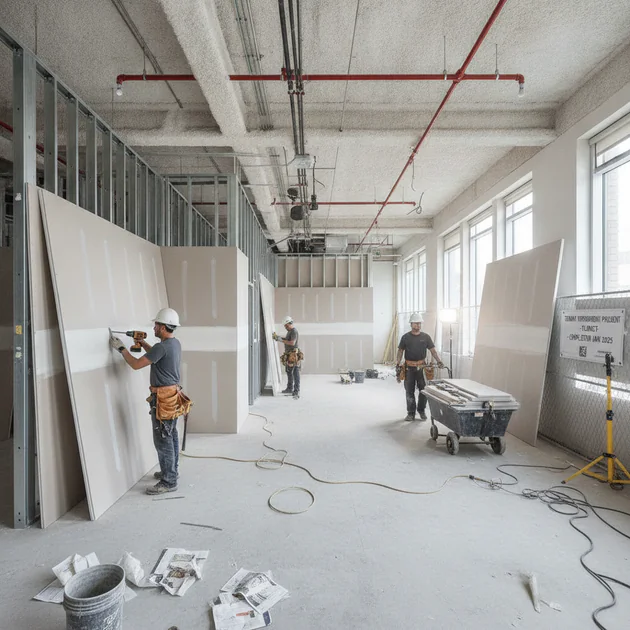
The Philadelphia commercial construction landscape is on the cusp of a significant transformation. As businesses adapt to new economic realities and workplace models, a powerful undercurrent is reshaping demand for skilled trades. The recently released Walls & Ceilings 2026 forecast has sent a clear signal to the industry: a massive wave of demand is building for Drywall TI (Tenant Improvement) projects. This isn’t just a minor uptick; it’s a fundamental shift driven by the evolving needs of commercial tenants, creating an unprecedented opportunity for contractors who are prepared to capitalize on it.
For general contractors, project managers, and subcontractors in the Greater Philadelphia area, this forecast is more than just data—it’s a strategic roadmap. The demand for flexible, modern, and purpose-built commercial spaces is fueling a renovation boom. From Center City high-rises to sprawling suburban office parks, property owners are investing heavily in tenant improvements to attract and retain high-value occupants. This surge places drywall, the backbone of interior construction, at the very center of the action. Understanding the nuances of this impending Drywall TI boom is critical for survival and success in the coming years.
At Philadelphia Trade Experts, we’ve analyzed the forecast and combined it with our deep, on-the-ground knowledge of the local market. This comprehensive guide will dissect the key drivers behind this trend, explore the specific challenges and opportunities within our region, and provide actionable strategies to help your firm navigate the complexities of material sourcing, labor management, and project execution. The future of commercial interiors is being framed right now, and it’s being framed with gypsum board.
Understanding the Surge: Why Tenant Improvement is Driving 2026 Drywall Demand
The projected boom in Drywall TI for 2026 isn’t occurring in a vacuum. It’s the direct result of several powerful, converging tenant improvement construction trends that are fundamentally altering the purpose and design of commercial spaces. The post-pandemic world has accelerated changes that were already underway, forcing landlords and businesses to rethink what an office, a retail store, or a lab needs to be.
One of the most significant drivers is the widespread adoption of hybrid work models. The traditional office, with its sea of cubicles and corner executive suites, is becoming obsolete. Companies now require flexible, collaborative spaces that can support a fluid workforce. This means tearing down old walls and building new ones. Drywall is the primary medium for this transformation, used to create smaller “huddle rooms,” private phone booths, open-plan collaborative zones, and reconfigured common areas. Every company adjusting its footprint is, in essence, a potential TI project.
Another key trend is the “flight to quality.” In a competitive leasing market, tenants are increasingly drawn to Class A buildings that offer modern amenities, superior infrastructure, and a premium experience. To compete, owners of Class B and even older Class A properties must invest in significant upgrades. These renovations almost always involve extensive interior demolition and reconstruction, making Drywall TI a core component of their capital improvement budgets. This is not just about a fresh coat of paint; it’s about complete spatial reinvention to meet modern standards.
Furthermore, the Philadelphia region is witnessing a powerful wave of adaptive reuse. As demand shifts, properties are being repurposed for new, higher-value uses. Consider these common scenarios:
- Office to Life Sciences: Philadelphia’s booming “eds and meds” sector requires specialized lab and research spaces. Converting a standard office floor into a laboratory is a complex process involving new walls, specialized fire-rated gypsum board (Type X), and intricate MEP/FP systems, all of which drive significant drywall demand.
- Retail to Mixed-Use: Underperforming big-box retail stores are being redeveloped into mixed-use facilities, combining smaller retail footprints with residential units, offices, or entertainment venues. This requires subdividing vast open spaces, a task perfectly suited for steel-stud framing and drywall.
- Industrial to Creative Office: Old warehouses in neighborhoods like Fishtown and Kensington are being transformed into trendy creative lofts and office spaces, a process that relies heavily on drywall to create functional, modern interiors while preserving the building’s historic character.
These large-scale trends—hybrid work, flight to quality, and adaptive reuse—are the engines powering the drywall material demand 2026 forecast. They represent a fundamental shift from new ground-up construction towards the renovation and reconfiguration of existing building stock, placing skilled drywall contractors at the heart of the industry’s future.
The 2026 Drywall TI Market in Philadelphia: A Localized Analysis
While national trends provide the big picture, success in construction is always local. The Philadelphia commercial construction outlook for 2026 is uniquely shaped by our region’s economic strengths, development patterns, and specific submarket dynamics. For contractors, understanding this local context is crucial for identifying the most promising opportunities for Drywall TI work.
Philadelphia’s robust life sciences sector, concentrated in University City and increasingly at the Navy Yard, is a primary engine of demand. The constant need for new lab space, R&D facilities, and biomanufacturing suites generates a steady stream of highly specialized TI projects. These jobs often require advanced drywall solutions, such as double-layered Type X gypsum board for fire separation, moisture and mold-resistant board for sensitive environments, and sound-dampening assemblies for privacy and focus. Contractors with expertise in these technical installations will be in high demand.
In Center City, the story is one of office reconfiguration. Major corporations are redesigning their headquarters to encourage collaboration and accommodate a hybrid workforce. This often involves demolishing private offices to create open, flexible floor plans interspersed with smaller, soundproof meeting rooms. This high volume of interior demolition and reconstruction will keep drywall crews busy as landlords and tenants race to modernize aging office towers along Market Street and JFK Boulevard.
The Philadelphia commercial construction outlook is also influenced by key market characteristics you must factor into your 2026 strategy:
- Historic Building Stock: Philadelphia has a vast inventory of historic buildings. TI projects in these structures present unique challenges, requiring careful integration of modern systems while preserving historic fabric. This often involves intricate drywall work to scribe around existing features or meet specific preservation guidelines.
- Strong Suburban Markets: The demand isn’t limited to the city proper. Suburban office hubs like King of Prussia, Conshohocken, and the Great Valley are also seeing significant TI activity as companies seek to create attractive workplaces closer to where their employees live.
- Regulatory Environment: Navigating the City of Philadelphia’s Department of Licenses and Inspections (L&I) is a critical skill. Contractors who understand the local codes for fire ratings, accessibility, and energy efficiency will have a competitive advantage in executing Drywall TI projects smoothly and without costly delays.
By focusing on these high-growth sectors and understanding the unique demands of the local market, Philadelphia-based contractors can position themselves to not just participate in the 2026 TI boom, but to lead it. The opportunities are here, but they demand a localized, expert approach. For more on local cost factors, check out our guide to understanding Philadelphia construction costs.
Material Matters: Navigating Gypsum Board Supply and Pricing
With demand for Drywall TI set to surge, the conversation inevitably turns to materials. The availability and cost of gypsum board will be a defining factor for project profitability and scheduling in 2026. After years of supply chain volatility, contractors must adopt a proactive and strategic approach to sourcing and procurement to avoid being caught off guard.
The forecast for drywall material demand 2026 is strong, which naturally raises concerns about construction material pricing. While manufacturing capacity for gypsum board is generally robust, localized shortages and transportation bottlenecks can still occur, especially during periods of peak demand. We anticipate that pricing will remain firm and potentially see modest increases leading into 2026. Therefore, building strong relationships with local suppliers and distributors is more important than ever. These partnerships can provide early warnings of price hikes and ensure priority access to materials when supply tightens.
To effectively manage commercial renovation costs, contractors should consider the following strategies:
- Early Procurement and Storage: For large, well-defined TI projects, locking in pricing and securing materials early can protect against future volatility. This may require arrangements for off-site storage, but the cost can often be justified by the budget certainty it provides.
- Value Engineering with Alternative Products: Be knowledgeable about the full range of gypsum products available. In some cases, a different type of board—such as a lightweight panel or a high-abuse board—might offer better long-term value or faster installation, offsetting a slightly higher upfront material cost.
- Accurate and Detailed Bidding: Your bids must account for potential material price fluctuations. Include clear escalation clauses or allowances in your contracts to protect your margins. Relying on outdated pricing data is a recipe for disaster in a dynamic market. For context on broader trends, authoritative sources like the U.S. Census Bureau’s Value of Construction Put in Place Survey can provide valuable macroeconomic data.
Beyond standard 1/2″ or 5/8″ drywall, the complexity of modern TI projects requires expertise in a variety of specialized gypsum board products. Being proficient with these materials is a key differentiator. Your crews should be trained on the proper handling and installation of:
- Type X and Type C: Essential for fire-rated assemblies in commercial corridors, stairwells, and area separation walls.
- Moisture and Mold-Resistant Board: Critical for bathrooms, kitchens, and lab environments.
- Acoustic Drywall: High-density or laminated panels designed to reduce sound transmission, a vital feature for creating private offices and quiet zones in open-plan spaces.
- Impact and Abuse-Resistant Board: Ideal for high-traffic areas like hallways, lobbies, and educational facilities to minimize maintenance and repair costs.
Mastering the material side of the Drywall TI equation—from sourcing and pricing to specialized product knowledge—is a non-negotiable for success in the 2026 market.
Strategic Planning for General Contractors: Capitalizing on the Drywall TI Boom
The 2026 forecast is a call to action. It’s not enough to simply acknowledge the coming demand for Drywall TI; the most successful general contractors and subcontractors will be those who develop a deliberate, strategic plan to capitalize on it. This means looking beyond the job site and focusing on the core business functions of labor, technology, and client management.
First and foremost is labor. A surge in demand will inevitably strain the existing pool of skilled drywall installers and finishers. The war for talent will be fierce. Proactive firms should be investing in workforce development now. This includes creating robust in-house training programs, partnering with local trade schools, and establishing apprenticeship opportunities to build a sustainable pipeline of skilled labor. Retaining your top performers through competitive wages, benefits, and a positive company culture will be just as critical as recruitment.
Second, technology adoption is no longer optional. The fast-paced nature of TI projects, which often occur in occupied buildings with compressed schedules, demands maximum efficiency. Implementing modern tools can provide a significant competitive edge:
- Building Information Modeling (BIM): Using BIM for interior framing and drywall layout can help identify clashes with MEP systems before construction begins, saving immense time and money on rework.
- Project Management Software: Cloud-based platforms that streamline communication, scheduling, and document control are essential for keeping complex TI jobs on track and all stakeholders informed.
- Laser Layout Tools: Digital layout tools can dramatically increase the speed and accuracy of framing, allowing crews to get walls up faster and more precisely than with traditional methods.
Finally, refining your project management and client communication processes is paramount. Tenant improvement work is uniquely client-facing. Managing expectations around commercial renovation costs, schedules, and the inevitable disruptions of construction is key to a successful project and a repeat client. Your project managers must be excellent communicators, capable of navigating the complex relationships between the landlord, tenant, architect, and your own crews. Delivering a quality finish on time and on budget is the ultimate goal. If your team consistently excels in this area, consider showcasing your work and expertise, as we do with our commercial drywall installation services.
By strategically addressing labor, technology, and project management, your firm can build the capacity and reputation needed to become a go-to contractor for the most desirable Drywall TI projects in the Philadelphia market.
Beyond the Board: Integrating Modern Wall & Ceiling Systems
While gypsum board is the star of the 2026 forecast, the most forward-thinking contractors understand that modern tenant improvements are about creating complete, high-performance interior environments. The walls and ceilings of today’s Class A spaces are sophisticated systems, not just simple planes of drywall. Expanding your firm’s expertise beyond basic board installation to include integrated and specialty systems can unlock higher-margin work and create a powerful competitive advantage.
Acoustic performance is a major focus in contemporary office design. The shift to open-plan layouts has made noise control a critical factor for employee comfort and productivity. This has driven huge demand for:
- Acoustical Ceiling Tiles (ACT): Offering a wide range of styles and noise reduction coefficients (NRC), ACT systems are a staple of commercial interiors. Expertise in grid installation and tile layout is a core competency.
- Specialty Acoustic Panels: These can be wall-mounted or hung as baffles or “clouds” from the ceiling. They offer targeted sound absorption and have become a key design element in modern workspaces.
- Sound Attenuation Blankets: Proper installation of insulation within wall cavities is crucial for achieving specified Sound Transmission Class (STC) ratings between rooms.
Aesthetics and functionality are also driving innovation. Clients are increasingly requesting advanced wall and ceiling solutions that integrate lighting, technology, and unique finishes. This can include linear lighting systems recessed flush with drywall, specialty wood or metal ceiling panels, and fabric-wrapped wall systems. Being able to install these complex, multi-trade systems positions your company as a high-value partner rather than just a drywall subcontractor.
Sustainability is another critical consideration. Many TI projects are now targeting green building certifications like LEED or WELL. This impacts material selection for your Drywall TI projects. You should be familiar with sourcing and documenting the use of gypsum board with high recycled content, low-VOC (volatile organic compound) paints and finishes, and materials with transparent sourcing through Environmental Product Declarations (EPDs). Showcasing this expertise can be a major selling point for environmentally conscious clients.
To stay on top of these evolving trends, continuous education is key. Following leading industry publications like Walls & Ceilings Magazine is an excellent way to learn about new products, techniques, and best practices. By embracing these advanced systems, you can elevate your offerings and capture a larger share of the sophisticated and profitable Drywall TI market in 2026 and beyond.
Frequently Asked Questions About the 2026 Drywall TI Forecast
What specific types of commercial spaces will see the most drywall TI work in 2026?
The 2026 forecast points heavily towards Class A office reconfigurations for hybrid work, life sciences lab conversions, and adaptive reuse projects turning older commercial buildings into modern mixed-use facilities. Healthcare facility upgrades and expansions, driven by Philadelphia’s strong medical sector, are also expected to be significant drivers of drywall TI demand.
How will labor shortages impact the 2026 drywall TI market in Philadelphia?
Labor shortages will be a critical challenge. The increased demand for skilled drywall installers and finishers could lead to project delays and higher labor costs. Proactive contractors should focus on workforce development, apprenticeships, and adopting labor-saving technologies to mitigate these impacts. Retaining top talent will be as important as recruiting new workers to maintain project profitability and schedules.
What are the biggest risks contractors face with the predicted surge in drywall TI?
The primary risks include material price volatility for gypsum board, potential supply chain disruptions, and the aforementioned skilled labor shortage. Additionally, contractors must be adept at managing the compressed timelines and complex logistics typical of TI projects. A major risk is overextending company resources, which can compromise quality, safety, and client relationships. Accurate bidding and robust project management will be essential for risk mitigation.
Are there new drywall technologies or products I should be aware of for TI projects?
Yes, several innovations are gaining traction and can provide a competitive edge. Look into high-performance gypsum boards with enhanced acoustic or impact-resistant properties, which are ideal for modern offices and high-traffic areas. Lightweight panels are also becoming more popular as they are easier and faster to install, potentially reducing labor costs. Finally, prefabricated wall panels and modular construction methods are emerging as a way to significantly speed up TI project schedules.
Conclusion: Your Strategy for the 2026 Drywall TI Market
The message from the Walls & Ceilings 2026 forecast is unambiguous: the Philadelphia commercial construction market is gearing up for a period of intense activity centered on tenant improvements. This represents a generational opportunity for drywall contractors and general contractors who specialize in interior work. The demand for skilled, efficient, and strategic execution of Drywall TI projects will be at an all-time high, driven by the fundamental reshaping of our commercial real estate landscape.
Success will not be accidental. It will belong to the firms that prepare now by securing their supply chains, investing in their workforce, adopting efficiency-boosting technologies, and deepening their expertise in the specialized systems that modern tenants demand. From understanding the nuances of the Philadelphia commercial construction outlook to mastering the complexities of construction material pricing, a proactive, informed approach is the only path forward.
The coming years will reward the prepared and punish the complacent. The time to build your strategy is now. Position your business to be a leader in this dynamic market, ready to meet the challenges and seize the immense opportunities that the 2026 Drywall TI boom will bring.
Ready to position your business for the 2026 boom? Explore the complete 2026 commercial drywall market forecast with Philadelphia Trade Experts and ensure you’re ahead of the curve.
Leave a Reply