
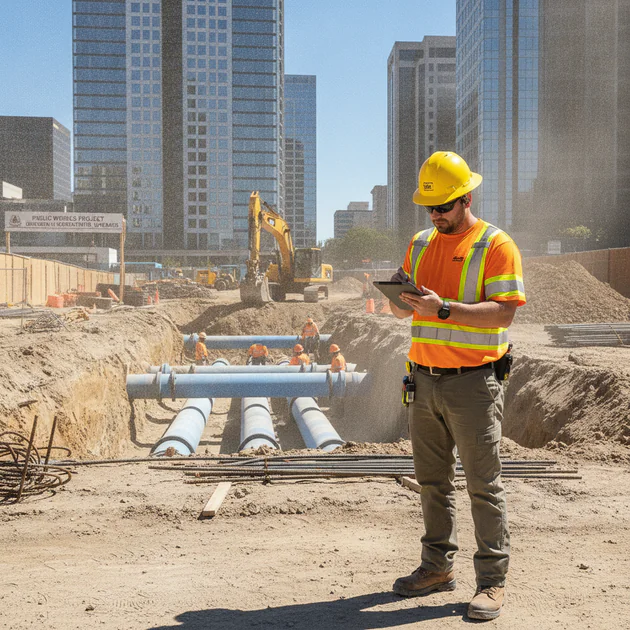
Philadelphia is a city in motion. From the monumental I-95 reconstruction to the revitalization of neighborhood parks and recreation centers through the Rebuild initiative, the hum of progress is everywhere. This isn’t just noise; it’s the sound of opportunity. For skilled construction professionals, this boom represents a unique chance to build a lasting legacy. The City of Philadelphia is actively seeking dedicated individuals to fill the crucial role of Construction Projects Technician, or **Const Tech**, to oversee these vital public works. This isn’t just another job; it’s a chance to be the on-the-ground guardian of our city’s quality, safety, and future. If you have a background in construction and a passion for building a better Philadelphia, this comprehensive guide is your blueprint for success.
Here at Philadelphia Trade Experts, we understand the local market inside and out. We see the trends, we know the key players, and we recognize a golden opportunity when it arises. The city’s push to hire a new wave of **Const Tech** professionals is exactly that. These roles are the backbone of every successful public project, ensuring that taxpayer dollars are spent wisely and that the infrastructure built today will serve Philadelphians for generations. This article will break down everything you need to know: what the role truly entails, why it’s a superior career move for many in the trades, the specific skills you need to stand out, and a step-by-step guide to navigating the application process.
Whether you’re a seasoned foreman looking for more stability, a recent civil engineering tech graduate eager to make an impact, or an experienced inspector wanting to serve the public, a career as a city **Const Tech** offers a pathway to professional fulfillment and financial security. Let’s dig into the details and pave your way toward one of the most stable and rewarding government construction jobs PA has to offer.
Table of Contents
- What is a Construction Projects Technician (Const Tech) in Public Works?
- The Critical Role of a Const Tech in Philadelphia’s Infrastructure Future
- Day-to-Day Responsibilities & Essential Skills for Success
- Why a Government Construction Job in PA is a Smart Career Move
- How to Qualify and Apply for Public Works Inspection Jobs in Philly
- Frequently Asked Questions about Const Tech Careers
- Build Your Future by Building Philadelphia’s
What is a Construction Projects Technician (Const Tech) in Public Works?
On the surface, the title “Construction Projects Technician” might sound like a generic field position. However, in the context of Philadelphia’s public works, this role is highly specialized and carries immense responsibility. A city **Const Tech** is the official representative of the city on a construction site. They are the frontline experts responsible for inspection, quality assurance, and contract compliance for a wide range of municipal projects, from street paving and water main replacements to the construction of new public buildings.
Unlike a private-sector inspector who answers to a developer or general contractor, a public works **Const Tech** answers to the citizens of Philadelphia. Their primary objective is not just to get the job done, but to ensure it’s done right, according to exacting standards, on budget, and in full compliance with all applicable building codes and regulations. They serve as the critical link between the engineers who design the projects and the contractors who build them, translating complex plans and specifications into tangible, high-quality results.
The core of the job revolves around meticulous observation and documentation. Key responsibilities often include:
- On-Site Inspection: Regularly visiting active construction sites to monitor progress, workmanship, and safety protocols.
- Materials Testing: Taking samples of materials like concrete, asphalt, and soil for laboratory analysis to ensure they meet project specifications.
- Blueprint and Specification Review: Ensuring all work performed by contractors aligns with the approved engineering drawings and contract documents.
- Documentation and Reporting: Maintaining detailed daily logs, preparing progress reports, and documenting any deviations or issues encountered on site.
- Payment Verification: Reviewing contractor pay requests to confirm that the work being billed for has been completed satisfactorily.
- Problem Resolution: Identifying potential construction issues early and working with contractors and city engineers to find practical solutions before they become costly problems.
- Public Interface: Occasionally acting as a point of contact for residents or business owners affected by a construction project, explaining timelines and addressing concerns professionally.
In essence, a **Const Tech** is a blend of a quality control manager, a compliance officer, and a technical expert. It’s a role that demands a deep understanding of construction project management principles and a commitment to public service and integrity.
The Critical Role of a Const Tech in Philadelphia’s Infrastructure Future
To truly appreciate the importance of the **Const Tech** role, you have to look at the bigger picture of what’s happening across Philadelphia. The city is in the midst of a once-in-a-generation investment in its core infrastructure. This isn’t just about filling potholes; it’s about fundamentally upgrading the systems that make the city work. A career in this field places you at the very heart of this transformation, making it one of the most impactful Philadelphia infrastructure careers available.
Consider the scale of the projects currently underway. The federal Bipartisan Infrastructure Law has unlocked billions for Pennsylvania, and Philadelphia is a primary beneficiary. This funding is fueling massive undertakings like the multi-year reconstruction of Interstate 95, a project critical to the entire eastern seaboard’s economy. City **Const Tech** professionals are on the front lines of this project, inspecting everything from the steel girders to the concrete pour of the new roadway, ensuring every phase meets stringent federal and state standards.
Beyond the highways, the Philadelphia Water Department is engaged in a massive, ongoing effort to upgrade an aging system of pipes, some of which are over a century old. A **Const Tech** specializing in utility work might spend their day inspecting a new water main installation in South Philly or overseeing the lining of a sewer line in the Northeast. This work is essential for providing safe drinking water and preventing disruptive and costly main breaks. It’s work that directly impacts the health and quality of life of every single resident.
Furthermore, the city’s Rebuild program is a signature initiative aimed at revitalizing parks, recreation centers, and libraries in neighborhoods across the city. These projects require a keen eye for detail, from ensuring playground equipment is installed safely to verifying that a new community center’s ADA-compliant ramps are built to code. The **Const Tech** assigned to these projects helps ensure that these community assets are built to last, providing safe and welcoming spaces for children and families. For a deeper dive into market trends, explore our analysis of the Philadelphia construction market outlook.
By joining the city’s team, you are not just an inspector; you are an active participant in the city’s renewal. Your daily reports, material tests, and quality checks are the building blocks of a safer, more efficient, and more equitable Philadelphia. This direct connection between your work and the public good is a powerful motivator and a source of immense professional pride.
Day-to-Day Responsibilities & Essential Skills for Success
While the big-picture impact is inspiring, it’s the day-to-day work that defines the job. A career as a **Const Tech** is dynamic and rarely dull, offering a healthy mix of fieldwork and office responsibilities. No two days are exactly alike, but a typical workflow often follows a structured process of observation, documentation, and communication.
A typical inspection process might look like this:
- Pre-Construction Review: Before work begins, you’ll meet with the project engineer and contractor to review the plans, specifications, and construction schedule. This is a critical step to align expectations.
- Site Arrival and Safety Check: Your first task on site is to assess safety conditions. You’ll check for proper signage, personal protective equipment (PPE) usage, and secure work zones.
- Work in Progress Inspection: You will meticulously observe the active construction. If a crew is pouring a concrete sidewalk, you’ll verify the formwork, rebar placement, and concrete mix design before the pour begins. You might even perform a slump test on the spot.
- Measurement and Verification: You will take precise measurements to ensure dimensions match the plans. This includes checking depths of excavations, thickness of asphalt layers, and grades for proper drainage.
- Documentation: Throughout the day, you’ll take detailed notes, photos, and videos. This evidence is crucial for your daily report and for resolving any future disputes.
- Communication with Contractor: You’ll communicate your findings to the contractor’s site supervisor. If you spot a minor issue, you’ll address it directly. For more significant problems, you’ll document it and escalate it to the city’s project manager.
- Reporting: Back in the office or vehicle, you’ll compile your notes into a formal daily report, which becomes part of the official project record. This report details the weather, crew size, work completed, materials used, and any issues observed.
To excel in this role, you need a balanced portfolio of technical and soft skills. The city isn’t just hiring a walking codebook; they’re hiring a professional problem-solver.
Essential Technical Skills:
- Blueprint and Specification Literacy: The ability to read and interpret complex civil, structural, and architectural plans is non-negotiable.
- Materials Knowledge: A strong working knowledge of construction materials, including soil, aggregates, concrete, and asphalt, and their associated testing procedures (e.g., compaction tests, concrete cylinder breaks).
- Construction Methods: Understanding the proper sequence and techniques for tasks like excavation, grading, utility installation, and paving.
- Regulatory Familiarity: Deep knowledge of relevant building codes and regulations, including PennDOT, City of Philadelphia, and industry standards like ACI (American Concrete Institute) and ASTM (American Society for Testing and Materials).
- Math and Measurement: Proficiency in construction math for calculating quantities, areas, volumes, and grades.
Critical Soft Skills:
- Unwavering Attention to Detail: The ability to spot small discrepancies that could lead to large problems is perhaps the most critical trait.
- Clear Communication: You must be able to articulate technical issues clearly and professionally to engineers, contractors, and sometimes the public.
- Conflict Resolution: You will inevitably encounter disagreements on site. The ability to remain calm, professional, and firm while working toward a solution is key.
- Integrity and Ethics: As a public servant, your integrity must be beyond reproach. You are the steward of public funds and trust.
- Independence and Time Management: You’ll often manage your own schedule, traveling between multiple job sites. Self-motivation and organization are essential.
Why a Government Construction Job in PA is a Smart Career Move
For many in the construction industry, the allure of private sector work is strong. However, a career in public service, specifically a **government construction jobs PA** role like a **Const Tech**, offers a unique and powerful set of advantages that are often overlooked. These benefits center on long-term stability, comprehensive support, and a healthy work-life balance.
The most significant advantage is job security. The private construction market can be a rollercoaster, heavily influenced by economic cycles, interest rates, and developer financing. Public works, on the other hand, are funded by tax revenues and long-term capital budgets, making them far more resilient to economic downturns. While private projects may halt, the need to maintain roads, bridges, and water systems is constant. This stability provides a level of peace of mind that is hard to find in the private sector.
Another major draw is the exceptional benefits package. City of Philadelphia employees are eligible for benefits that are increasingly rare in private industry. This typically includes:
- A Defined-Benefit Pension Plan: This is the gold standard of retirement plans, providing a guaranteed monthly income for life after you retire. It’s a benefit that has all but disappeared from the private sector.
- Comprehensive Health Insurance: Access to a variety of high-quality, affordable health, dental, and vision plans for you and your family.
- Generous Paid Time Off: City employees enjoy a substantial number of vacation days, sick days, and paid holidays, promoting a healthier work-life balance.
- Union Representation: Most **Const Tech** positions are represented by a union (like AFSCME District Council 33 or 47), which advocates for fair wages, safe working conditions, and job protections.
The work-life balance in a public sector role is often superior. While overtime can occur, the standard workweek is more predictable than in the private sector, where 60-hour weeks can be the norm during project crunches. This predictability allows you to plan your life, spend more time with family, and pursue hobbies outside of work. For more information on the benefits of public service, the U.S. Office of Personnel Management provides a great overview of federal-level benefits, many of which are mirrored at the municipal level.
Finally, there is a clear path for career advancement. You can progress from a Technician Trainee to a Technician 1, then Technician 2, and potentially move into supervisory roles like a Construction Projects Supervisor or even a Project Manager. The city invests in its employees with training and development opportunities, supporting your growth from a field inspector to a leader in public works.
How to Qualify and Apply for Public Works Inspection Jobs in Philly
Securing one of the coveted public works inspection jobs Philly has to offer requires a strategic approach. The city’s hiring process is structured and competitive, designed to identify the most qualified candidates. By understanding the process and preparing thoroughly, you can significantly increase your chances of success.
First, review the minimum qualifications. While these can vary slightly, a typical **Const Tech** job posting will require a combination of education and experience. This often looks like:
- An associate’s degree in Civil Engineering Technology, Construction Management, or a related field.
- OR a high school diploma/GED supplemented by several years of hands-on experience in construction inspection, materials testing, or as a construction foreman/superintendent.
The city often values practical experience highly. If you have years of experience reading blueprints, managing crews, and working with concrete and asphalt, don’t be discouraged if you lack a formal degree. Your field knowledge is incredibly valuable.
The next critical step is the Civil Service Exam. Most permanent city jobs require candidates to pass an exam to be placed on an eligible list. This isn’t a pass/fail test in the traditional sense; your score determines your rank on the list. The exam for a **Const Tech** will likely cover:
- Blueprint reading and interpretation.
- Construction terminology and methods.
- Basic construction math.
- Knowledge of materials and safety standards.
- Reading comprehension and following instructions.
Once you’ve passed the exam and are on the eligible list, you can apply for specific openings. This is where your resume becomes critical. Tailor your resume to the job description, using the same keywords. Instead of just listing duties, focus on accomplishments. For example:
- Instead of: “Inspected concrete pours.”
- Write: “Inspected and approved over 200 concrete pours, ensuring compliance with ACI standards and project specifications, and identifying and rejecting 5 non-compliant batches to prevent structural deficiencies.”
If you make it to the interview stage, be prepared for a mix of technical and situational questions. They will want to know not just what you know, but how you apply that knowledge in real-world scenarios. Be ready to discuss a time you had a conflict with a contractor, how you identified a major construction flaw, or how you would handle a specific inspection scenario. Preparing for these interviews can be daunting, and working with a professional can make all the difference. Our career coaching services at Philadelphia Trade Experts can help you hone your resume and ace your interview.
The entire process starts at the city’s official jobs portal. You can view all current openings, read detailed job specifications, and submit your application online at the City of Philadelphia’s official job website. Be sure to check frequently, as new **Const Tech** positions are posted regularly.
Frequently Asked Questions about Const Tech Careers
What is the typical salary for a Const Tech in Philadelphia?
Salaries for City of Philadelphia positions are publicly available and are determined by union contracts. A Construction Projects Technician’s salary typically starts around $55,000 to $60,000 per year for entry-level or trainee positions and can increase to over $80,000 or more for senior technicians with significant experience and certifications. This does not include the excellent benefits package, which adds substantial value.
Do I need a college degree to become a Construction Projects Technician?
Not necessarily. While an associate’s or bachelor’s degree in a relevant field like Civil Engineering Technology is highly beneficial and can substitute for some experience, it is not always a strict requirement. The city places a high value on direct, hands-on experience. Several years of proven experience in construction inspection, materials testing, or as a skilled trades supervisor can often meet the minimum qualifications.
What kind of projects will I work on as a city inspector?
The variety is one of the best parts of the job. You could be assigned to the Streets Department, working on road paving, curb and sidewalk installation, or bridge maintenance. You might work for the Water Department, inspecting new water and sewer main installations. Or you could be with Public Property, overseeing the construction or renovation of city buildings like libraries, police stations, and recreation centers. The scope is broad, offering a chance to gain diverse experience.
How does a city Const Tech role differ from a private building inspector?
The primary difference lies in allegiance and scope. A private inspector typically works for a developer or an inspection firm, focusing on compliance with building codes primarily for vertical construction (buildings). A city **Const Tech** works for the public and focuses on public works and infrastructure projects (horizontal construction). Their scope is broader, including contract compliance, materials quality, and adherence to detailed city specifications, all with the goal of protecting the public’s investment and safety.
Build Your Future by Building Philadelphia’s
The call for skilled construction professionals to join the City of Philadelphia’s ranks is more than just a hiring announcement; it’s an invitation to take part in the very fabric of our city’s future. A career as a **Const Tech** offers a rare combination of meaningful work, unparalleled job security, and a benefits package that provides a foundation for a prosperous life. You will be on the front lines, ensuring that every new road, every replaced water main, and every revitalized park is built to the highest standard of quality and safety.
This is your chance to trade the uncertainty of the private market for the stability of public service. It’s an opportunity to apply your hard-earned skills in a role where your attention to detail directly contributes to the well-being of your community. The path is clear, the need is urgent, and the rewards—both professional and personal—are immense.
Don’t just watch Philadelphia grow; be a reason for its success. Take the knowledge you’ve gained from this guide, polish your resume, and prepare to show the city what you can do. The next great phase of your career, and Philadelphia’s next great era of infrastructure, awaits.
Ready to build a better future? Apply for a City of Philadelphia Const Tech role today!
Leave a Reply