
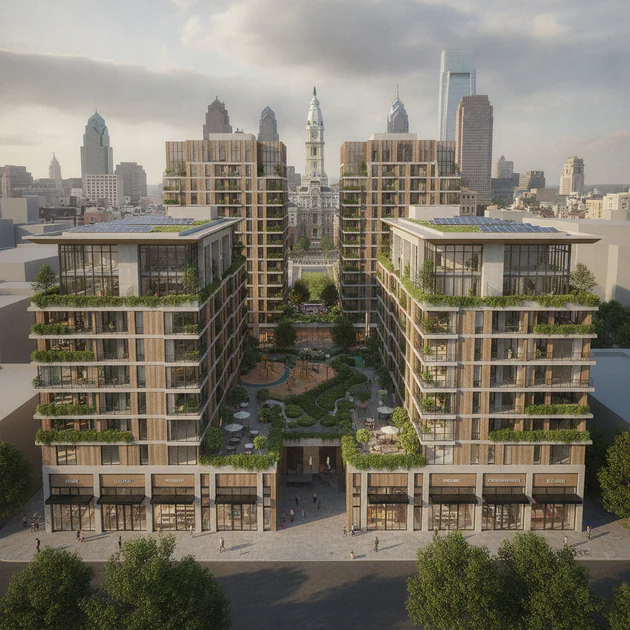
The Philadelphia skyline is undergoing a profound transformation. It’s not just about new high-rises reaching for the clouds; it’s a story of intelligent, integrated growth from the ground up. Across the city, from Fishtown to University City, a powerful wave of sustainable, mixed-use urban development is reshaping neighborhoods, creating vibrant communities where people can live, work, and play in the same city block. This boom is more than an architectural trend—it’s a fundamental shift in the Philadelphia construction market, and it’s placing unprecedented demands on every trade, especially the drywall industry. The need for specialized, high-performance, and sustainable materials has never been greater, making a deep understanding of the Philly mixed-use drywall landscape absolutely critical for contractors, developers, and suppliers aiming to succeed in this new era.
This paradigm shift is driven by a convergence of factors: a growing desire for walkable urban living, city-wide initiatives promoting density, and an urgent, non-negotiable demand for sustainability. Developers are no longer just building structures; they are engineering ecosystems. These complex projects, which blend residential, commercial, and retail spaces under one roof, require a sophisticated approach to building materials. For drywall contractors and suppliers, this means moving beyond standard ½-inch wallboard. The focus is now on a product’s acoustic performance, fire rating, moisture resistance, and its environmental footprint. Success in this evolving market hinges on navigating these new complexities with expertise and foresight.
This comprehensive guide, brought to you by the experts at Philadelphia Trade Experts, will serve as your essential resource for understanding the forces shaping the Philly mixed-use drywall sector. We will delve into the drivers behind this construction boom, explore the critical role of specialized and sustainable drywall products, tackle the unique logistical challenges of urban job sites, and examine the labor demands required to meet the high standards of today’s projects. Whether you are a general contractor, a developer, or a specialty subcontractor, this article will provide the actionable insights you need to thrive amidst Philadelphia’s sustainable urban expansion.
Table of Contents
- The Driving Force: Why Mixed-Use and Sustainability are Remaking Philadelphia
- The Evolving Role of Drywall in Sustainable Mixed-Use Projects
- Green Building Materials: The New Standard for Philly Mixed-Use Drywall
- Navigating the Complexities of Drywall Supply and Logistics in Philly
- Labor and Installation: Meeting the High Standards of Mixed-Use Construction Trends
- Frequently Asked Questions
The Driving Force: Why Mixed-Use and Sustainability are Remaking Philadelphia
To understand the seismic shifts in the drywall market, we must first look at the larger trends fueling sustainable urban expansion Philly. The city is experiencing a renaissance, driven by a new generation of residents and businesses who prioritize convenience, community, and environmental responsibility. This has led to the rise of the “15-minute city” concept, where daily necessities are all within a short walk or bike ride—a model that mixed-use developments are perfectly designed to support.
This isn’t happening by accident. Philadelphia’s city planning and zoning policies have actively encouraged this type of dense, transit-oriented development. Revisions to the zoning code have made it easier to get mixed-use projects approved, particularly along commercial corridors and near public transit hubs. According to reports from organizations like the Center City District, this has spurred billions of dollars in investment, transforming underutilized lots and aging industrial buildings into thriving, multi-functional community centers. These projects are not just buildings; they are catalysts for neighborhood revitalization, bringing new residents, jobs, and amenities to areas across the city.
At the heart of this movement is a powerful commitment to sustainability. Developers are increasingly seeking green building certifications like LEED (Leadership in Energy and Environmental Design) not just for the environmental benefits, but for the significant marketing and operational advantages. A LEED-certified building can command higher rents, attract environmentally-conscious tenants (both residential and commercial), and often results in lower long-term utility costs. This focus on sustainability permeates every decision on a job site, from energy-efficient HVAC systems to the very composition of the wallboard being installed. The demand is for materials that contribute to a healthier indoor environment, have a lower carbon footprint, and support a circular economy through recycled content and waste reduction.
The Evolving Role of Drywall in Sustainable Mixed-Use Projects
In the context of a complex mixed-use building, drywall sheds its identity as a simple commodity and becomes a high-performance building system. The unique challenge of these projects is the need to harmoniously blend vastly different environments. A quiet residential apartment may share a wall or floor-ceiling assembly with a bustling restaurant, a fitness center, or a retail store. This proximity of occupancies creates a critical need for specialized drywall solutions that can effectively manage sound, ensure fire safety, and withstand the rigors of different environments.
General contractors and architects now specify a diverse portfolio of drywall products within a single project, each chosen for a specific purpose. Understanding these applications is essential for any drywall professional working on the Philly mixed-use drywall scene. The days of a “one-size-fits-all” approach are long gone.
Here are some of the most critical types of performance drywall being specified in Philadelphia’s mixed-use projects today:
- Acoustic Drywall: Perhaps the most important type in mixed-use construction. Products like QuietRock® or specialized assemblies using resilient channels and sound-dampening insulation are non-negotiable. They are essential for achieving a high Sound Transmission Class (STC) rating between units, preventing noise from a ground-floor bar from disturbing a third-floor tenant. Excellent sound control is a primary selling point for luxury residential units.
- Fire-Resistant Drywall (Type X and Type C): Building codes for mixed-use structures are incredibly stringent. Fire-rated assemblies (e.g., 1-hour or 2-hour walls) are required to separate commercial spaces from residential floors, protect exit stairwells, and enclose elevator shafts. Type X and Type C drywall, which contain glass fibers and other additives to improve fire resistance, are the backbone of a building’s passive fire protection system.
- Mold and Moisture-Resistant Drywall: With a mix of residential bathrooms, commercial kitchens, and ground-floor spaces susceptible to moisture, specifying mold-resistant drywall (often called “green board” or “purple board”) is standard practice. These panels use a specialized paper and core formulation to inhibit mold growth, ensuring better indoor air quality and long-term durability.
- Impact- and Abuse-Resistant Drywall: High-traffic common areas like lobbies, corridors, fitness centers, and loading docks require a tougher solution. Abuse-resistant drywall features a denser core and a heavy-duty paper or fiberglass mesh face to withstand scuffs, dents, and punctures, reducing long-term maintenance costs for building owners.
The successful execution of a mixed-use project requires a deep understanding of how to properly install these varied systems. It demands meticulous attention to detail, from sealing every penetration in a fire-rated wall to ensuring the correct fastener patterns for acoustic assemblies. This level of complexity elevates the role of the drywall contractor from a simple installer to a critical partner in achieving the building’s performance goals.
Green Building Materials: The New Standard for Philly Mixed-Use Drywall
The push for sustainability in the Philadelphia construction market goes beyond just performance; it extends to the very DNA of the materials used. The term “green building materials” has evolved from a niche preference to a core requirement, and drywall manufacturers have responded with a host of innovative, environmentally friendly products.
One of the most significant developments is the use of synthetic gypsum. Traditional drywall is made from mined gypsum, but synthetic gypsum is a byproduct of the flue-gas desulfurization process used at coal-fired power plants. Using synthetic gypsum accomplishes two key environmental goals: it diverts millions of tons of material from landfills and it preserves natural gypsum resources. Many modern drywall panels, including high-performance variants, contain a high percentage of recycled content, a key factor in earning points toward LEED certification. Savvy contractors now highlight the recycled content of their materials in bids to appeal to sustainability-focused developers.
Indoor air quality (IAQ) is another paramount concern, especially in residential portions of mixed-use buildings. Traditional building materials can off-gas volatile organic compounds (VOCs), which can be harmful to occupants’ health. In response, the industry has embraced low-VOC and zero-VOC drywall, joint compounds, and primers. Products that are GREENGUARD Gold certified have become a go-to standard, as they are tested for over 10,000 chemicals and are proven to have negligible impact on indoor air quality. This isn’t just a “nice-to-have”; for many projects aiming for high-level green certifications, it’s a mandatory specification.
Furthermore, the industry is seeing a rise in transparency through tools like Environmental Product Declarations (EPDs) and Health Product Declarations (HPDs). An EPD is like a nutrition label for a building product, providing a comprehensive, third-party verified report on a product’s environmental impact throughout its life cycle. An HPD discloses a product’s material ingredients and any associated health hazards. Architects and sustainability consultants increasingly rely on these documents to make informed decisions and ensure the materials they specify align with the project’s overall green-building goals. For a drywall supplier, having access to and understanding these documents for the products you carry can be a significant competitive advantage.
Navigating the Complexities of Drywall Supply and Logistics in Philly
The theoretical benefits of high-performance, sustainable drywall mean little if you can’t get the material to the job site efficiently and on schedule. The reality of urban development Philadelphia presents a formidable set of logistical hurdles. Unlike a sprawling suburban project with ample laydown area, urban mixed-use sites are notoriously tight, often spanning curb-to-curb with zero room for on-site storage.
This environment makes a reliable and agile drywall supply Philadelphia partner more critical than ever. The entire supply chain must operate on a just-in-time (JIT) basis. This requires meticulous coordination between the supplier, the general contractor, and the drywall installation crew. Deliveries must be scheduled for specific, often narrow, time windows to avoid blocking traffic or interfering with other trades. A missed delivery window can cause a domino effect of delays, costing the project significant time and money.
Effective logistics involve more than just a truck driver. It requires:
- Specialized Equipment: Boom trucks are essential for delivering drywall directly to the specific floor where it will be installed, bypassing choked ground-level access points and minimizing on-site material handling.
- Strategic Warehousing: A local supplier with a well-stocked warehouse, like Philadelphia Trade Experts, can act as an off-site storage solution, holding materials until the very moment they are needed on site.
- Expert Coordination: The supplier’s dispatch team must be in constant communication with the site superintendent to adapt to the fluid nature of a construction schedule. A last-minute change requires a supplier who can pivot quickly.
- Waste Management: Sustainability extends to waste. A forward-thinking supplier can assist with programs for recycling drywall scraps, helping the project meet its waste diversion goals, which is another crucial component of LEED and other green building programs.
The sheer scale of these projects also puts immense pressure on the supply chain. A large mixed-use development can require hundreds of thousands, if not millions, of square feet of drywall. This necessitates a supplier with strong manufacturer relationships and the purchasing power to secure large quantities of both standard and specialty boards, preventing material shortages from derailing the project timeline. Learn more about our expert drywall supply and logistics services to see how we tackle these challenges head-on.
Labor and Installation: Meeting the High Standards of Mixed-Use Construction Trends
The final, and arguably most important, piece of the puzzle is the skilled labor required to install these advanced drywall systems. The latest mixed-use construction trends demand a level of precision and expertise far beyond that of a standard residential or commercial job. A single project might require crews to execute a flawless Level 5 finish in a luxury condo lobby, build a complex, multi-layered fire-rated shaft wall, and install a high-STC acoustic assembly—all within the same building footprint.
This convergence of commercial and residential standards requires a versatile and highly trained workforce. Crews must be proficient in:
- Reading Complex Blueprints: Mixed-use plans are dense, often detailing dozens of different wall types. The ability to correctly interpret these specifications is paramount to avoiding costly mistakes.
- Understanding Fire and Sound Assemblies: Proper installation is key to performance. A fire-rated wall is only as good as its weakest point. Crews must be experts in sealing penetrations, using the correct fasteners, and following the manufacturer’s specific instructions to the letter.
- Achieving High-Level Finishes: The residential components of these projects often demand a Level 5 finish—the highest quality available—which involves skim-coating the entire surface to eliminate any imperfections. This is a highly skilled and time-consuming process.
- Working Safely in a Crowded Environment: Urban job sites are congested with multiple trades working in close proximity. A professional crew prioritizes safety and coordination to maintain a productive and accident-free environment.
The demand for this level of skilled labor is high, and the supply can be tight. This is where a trusted partner with deep industry connections becomes invaluable. At Philadelphia Trade Experts, we pride ourselves on a legacy of quality craftsmanship. Our team at Philadelphia Trade Experts has decades of experience working on some of the city’s most complex and iconic mixed-use projects. We understand that delivering a quality product on time and on budget is not just about the materials—it’s about the people who install them.
Frequently Asked Questions about Philly Mixed-Use Drywall
What is the biggest challenge for drywall contractors in Philly’s mixed-use market?
The single biggest challenge is logistical coordination. The tight urban job sites with no storage space require perfect just-in-time delivery of a wide variety of drywall products. A delay in material delivery can halt progress for multiple trades. This is coupled with the complexity of installing many different high-performance wall systems (acoustic, fire-rated, etc.) within the same project, demanding a highly skilled and adaptable workforce.
How does sustainable drywall contribute to LEED points?
Sustainable drywall can contribute to LEED points in several key areas. Using panels with high recycled content (especially synthetic gypsum) earns points in the “Materials and Resources” category. Specifying low-VOC or zero-VOC drywall and finishing products contributes to the “Indoor Environmental Quality” category by improving air quality. Additionally, partnering with a local supplier who sources materials regionally and assists with construction waste recycling can also add to a project’s total LEED score. Check out this great resource from the BuildingGreen website for more info.
What type of drywall is best for soundproofing between apartments and retail?
There isn’t one single “best” drywall, but rather a best “assembly.” For optimal soundproofing, a multi-component system is required. This typically involves using a specialized acoustic drywall product, like 5/8″ QuietRock, which has a layer of sound-dampening polymer. This panel is then installed on resilient channels or sound isolation clips, which decouple the drywall from the framing. The stud cavity should be filled with dense sound-dampening insulation. This combination creates a high-STC wall assembly that effectively blocks both airborne and impact noise.
Why is a reliable local supplier so critical for these projects?
A reliable local supplier is the logistical backbone of a successful urban mixed-use project. Their proximity allows for true just-in-time delivery, which is essential on space-constrained sites. They have deep knowledge of local traffic patterns, street closure requirements, and job site access challenges. Furthermore, a local supplier like Philadelphia Trade Experts has established relationships with regional contractors and understands the specific demands and standards of the Philadelphia construction market, acting as a true partner rather than just a vendor.
Conclusion: The Future of Philadelphia Construction is Integrated and Sustainable
The rise of sustainable mixed-use developments is not a passing phase; it is the definitive future of urban construction in Philadelphia. This movement is fundamentally reshaping the requirements for building materials and installation expertise, placing the drywall industry at the center of a complex and demanding new reality. From the acoustic performance of a residential demising wall to the recycled content of the board itself, every detail matters more than ever before.
Success in this dynamic environment requires more than just access to materials. It demands a deep understanding of building science, a commitment to sustainability, mastery of urban logistics, and a highly skilled workforce. The challenges are significant, but for those who can adapt and excel, the opportunities are immense. The future of the Philly mixed-use drywall market belongs to the experts who can deliver performance, sustainability, and reliability on every project.
Ready to build the future of Philadelphia? See how mixed-use developments are shaping the future of the city’s construction and drywall industries and how Philadelphia Trade Experts can be your trusted partner in navigating this exciting landscape. Contact our team of specialists today.
Leave a Reply