
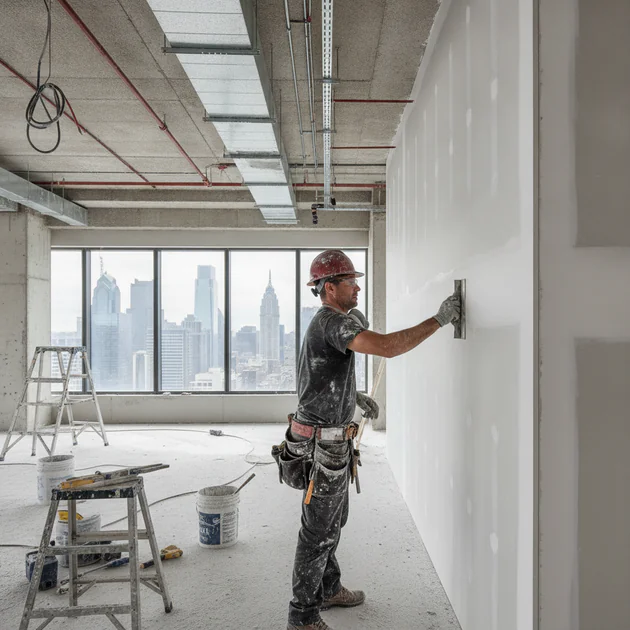
The Philadelphia skyline is a testament to growth, a dynamic canvas of steel and glass constantly being reshaped by ambition and innovation. Behind every new high-rise, state-of-the-art lab, and luxury residence is a team of skilled trade professionals turning blueprints into reality. Right now, at the heart of this construction boom, there is an urgent and unprecedented demand for one particular expert: the skilled drywaller. If you are a professional with experience in hanging and finishing, the city’s top contractors are not just looking for you—they are competing for you.
This isn’t just another call for construction help. This is a signal of a major market shift. Philadelphia contractors are actively seeking experienced drywall hangers and finishers, offering highly competitive wages ranging from $22 to $30 per hour, and in some cases, even more for specialized skills. The demand is so high that companies are providing significant incentives to secure reliable, high-quality talent. For a dedicated drywaller, this is more than a job; it’s a golden opportunity to build a stable, lucrative career in a city that’s building its future.
At Philadelphia Trade Experts, we have our finger on the pulse of the local construction industry. We see the project pipelines, we talk to the hiring managers, and we understand the critical need for your skills. This comprehensive guide will break down exactly why this demand exists, what you can expect to earn, the skills that will put you at the top of the pay scale, and how to connect with the best commercial construction hiring opportunities in the region.
Table of Contents
- Why the Demand for Skilled Drywallers in Philadelphia is Skyrocketing
- Breaking Down the Pay: What a Top Drywaller Can Expect to Earn
- The Essential Skills Every Top-Tier Philadelphia Drywaller Needs
- Navigating the Job Market: Finding the Best Drywall Contractor Philadelphia
- The Future of the Drywall Trade: Technology and Trends
- FAQ: Your Questions About Drywaller Jobs in Philly Answered
Why the Demand for Skilled Drywallers in Philadelphia is Skyrocketing
The surge in demand for drywall professionals isn’t a random event; it’s the result of several powerful economic forces converging on the Philadelphia metropolitan area. The city is experiencing a renaissance in development, touching nearly every sector and creating a massive pipeline of projects that all require the precision and speed of an expert drywaller.
A primary driver is the explosion of the life sciences and biotech sectors. Philadelphia is rapidly becoming a global hub for cell and gene therapy, leading to the construction of countless new laboratories, research facilities, and pharmaceutical manufacturing plants. These are not simple office buildings; they are complex environments with specific requirements for clean rooms, controlled environments, and intricate MEP (Mechanical, Electrical, and Plumbing) systems. Drywall installation in these facilities must be flawless to meet strict regulatory standards, creating a premium on high-skill labor.
Simultaneously, the residential market continues its upward trajectory. From towering luxury apartment buildings in Center City to sprawling multi-family developments in surrounding neighborhoods, the need for housing is fueling large-scale projects. Each unit requires hundreds, if not thousands, of square feet of sheetrock. A proficient drywaller is essential to keeping these massive projects on schedule, as drywall is often a critical path activity that gates the work of painters, electricians, and finish carpenters.
This boom has led to a significant increase in commercial construction hiring across the board. However, the supply of skilled labor has not kept pace with this explosive demand. Many veteran tradespeople are nearing retirement, and for years, there was a lag in new talent entering the trades. This has created a classic supply-and-demand imbalance, which directly translates to higher drywall hanger wages Philly and more negotiating power for those with proven experience.
The bottom line is simple: general contractors and major developers cannot afford delays. A skilled drywall team that can work efficiently and deliver a high-quality finish is invaluable. They are the engine that moves the interior phase of a project forward. This urgency is why a top-tier drywaller is one of the most sought-after professionals on any Philadelphia job site today.
Breaking Down the Pay: What a Top Drywaller Can Expect to Earn
The advertised wage range of $22 to $30 per hour is a strong indicator of the current market, but understanding the nuances behind these numbers can help you maximize your earning potential. Your final compensation as a drywaller in Philadelphia is influenced by a combination of your skill set, experience, the type of project, and the employer.
Let’s dissect the factors that determine where you fall on the pay scale:
- Experience Level: This is the most significant factor. An apprentice or helper with a few years of experience might start at the $22-$24 range, while a journeyman drywaller with 5+ years of independent experience, tool proficiency, and blueprint-reading skills can command $25-$28. A master craftsman, particularly a finisher who can deliver a perfect Level 5 finish, can easily push into the $30/hour range and beyond.
- Specialization (Hanger vs. Finisher): While both roles are critical, finishers with advanced skills are often in higher demand. The ability to flawlessly tape, mud, and sand, especially with automatic tools like bazookas and boxes, is a premium skill. A great finisher can save a project immense time and money by eliminating rework, making them exceptionally valuable to a drywall contractor Philadelphia.
- Project Complexity: Commercial projects, especially in sectors like healthcare and life sciences, typically pay more than standard residential work. These jobs often require specialized materials (e.g., moisture-resistant, fire-rated, or lead-lined drywall) and adherence to stricter codes and higher quality standards.
- Union vs. Non-Union: Both sectors are desperate for talent. Union jobs often come with a set wage scale and a comprehensive benefits package determined by collective bargaining. Non-union (or “open shop”) contractors offer more flexibility in pay, often rewarding top performers with higher hourly rates and performance bonuses to stay competitive.
The hourly wage is only part of the total compensation picture. A robust construction salary Philadelphia package for a skilled drywaller often includes:
- Overtime Opportunities: With tight project deadlines, overtime is common and paid at time-and-a-half, significantly boosting your weekly take-home pay.
- Health Insurance: Comprehensive medical, dental, and vision plans are standard offerings from reputable contractors.
- Retirement Plans: Many employers offer 401(k) plans, often with a company match, helping you build long-term wealth.
- Paid Time Off: Vacation days and paid holidays are increasingly common as companies compete to attract and retain the best talent.
For a national perspective, the U.S. Bureau of Labor Statistics (BLS) provides data on median pay for drywall installers and tapers. However, it’s crucial to note that Philadelphia’s current market conditions often exceed these national averages due to the intense local demand.
The Essential Skills Every Top-Tier Philadelphia Drywaller Needs
To command the highest wages and secure the best sheetrock jobs Philly, a drywaller must be more than just competent—they must be a master of their craft. Top contractors are looking for professionals who bring a blend of technical expertise, efficiency, and problem-solving skills to the job site. Here’s a breakdown of the core competencies that separate the good from the great.
For the Drywall Hanger (Installer)
The hanger is responsible for the precise and secure installation of the drywall panels. This role is about speed, accuracy, and strength.
- Blueprint and Layout Interpretation: You must be able to read architectural drawings to understand wall locations, ceiling heights, and specific details like soffits, headers, and openings.
- Precise Measurement and Cutting: Accuracy is paramount. Wasting material costs money, and poorly cut sheets create more work for finishers. Proficiency with a T-square, utility knife, and roto-zip for cutting outlets and fixtures is non-negotiable.
- Framing Awareness: A great hanger understands how to “break” sheets on studs correctly, plan for butt joints, and identify potential framing issues that could compromise the final finish.
- Material Handling and Installation: This includes knowing how to safely lift and maneuver large, heavy sheets, as well as proper screw patterns and depth to ensure a secure fit without breaking the paper.
- Tool Proficiency: Mastery of a screw gun is a given. Experience with lasers for layout, stilts for ceiling work, and panel lifts can dramatically increase your efficiency and value.
For the Drywall Finisher (Taper)
The finisher turns a wall of raw panels into a seamless, paint-ready surface. This role is about finesse, patience, and an artist’s eye for detail.
- Mastery of Joint Compounds: Understanding the difference between all-purpose, topping, and hot mud (e.g., 5-minute, 20-minute) and knowing when to use each is fundamental.
- Taping Techniques: Whether using paper tape or mesh, a finisher must be able to embed it perfectly to prevent cracks and bubbles. This includes proficiency in taping flats, inside corners, and outside corners with corner bead.
- Multi-Coat Application: The ability to apply smooth, consistent coats of mud—from the initial tape coat to the final skim coat—is the core of the job. This requires skill in feathering edges to make seams disappear.
- Sanding and Texturing: A top-tier finisher knows how to sand surfaces to a flawless smooth finish with minimal dust, using tools like pole sanders and dust-control systems. If the job requires it, they are also skilled in applying various textures.
- Attaining Finish Levels: Crucially, a professional drywaller must understand and be able to execute the different GA-214 Levels of Gypsum Board Finish, from Level 1 in a plenum space to a perfect, light-critical Level 5 finish required in high-end lobbies and executive suites.
Beyond these technical skills, top employers value soft skills like reliability, a strong work ethic, and the ability to communicate effectively with foremen and other trades. A drywaller who shows up on time, works safely, and takes pride in their work is an asset to any team.
Navigating the Job Market: Finding the Best Drywall Contractor Philadelphia
With so many companies hiring, how do you identify the best opportunities? Finding the right drywall contractor Philadelphia is about more than just the hourly rate; it’s about finding a company that values your skills, invests in your safety, and provides a steady stream of work. Here’s what to look for when evaluating potential employers.
First and foremost, prioritize safety. A reputable contractor will have a comprehensive safety program, provide necessary personal protective equipment (PPE), and conduct regular job site safety meetings. Ask about their safety record (e.g., their EMR or Experience Modification Rate). A company that invests in safety is a company that invests in its people.
Next, look at their portfolio and reputation. Do they work on the kind of landmark projects you want to be a part of? A contractor with a strong pipeline of high-profile commercial jobs is more likely to offer stable, long-term employment. Check their website, look for project signs around the city, and don’t be afraid to ask for references. A company proud of its work will be happy to share it.
Consider the company’s investment in technology and tools. The best contractors equip their teams with modern tools that increase efficiency and reduce physical strain. This includes things like automatic taping and finishing tools (ATF), dustless sanding systems, and modern scaffolding. This not only makes your job easier but also shows the company is committed to quality and productivity.
This is where a partner like Philadelphia Trade Experts can be an invaluable asset. We have established relationships with the city’s leading contractors. We’ve already vetted them for safety, reliability, and fair pay. We connect skilled professionals like you directly with the hiring managers looking for a top-tier drywaller. We understand the nuances of the local market and can help you find a position that aligns perfectly with your skills and career goals. Learn more about our placement services and how we support skilled tradespeople.
The Future of the Drywall Trade: Technology and Trends
The craft of a drywaller is ancient, but the tools and materials are constantly evolving. Staying ahead of these trends not only makes you more efficient but also increases your value in a competitive market. The future of the trade is about working smarter, not just harder.
One of the biggest shifts is in materials science. Manufacturers are developing innovative drywall products designed for specific applications. This includes:
- Ultra-lightweight panels: Easier to transport and hang, reducing physical strain and increasing installation speed.
- Sound-dampening drywall: Products like QuietRock are becoming standard in high-end residential, office, and healthcare settings to improve acoustics.
- Impact and abuse-resistant board: Essential for high-traffic areas like hospital corridors, schools, and commercial hallways.
- Advanced mold and moisture-resistant panels: Going beyond standard “green board,” these products offer superior protection in humid environments.
Tool technology is also advancing rapidly. The adoption of automatic taping and finishing (ATF) tools, once a niche, is now widespread among top commercial contractors. A drywaller proficient with a “bazooka,” flat boxes, and an angle head can finish a room in a fraction of the time it takes using only hand tools, making them incredibly productive.
Furthermore, the rise of prefabrication and modular construction is changing how work is sequenced. In some cases, entire wall sections are being framed and drywalled off-site in a controlled factory environment. While this changes the workflow, it also creates new opportunities for drywall professionals in these facilities, offering a more predictable work environment shielded from the elements.
A forward-thinking drywaller embraces these changes. They seek out training on new tools, learn the best practices for installing new materials, and understand how technology can enhance their craft. This commitment to continuous learning is what defines a true professional and ensures a long and prosperous career in the ever-changing Philadelphia construction landscape.
FAQ: Your Questions About Drywaller Jobs in Philly Answered
What’s the real difference between a drywall hanger and a finisher?
Think of it as a two-step process performed by specialists. The drywall hanger is responsible for the “heavy lifting”—they measure, cut, and fasten the drywall panels to the wood or metal framing. Their job is about precision, speed, and structural integrity. The drywall finisher (or taper) comes in after the panels are up. They are the artists who apply tape and layers of joint compound over the seams and screw heads, sanding everything down to create a perfectly smooth, seamless surface that is ready for paint. While some pros do both, many specialize in one area.
Are most sheetrock jobs Philly union or non-union?
Philadelphia has a strong presence of both union and non-union (open shop) contractors, and both are extremely busy and actively hiring. Union jobs typically offer standardized wages, excellent benefits, and pension plans through the local trade union. Non-union contractors provide more flexibility, often with the ability to negotiate wages based on individual skill and performance. The high demand for a skilled drywaller means that both sectors are offering very competitive compensation packages to attract top talent.
What certifications can help me earn a higher wage?
Absolutely. While experience is king, certain certifications can make you a more attractive and valuable candidate. The most important is an OSHA 10 or OSHA 30 card, which is a requirement on most commercial job sites. Certifications for operating aerial lifts (scissor lifts, boom lifts) and scaffolding are also highly sought after. For finishers, any manufacturer-specific training on automatic taping tools or specialized coating systems can also give you a competitive edge.
How quickly can I advance my career as a drywaller in the current market?
The opportunity for advancement has never been better. With the current labor shortage, contractors are eager to promote from within. A reliable and skilled drywaller who demonstrates leadership potential can quickly move up to a Lead Man or Foreman position. These roles involve supervising a crew, coordinating with other trades, and reading blueprints to plan the workflow, and they come with a significant pay increase and more responsibility.
Besides pay, what are the key benefits of working on commercial projects?
Commercial projects offer several advantages. They are typically larger and longer in duration, providing more stable, long-term employment compared to smaller residential jobs. They also expose you to a wider variety of challenges and materials, from fire-rated shaft walls to curved ceilings, which expands your skill set. Finally, working on major Philadelphia landmarks—hospitals, skyscrapers, universities—provides a unique sense of pride and accomplishment in physically building the city you live in.
Your Opportunity is Now: Build Your Future in Philadelphia
The message from the Philadelphia construction industry is loud and clear: if you are an experienced drywaller, your skills are in critical demand. The confluence of a building boom and a skilled labor shortage has created a perfect storm of opportunity. Competitive wages, stable work on landmark projects, and the chance to be a part of a city’s growth are on the table.
This is not the time to be underpaid or undervalued. The city’s top contractors are actively searching for professionals who bring precision, efficiency, and a commitment to quality to the job site. Whether you are a master hanger who can stock and sheet a building with unmatched speed or a finisher who can deliver a flawless Level 5 surface, your expertise is the key to unlocking a more prosperous career.
At Philadelphia Trade Experts, we specialize in making that connection. We know the companies that are hiring, we understand what they’re looking for, and we are dedicated to helping skilled tradespeople like you find the best possible fit. Don’t let this opportunity pass you by. It’s time to build your future. Learn more about our mission to empower the local trade community.
Skilled in drywall? Check out the latest high-paying commercial drywall jobs available in Philadelphia.
Leave a Reply