
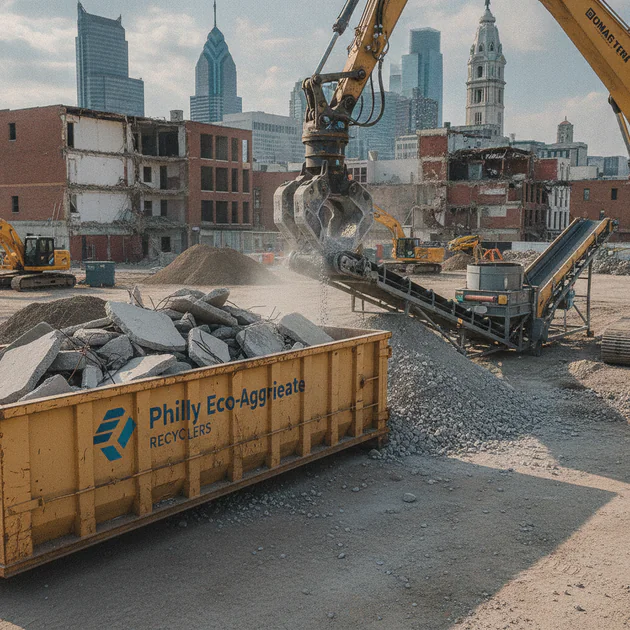
The Philadelphia skyline is in a constant state of transformation. Cranes dot the horizon, and new structures rise from the ground, a testament to the city’s growth and vitality. But this boom comes with a significant byproduct: construction and demolition (C&D) waste. For decades, concrete rubble was simply a costly problem to be hauled away and buried in a landfill. Today, a powerful shift towards sustainability is redefining the industry, and at the forefront of this movement are innovative Philadelphia clean concrete recycling services. This isn’t just about being “green”; it’s a strategic business decision that impacts your bottom line, enhances your reputation, and aligns your projects with the future of construction.
For forward-thinking contractors, developers, and project managers in the City of Brotherly Love, understanding the nuances of sustainable waste management is no longer a niche interest—it’s a competitive necessity. The demand for green building practices from clients, coupled with evolving municipal regulations, means that how you handle waste is as important as how you build. This comprehensive guide will explore the rise of clean concrete recycling in Philadelphia, detailing the processes, economic benefits, and practical steps for integrating these services into your workflow. We’ll delve into everything from sourcing the right construction dumpster services for heavy materials to leveraging recycled aggregate to achieve project goals and certifications.
Whether you’re overseeing a small demolition or a large-scale commercial development, making the switch to sustainable concrete disposal is more accessible than ever. It represents a critical opportunity to reduce environmental impact, cut operational costs, and position your company as a leader in Philadelphia’s evolving construction landscape. Let’s break down how you can turn concrete waste into a valuable asset for your next project.
Table of Contents
- The Shifting Landscape: Why Sustainable Construction is No Longer Optional in Philly
- Demystifying Clean Concrete Recycling: What It Is and How It Works
- Your Guide to Philadelphia Clean Concrete Recycling Services
- The Economic Case for Sustainable Concrete Disposal in Philly
- Integrating Recycling into Your Workflow: A Step-by-Step Plan
- FAQ: Your Questions on Concrete Recycling Answered
The Shifting Landscape: Why Sustainable Construction is No Longer Optional in Philly
The push for green building in Philadelphia is not a fleeting trend; it’s a foundational shift driven by regulatory pressure, market demand, and proven economic advantages. For construction professionals, ignoring this change means risking obsolescence. The days of indiscriminately sending all C&D debris to the landfill are numbered, and the focus has squarely turned to intelligent construction waste management in Philly.
One of the most significant drivers of this change is local policy. The City of Philadelphia has adopted versions of the International Green Construction Code (IgCC), which sets baseline requirements for sustainability in new construction and major renovations. While not all projects fall under the strictest mandates, the code signals a clear direction from regulators. Adhering to these principles, especially regarding waste diversion, is becoming standard practice for any project seeking smooth permit approvals and a positive relationship with city agencies. The Philadelphia Green Construction Code is a critical document for any local builder to understand.
Beyond regulations, clients are increasingly sophisticated in their demands. Both commercial and residential clients are now frequently requesting, and sometimes requiring, that their projects meet specific sustainability benchmarks, such as those set by the Leadership in Energy and Environmental Design (LEED) rating system. A project’s ability to divert a high percentage of waste from landfills is a major contributor to LEED points. By utilizing Philadelphia clean concrete recycling services, you can directly address these client demands, making your bids more competitive and your firm more attractive.
Finally, the economic argument is undeniable. While there may be a perception that “going green” is more expensive, the reality of C&D waste is often the opposite. Landfill tipping fees are continually on the rise due to limited space and stricter environmental controls. Recycling facilities, on the other hand, often charge significantly less to accept clean, sorted materials like concrete because they can process and resell it as a new product. This direct cost saving, combined with the value of building a reputation as a sustainable contractor, creates a powerful business case for embracing these practices.
Demystifying Clean Concrete Recycling: What It Is and How It Works
At its core, concrete recycling is a straightforward process: turning old, hardened concrete into a reusable material. However, the success and efficiency of this process hinge on one critical word: clean. Understanding what “clean concrete” means is the first step for any contractor looking to implement a successful recycling program.
Clean concrete is defined as concrete that is free from contaminants. This includes:
- Trash, wood, and plastic
- Excessive soil, clay, or rock
- Asphalt, brick, and other C&D materials
- Hazardous materials like asbestos or lead-painted surfaces
- Significant amounts of metal reinforcement (rebar, wire mesh)
While some facilities can handle concrete with minimal rebar, the cleaner the material, the easier and cheaper it is to process. This is why on-site source separation is so crucial. By designating a specific dumpster solely for concrete, you ensure the material remains clean and valuable.
The Recycling Process Step-by-Step
Once clean concrete arrives at a recycling facility, it undergoes a multi-stage transformation:
- Initial Inspection & Sorting: The load is visually inspected to ensure it meets the “clean” criteria. Any large contaminants are removed manually.
- Primary Crushing: The large chunks of concrete are fed into a primary crusher, typically a jaw crusher. This powerful machine breaks the material down into smaller, more manageable pieces, often the size of a fist.
- Secondary Crushing & Screening: The smaller pieces are then moved via conveyor belt to a secondary crusher (like an impact crusher) for further size reduction. During this stage, powerful magnets are often used to pull out any remaining steel rebar or mesh. The material then passes over a series of screens that sort it by size.
- Final Product: Recycled Aggregate: The end result is a high-quality product known as recycled aggregate Philadelphia. This material is graded into various sizes, each with specific applications in new construction projects.
The benefits of using recycled aggregate are numerous. It reduces the need for virgin materials, which saves energy and conserves natural resources. It also lowers transportation costs, as recycled aggregate is often produced locally, closer to urban job sites than traditional quarries. For your project, it can be a cost-effective and high-performing alternative for a variety of applications, from road base to backfill.
Your Guide to Philadelphia Clean Concrete Recycling Services
Successfully integrating concrete recycling into your projects requires a partnership with the right service providers. This ecosystem typically involves two key players: the recycling facility that processes the material and the hauling company that provides specialized construction dumpster services to get it there. For many contractors, a single-source provider that handles both hauling and recycling connections is the most efficient solution.
When evaluating providers for sustainable concrete disposal Philly, it’s essential to look beyond the price tag. A reliable partner will contribute to your project’s overall efficiency and success. Here’s what to look for:
- Clear Material Guidelines: A reputable service will provide you with explicit instructions on what constitutes “clean” concrete for their facility. They should be transparent about contamination fees to help you avoid unexpected charges.
- Appropriate Equipment: Concrete is incredibly heavy. Your dumpster provider must offer containers built to handle the weight, typically smaller 10- or 20-yard dumpsters, to avoid exceeding road weight limits. Ensure they have a fleet that can navigate Philadelphia’s tight city streets and demanding job site logistics. Our construction dumpster services are specifically tailored for these challenges.
- Reliable Scheduling: A full dumpster sitting on your site can bring work to a halt. Your provider must be punctual with drop-offs and pick-ups. Ask about their communication process and average turnaround time for swaps.
- Proper Documentation: For projects pursuing LEED certification or needing to comply with municipal requirements, documentation is key. Your recycling partner should be able to provide weight tickets and diversion reports that prove your concrete was recycled rather than landfilled. This paperwork is invaluable for demonstrating your commitment to sustainability.
- Local Market Knowledge: A partner who understands the Philadelphia market knows the best routes, local regulations, and the locations of the premier recycling facilities. This local expertise translates into smoother, more efficient service.
The process starts with a simple conversation. Discuss your project’s scope, the estimated volume of concrete you’ll be generating, and your timeline. A good provider will act as a consultant, helping you develop a waste management plan that maximizes recycling and minimizes costs.
The Economic Case for Sustainable Concrete Disposal in Philly
While the environmental benefits of recycling are clear, the financial advantages are what truly drive adoption in the competitive construction industry. Shifting from landfilling to recycling concrete isn’t an expense; it’s an investment with a tangible return. Let’s break down the economic arguments for embracing sustainable concrete disposal Philly.
Direct Cost Savings: Tipping Fees
The most immediate financial benefit comes from reduced disposal costs. Landfills charge “tipping fees” per ton to accept waste. These fees are influenced by factors like land value, operational costs, and government taxes, and they are consistently trending upward.
In contrast, concrete recycling facilities see your “waste” as a raw material. Because they can process and sell the recycled aggregate, their tipping fees for clean, source-separated concrete are often 30-50% lower than local landfills. For a project generating hundreds of tons of concrete debris, this percentage represents thousands of dollars in direct savings.
Hypothetical Cost Comparison (Per 10-Ton Load):
- Landfill Disposal:
- Tipping Fee: ~$75/ton
- Total Cost: $750
- Recycling Facility Disposal:
- Tipping Fee: ~$45/ton
- Total Cost: $450
- Immediate Savings: $300 per load
Indirect Savings and Added Value
The financial benefits extend beyond tipping fees. Consider these additional economic advantages:
- Reduced Material Costs: If your project requires aggregate for sub-base, backfill, or other applications, purchasing recycled aggregate Philadelphia can be significantly cheaper than buying virgin quarried stone. By creating a closed loop—hauling out old concrete and bringing back recycled aggregate from the same facility—you can achieve even greater savings on both materials and transportation.
- LEED and Green Building Incentives: Achieving certifications like LEED can unlock a world of financial benefits, including tax credits, zoning allowances, and expedited permitting. According to the U.S. Green Building Council, construction waste management is a key credit category. Proper documentation from your recycling partner is essential to securing these valuable points.
- Enhanced Brand Reputation: In today’s market, sustainability is a powerful differentiator. Being able to market your company as a green builder can attract environmentally-conscious clients, set you apart from competitors, and strengthen your proposals for public and private contracts that have sustainability requirements. This improved brand equity is a long-term asset that drives future business.
When you add up the direct savings on disposal, the reduced cost of materials, and the intangible value of a stronger brand, the economic case for using Philadelphia clean concrete recycling services becomes overwhelmingly positive. It’s a smarter, more profitable way to do business in the modern construction era.
Integrating Recycling into Your Workflow: A Step-by-Step Plan
Adopting a new process can seem daunting, but integrating concrete recycling into your daily operations is a manageable process that pays dividends in efficiency and cost savings. A proactive approach is key. Here is a practical, step-by-step plan to make sustainable concrete disposal a standard part of your project workflow.
- Pre-Project Planning: The Waste Management StrategySuccess begins before the first jackhammer hits the pavement. During the bidding and planning phase, develop a specific construction waste management plan. Estimate the types and volumes of waste you’ll generate, with a specific focus on concrete. Identify the need for a dedicated “Concrete Only” dumpster. This foresight allows you to accurately budget for disposal and communicate the plan to your entire team from day one.
- Partner with the Right Services EarlyDon’t wait until you have a pile of rubble to figure out what to do with it. Contact a trusted provider of Philadelphia clean concrete recycling services and construction dumpster services during your planning phase. Discuss your project’s needs, confirm their material requirements, and establish a schedule for dumpster delivery and swaps. This ensures you have the right equipment on-site when you need it, preventing delays.
- On-Site Execution: Training and Source SeparationYour plan is only as good as its execution on the ground. Hold a brief kickoff meeting with your site foreman and crew to explain the importance of source separation. Clearly label the designated concrete dumpster with large, bilingual signs (“Concrete Only / Solo Concreto”). Position it in a logical, easily accessible location for demolition crews. Consistent reinforcement from site leadership is crucial to prevent contamination.
- Efficient Hauling and LogisticsMaintain clear communication with your dumpster provider. Give them at least 24 hours’ notice when a dumpster is nearing capacity and needs to be swapped. This prevents overflow and keeps your site clean and safe. Remember that concrete dumpsters have strict weight limits, so avoid overfilling them to prevent hauling issues and potential fines.
- Documentation and Project CloseoutInsist on receiving weight tickets and recycling reports for every load of concrete hauled from your site. These documents are your proof of compliance and sustainability. Organize them in your project files. At the end of the project, compile a final waste diversion report. This data is not only essential for LEED certification but also serves as a powerful marketing tool to show clients your commitment to green building in Philadelphia.
By turning these steps into a repeatable process, you transform concrete recycling from a one-off task into a seamless, integrated part of your company’s standard operating procedure, enhancing efficiency and solidifying your reputation as a modern, responsible builder.
FAQ: Your Questions on Concrete Recycling Answered
What exactly qualifies as “clean” concrete?
Clean concrete is essentially pure concrete rubble without other materials mixed in. This means it should be free of soil, wood, plastic, paper, insulation, and other common construction debris. While most recycling facilities can handle concrete with a small amount of embedded steel rebar or wire mesh (as they use powerful magnets to remove it), it’s best to confirm the specific requirements with your chosen Philadelphia clean concrete recycling services provider. Any concrete with paint containing lead or contaminated with hazardous materials is not considered clean and requires special disposal.
Can I mix brick or asphalt with concrete in the same dumpster?
Generally, no. While brick and asphalt are also recyclable C&D materials, they are processed differently than concrete and are considered contaminants in a “clean concrete” load. Mixing them will likely result in your load being rejected by the concrete recycling facility or charged a significant contamination fee before being rerouted to a landfill, defeating the purpose. The best practice is to use separate, clearly labeled dumpsters for each material type if you are generating large quantities of each.
How does using recycled aggregate affect my LEED certification?
Using recycled aggregate and diverting concrete from landfills can contribute significantly to earning points in the LEED “Materials and Resources” (MR) credit category, specifically under “Construction and Demolition Waste Management.” To earn these points, you must divert a certain percentage (by weight) of your total C&D waste from the landfill. Concrete is one of the heaviest materials on a job site, so recycling it provides a massive boost to your diversion rate. The key is to obtain proper documentation—weight tickets and diversion reports—from your hauling and recycling partner to submit with your LEED application.
What is the main difference between a concrete recycling facility and a C&D landfill?
A C&D landfill is a final destination. Materials are buried and contained, but not repurposed. A concrete recycling facility is a processing plant. It takes in old concrete as a raw material and, through crushing and screening, transforms it into valuable recycled aggregate Philadelphia that can be sold back into the construction market for use in new projects. The former is a linear model of “take, make, dispose,” while the latter is a circular model that conserves resources, saves energy, and reduces the need for new material extraction.
Are there specific weight limits for concrete dumpsters in Philadelphia?
Yes, absolutely. This is a critical safety and regulatory issue. Concrete is extremely dense, weighing approximately 1.5 tons per cubic yard. A standard 20-yard dumpster, if filled to the top with other C&D debris, might weigh 4-5 tons. If filled to the top with concrete, it could weigh 30 tons, far exceeding the legal road limits and the capacity of the hauling truck. For this reason, providers of construction dumpster services typically only allow concrete dumpsters (often 10 or 20-yard containers) to be filled about halfway to three-quarters full to stay within the Department of Transportation’s weight regulations.
Conclusion: Build a Smarter, More Sustainable Future for Philadelphia
The construction industry in Philadelphia is at a pivotal moment. The old, linear model of build-and-dispose is being replaced by a smarter, circular approach that recognizes waste not as a problem, but as a resource. The rise of Philadelphia clean concrete recycling services is a cornerstone of this new paradigm. By embracing these practices, you are doing more than just diverting waste from a landfill; you are making a strategic business decision that reduces costs, meets modern client demands, and strengthens your competitive edge.
From understanding the financial benefits of lower tipping fees to implementing a seamless on-site separation plan, the path to sustainable building is clear and accessible. It requires a shift in mindset and a partnership with knowledgeable, reliable service providers who understand the unique demands of the Philadelphia market. By turning concrete rubble into high-quality recycled aggregate, you contribute to a more resilient local supply chain and a healthier urban environment.
The future of construction is green, efficient, and profitable. Integrating sustainable concrete disposal is a critical step in that direction, ensuring your business not only builds the structures of tomorrow but also helps build a better, more sustainable Philadelphia for generations to come.
Want to make your next project more sustainable? Learn about clean concrete recycling options in Philadelphia and discover how our specialized dumpster services can help you save money and achieve your green building goals.
Leave a Reply