
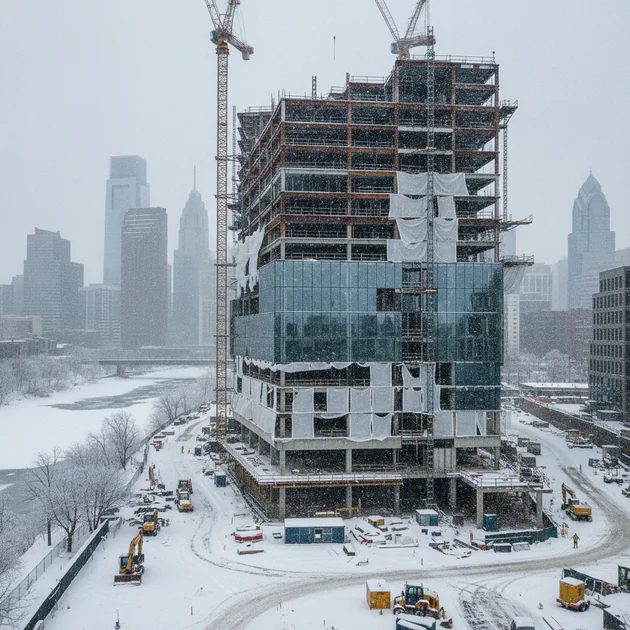
The Philadelphia skyline is in a constant state of evolution, but some of the most transformative and lucrative construction projects aren’t the ones reaching for the clouds. They are the highly specialized, technically demanding facilities rising in clusters around our universities, hospitals, and burgeoning tech hubs. For construction professionals in the Delaware Valley, understanding where the market is heading is not just an advantage; it’s essential for survival and growth. The newly released Skanska Winter 2026 market trends report serves as a critical compass, and its findings point squarely toward a boom in the science, technology, and healthcare sectors. This in-depth analysis will break down the report’s key takeaways, providing a clear roadmap for the most promising Philadelphia healthcare construction trends 2026 and the interconnected opportunities poised to define our industry for years to come.
As trusted experts in the Philadelphia trade landscape, we’ve dissected Skanska’s latest projections to bring you actionable intelligence. The report confirms what many on the ground have been feeling: while other sectors may see modest or fluctuating growth, the “Eds and Meds” foundation of our city’s economy is fueling a construction renaissance. From cutting-edge biotech labs in University City to sprawling hospital modernization projects and the data centers that power them, the demand for sophisticated construction expertise has never been higher. This article will guide you through the specific sub-sectors showing the most promise, the unique challenges they present, and how your firm can strategically position itself to capitalize on these Philly construction opportunities 2026.
Table of Contents
- The Big Picture: Skanska’s Macro-Economic Outlook for Philadelphia Construction
- Drilling Down: The Unstoppable Rise of Life Sciences and Biotech Construction
- Philadelphia Healthcare Construction Trends 2026: Modernizing for the Future
- The Tech Sector’s Influence: Data Centers and Smart Infrastructure
- Navigating the Challenges: Labor, Supply Chain, and Regulatory Hurdles in 2026
- Frequently Asked Questions (FAQ)
The Big Picture: Skanska’s Macro-Economic Outlook for Philadelphia Construction
Before diving into sector-specific trends, it’s crucial to understand the broader economic environment Skanska’s Winter 2026 report outlines for the Philadelphia metropolitan area. The report paints a picture of resilient, targeted growth. While the nation grapples with fluctuating interest rates and material cost volatility, Philadelphia’s unique economic composition provides a degree of insulation. The city’s reliance on historically stable sectors—education, healthcare, and research—creates a consistent pipeline of large-scale, long-term projects that are less susceptible to short-term market jitters.
Skanska’s analysis suggests that while the residential and speculative office markets may face headwinds, the institutional and private investment in specialized facilities remains robust. Key indicators for the region are positive, with a stable labor market and a steady influx of venture capital, particularly in the life sciences. According to a recent report from the Federal Reserve Bank of Philadelphia, regional economic activity continues to expand, supporting the capital-intensive projects that are the lifeblood of our industry. This stability is a key differentiator for our market. Contractors and trade professionals in Philadelphia can plan with more confidence than their counterparts in markets driven by more volatile industries.
The report emphasizes a “flight to quality.” This means that new construction and major renovation projects are focused on creating high-performance, technologically advanced, and sustainable buildings. For construction firms, this signals a clear shift: the lowest bid is becoming less important than the demonstrated ability to handle complex systems, meet stringent regulatory standards, and deliver a future-proofed final product. This is where expertise in Philadelphia science tech construction becomes a powerful competitive advantage.
Drilling Down: The Unstoppable Rise of Life Sciences and Biotech Construction
Philadelphia has firmly established itself as a global leader in cell and gene therapy, earning the nickname “Cellicon Valley.” This distinction is the primary engine behind one of the most significant construction booms the city has ever seen. The Skanska winter 2026 report highlights this sector as the undisputed star, with demand for specialized lab and manufacturing space continuing to outpace supply.
The opportunities within life sciences construction Philadelphia are diverse and highly technical. They include:
- Research & Development (R&D) Labs: These are the incubators of innovation, requiring flexible layouts, advanced ventilation systems (HVAC), robust utility connections for specialized equipment, and precise environmental controls.
- cGMP Manufacturing Facilities: Current Good Manufacturing Practice (cGMP) facilities are where proven therapies are produced at scale. These are among the most complex and expensive construction projects, demanding cleanroom environments (from ISO 8 to ISO 5), complex process piping for purified water and medical gases, and meticulous quality control throughout the build process.
- Vivarium and Animal Research Facilities: These highly regulated spaces have unique requirements for sanitation, airflow, and environmental separation to ensure both animal welfare and research integrity.
- Incubator and Accelerator Spaces: Often developed in partnership with universities or as speculative projects, these facilities offer smaller, flexible lab spaces for startups, driving a constant need for fit-outs and renovations.
Geographically, this boom is concentrated in key clusters like University City, the Philadelphia Navy Yard, and emerging hubs in the surrounding suburbs. The construction challenges are immense. Projects in biotech facilities Philly require a level of precision far beyond typical commercial construction. Vibration control is critical for sensitive imaging equipment, necessitating isolated structural slabs. Electrical systems must be incredibly reliable, with multiple layers of redundancy and backup power. For more insights on these unique demands, you can review our guide on the challenges of building specialized lab spaces.
The Skanska report predicts this momentum will not slow by 2026. As more therapies move from clinical trials to commercial production, the need for large-scale manufacturing facilities will only intensify, creating a multi-billion dollar pipeline of Philly construction opportunities 2026 for firms with the right expertise.
Philadelphia Healthcare Construction Trends 2026: Modernizing for the Future
Directly linked to the life sciences boom is the evolution of our healthcare infrastructure. The Philadelphia healthcare construction trends 2026 are defined by a strategic shift away from building entirely new hospital campuses and toward the comprehensive modernization of existing facilities and the decentralization of care. Philadelphia’s world-class hospital systems—including Penn Medicine, Jefferson Health, and the Children’s Hospital of Philadelphia (CHOP)—are investing heavily in renovating and expanding their footprints to accommodate new technologies and patient care models.
The Skanska report identifies three core pillars of hospital development Philadelphia:
1. Major Renovations and Vertical Expansions
With space at a premium in dense urban areas, hospitals are building up, not out. This involves complex projects like adding new patient towers on top of existing structures, which requires intricate phasing, structural reinforcement, and a sharp focus on infection control to avoid disrupting ongoing patient care in the active facility below. These projects also focus on upgrading core infrastructure—electrical, plumbing, and medical gas systems—that are decades old and unable to support modern medical equipment.
2. The Proliferation of Ambulatory and Outpatient Centers
Healthcare is increasingly moving out of the traditional hospital and into the community. This trend is fueling a surge in the construction of ambulatory surgery centers (ASCs), specialty clinics, and comprehensive outpatient facilities. These projects are often smaller and faster-paced than hospital wings, sometimes involving the conversion of former retail or office spaces. They demand expertise in rapid, efficient construction while still meeting the rigorous standards of healthcare environments, including the Healthcare Information Portability and Accountability Act (HIPAA) privacy requirements and specific clinical workflows.
3. Building “Smart” and Patient-Centric Hospitals
The hospital of the future is a technologically integrated, patient-focused environment. This is a central theme in the Philadelphia healthcare construction trends 2026. Construction plans now routinely include:
-
- Robust Data Infrastructure: Extensive fiber optic cabling, secure server rooms, and distributed antenna systems to support electronic health records (EHR), real-time device monitoring, and telehealth services.
- Flexible and Adaptable Spaces: Designing patient rooms and operating theaters that can be easily reconfigured to accommodate new equipment and technologies in the future.
–Wellness-Oriented Design: A greater emphasis on elements that promote healing, such as maximizing natural light, incorporating green spaces, using non-toxic building materials, and designing quieter, more comfortable patient rooms.
For contractors, success in this space means becoming a partner in care delivery, not just a builder. It requires understanding clinical needs and the critical importance of creating environments that are safe, efficient, and healing for both patients and staff.
The Tech Sector’s Influence: Data Centers and Smart Infrastructure
The science and healthcare booms do not happen in a vacuum. They are powered by an ever-growing need for data processing, storage, and connectivity. Skanska’s report highlights the resulting demand for data centers and other tech infrastructure as a significant, though less visible, driver of Philadelphia science tech construction.
Every gene sequenced, every MRI taken, and every electronic health record updated generates a massive amount of data. This data needs to be stored securely, accessed quickly, and processed by powerful computers. This has led to a rising demand for data center construction in and around the Philadelphia region. These are not typical buildings; they are fortresses of technology with unique construction requirements:
- Uninterruptible Power: Massive generator farms, battery-based uninterruptible power supply (UPS) systems, and redundant connections to the power grid are non-negotiable.
- Precision Cooling: Thousands of servers generate immense heat. Constructing the sophisticated cooling systems—from computer room air conditioners (CRACs) to liquid cooling loops—is a major component of any data center build.
- Extreme Security: These facilities require physical security measures including reinforced structures, multi-factor authentication access points, and comprehensive surveillance systems.
As a major internet connectivity hub on the East Coast, Philadelphia is a prime location for these facilities. Authoritative industry sources like Data Center Frontier consistently rank the region as a growing market. For construction firms, developing expertise in this niche can be highly profitable. It requires specialized knowledge in electrical and mechanical trades, but the project values are high and the demand is steady, driven by the insatiable data needs of the healthcare and life sciences sectors.
Navigating the Challenges: Labor, Supply Chain, and Regulatory Hurdles in 2026
While the opportunities highlighted in the Skanska report are immense, they are not without significant challenges. A clear-eyed view of the obstacles is necessary for any firm looking to succeed in this competitive landscape. The report, and our own on-the-ground experience, point to three primary areas of concern.
First, the skilled labor shortage remains a critical issue. The complexity of modern healthcare and lab facilities requires a highly trained workforce. There is a profound need for electricians who can handle complex power distribution systems, pipefitters certified in medical gas installation, and HVAC technicians experienced with cleanroom environments. The most successful firms in 2026 will be those that invest heavily in training, apprenticeship programs, and creating a company culture that retains top talent.
Second, supply chain volatility continues to impact project timelines and budgets. While the widespread shortages of the early 2020s have eased, specialized equipment still has extremely long lead times. Items like custom air handling units, large-scale generators, and specialized laboratory casework can take over a year to procure. This necessitates a shift in project management toward early procurement and close collaboration between the construction team, designers, and owner to make critical equipment decisions at the very beginning of the design process.
Finally, navigating Philadelphia’s regulatory environment requires local expertise. The permitting and inspection process can be complex, and for healthcare facilities, this is layered with stringent requirements from the Pennsylvania Department of Health. Understanding the nuances of these codes and having established relationships with city officials is invaluable. For those new to the market, partnering with a local expert can be the difference between a smooth project and one mired in delays. For more information, please see our overview on navigating Philadelphia building permits.
Frequently Asked Questions (FAQ)
What is the most significant takeaway from the Skanska Winter 2026 report for Philly contractors?
The most crucial takeaway is the immense and sustained opportunity in specialized construction. The report strongly indicates that firms excelling in the high-tech, high-regulation sectors of healthcare, life sciences, and data infrastructure will see the most significant growth. The era of the generalist is waning; deep expertise in these complex niches is the key to securing high-margin work in Philadelphia through 2026 and beyond.
Are there specific neighborhoods in Philadelphia seeing the most growth in science and healthcare construction?
Yes. University City remains the epicenter, driven by the expansion of Penn, Drexel, and CHOP, along with private developers building lab and R&D space. The Philadelphia Navy Yard has also become a major hub for cell and gene therapy manufacturing. Additionally, watch for growth along the Route 202 corridor in the suburbs, which is attracting significant life sciences investment, and in neighborhood-based outpatient medical facilities across the city.
How are sustainability and green building practices impacting Philadelphia healthcare construction trends 2026?
Sustainability is becoming a core requirement, not an optional add-on. Hospital systems and research institutions are increasingly demanding LEED certification and focusing on long-term operational efficiency. This impacts construction through the specification of high-performance building envelopes, energy-efficient MEP (Mechanical, Electrical, Plumbing) systems, water conservation measures, and the use of low-VOC (Volatile Organic Compound) materials to ensure indoor air quality, which is critical in patient care environments.
What skills are most in-demand for construction professionals looking to work on these specialized projects?
Beyond the core trades, skills in Building Information Modeling (BIM) and Virtual Design and Construction (VDC) are in high demand for coordinating complex MEP systems. Project managers with experience in infection control protocols (ICRA) are essential for hospital renovations. Additionally, an understanding of cleanroom construction protocols and cGMP standards is a highly valuable specialization for anyone looking to work in the life sciences sector.
Conclusion: Your Blueprint for Success in 2026
The Skanska Winter 2026 report provides a clear and compelling forecast: Philadelphia’s construction market is thriving, powered by the relentless innovation in its healthcare, science, and technology sectors. The opportunities are not just plentiful; they are sophisticated, challenging, and rewarding for those prepared to meet the demand. From state-of-the-art gene therapy labs to patient-centric hospital wings and the data centers that form their digital backbone, the future of Philadelphia construction is specialized.
Success will hinge on a firm’s ability to adapt, specialize, and invest in the talent and technology required to execute these complex projects flawlessly. The insights from this report should serve as your blueprint for strategic planning. By aligning your company’s capabilities with these powerful market forces, you can build a resilient and prosperous future. Understanding the nuances of Philadelphia healthcare construction trends 2026 is the first step toward capitalizing on this generational wave of growth.
Looking for the latest market insights? Read our breakdown of the Skanska Winter 2026 construction report for Philadelphia.
Leave a Reply