

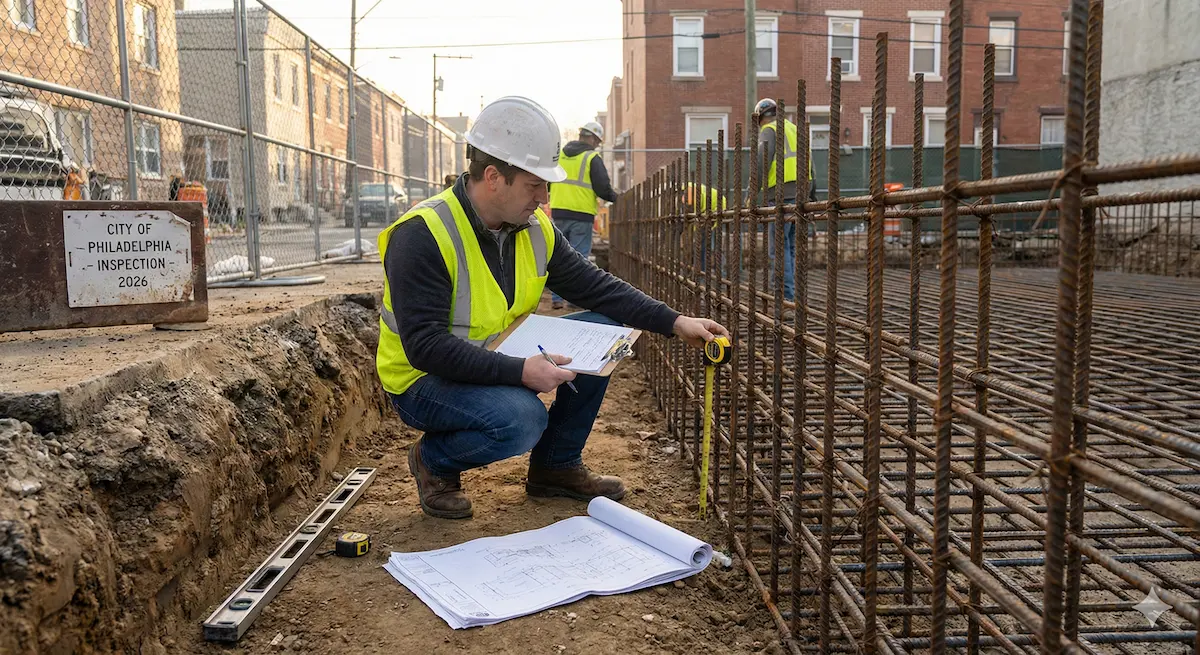

Concrete pouring in Philadelphia never slows down for long. Even as we move into 2026, pump trucks and ready-mix fleets are still a daily sight on almost every block from Fishtown to Point Breeze.
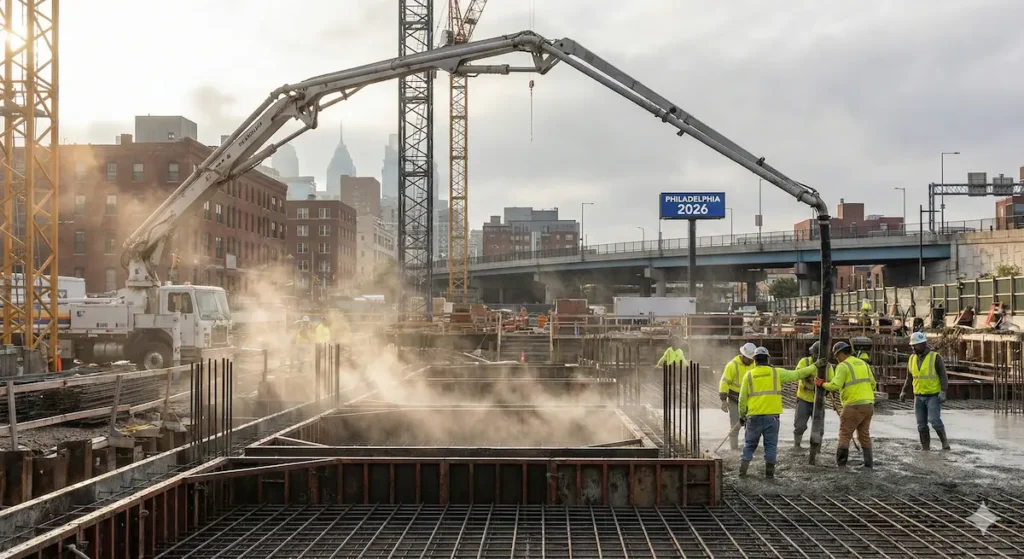
One of the first big pours of the year happened at 1713 N Front Street — a five-unit residential building on an 18-foot-wide infill lot. This job shows exactly what urban concrete work looks like right now in 2026.
Project Spotlight: 1713 N Front Street in 2026 Progress
Excavation wrapped up in late 2025. By mid-January 2026 the crew was ready for the continuous footer pour that will carry the entire four-story building.
The design calls for reinforced concrete grade beams and spread footings — the go-to foundation system for almost every new rowhome replacement and small multifamily project in Philadelphia this year.
The 2026 Concrete Pour Day Timeline
Pour day started at 5:45 a.m. in 28-degree weather:
- 3 pump trucks + 9 ready-mix trucks staged on Berks and Front
- 4,500 PSI mix with heated water and Type III cement for faster early strength
- Heated blankets and insulated forms standing by (standard practice now in Philly winters)
- Live temperature monitoring probes embedded every 20 feet
The entire 148 cubic yards went down in under three hours — textbook for a cold-weather pour in 2026.
Why Footers Are Still Make-or-Break in Philadelphia
Philadelphia’s soils haven’t changed: soft river silt, old fill, and occasional surprise artifacts from the 1800s. A properly poured and inspected footer is the only thing keeping new buildings from settling into the neighbor’s basement.
The 2026 Philadelphia L&I Footer Inspection Checklist
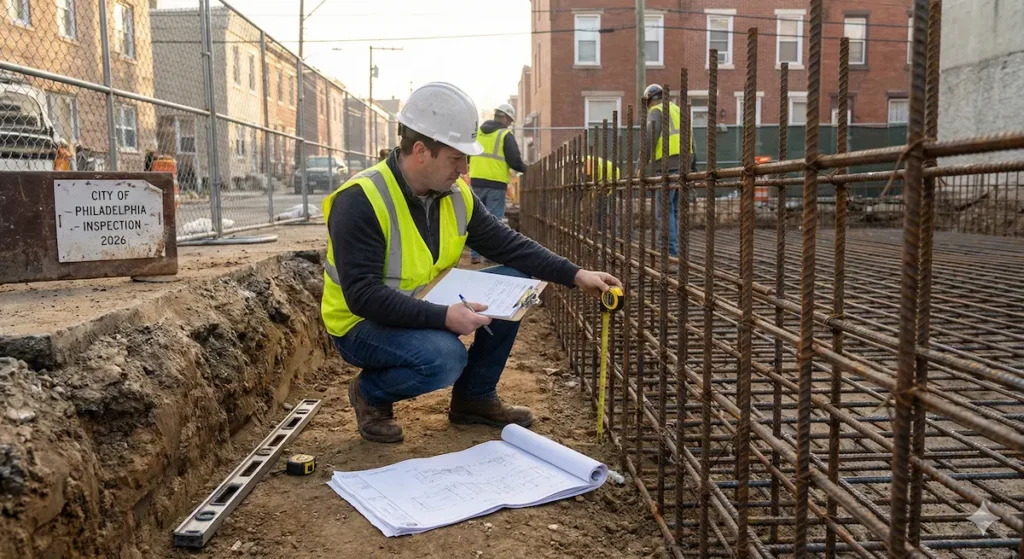
L&I special inspectors in 2026 are stricter than ever. At 1713 N Front they checked:
- Minimum 3-inch concrete cover on all rebar
- No standing water or ice in the trench
- Heated mix temperature between 55–80 °F at point of placement
- Vibration logs and cylinder breaks scheduled for 3, 7, and 28 days
Green tag issued at 9:12 a.m. — pour continued without a hitch.
The Real 2026 Challenges of Concrete Pouring in Philadelphia
Same city, new headaches:
- Narrower streets than ever street parking (thanks to protected bike lanes)
- Higher material costs — concrete is up another 9 % since January 2025
- Ongoing labor shortage — two finishers on this job were traveling in from Lancaster County
- New 2026 stormwater regulations requiring flowable fill in certain zones
What’s Next After the Footer?
Forms strip in 5–7 days (faster with the heated mix). Then:
- Full-height waterproofing with crystalline admixture
- Rigid insulation on the exterior face (now required on most new foundations)
- Basement slab pour scheduled for early February 2026
Why Concrete Work Is Still Hot in Philadelphia in 2026
Even with higher interest rates, the city issued more new-construction permits in Q1 2026 than the same period last year. Developers are rushing to lock in starts before the 10-year tax abatement phases down further.
That means concrete pumping trucks will keep rolling seven days a week for the foreseeable future.
Let Philly Trade Experts Pour Your 2026 Project
Cold weather, tight lots, party-wall nightmares — we’ve seen it all (and poured through it all).
Philly Trade Experts is booking foundation and flatwork through summer 2026. If you have a rowhome replacement, addition, or multifamily start this year, now is the time to lock in your concrete crew.
- Call (215) 608-2486 or contact us for a free 2026 pricing estimate.
We keep your pour on schedule — no matter what the forecast says.
Frequently Asked Questions
Heated water, insulated blankets, and Type III cement are now standard. Most reputable contractors won’t even bid a winter pour without them.
Not yet — cement and aggregate are still running 8–12 % higher than 2024 averages, though some suppliers are offering Q2 discounts for volume orders.
Typically 45–75 minutes once pumping starts. Inspectors are using tablets for same-day approvals.
Yes — as long as the mix stays above 55 °F on arrival and the ground is protected. We’ve poured successfully at 18 °F this January.
Average rowhome foundation (including excavation, forms, rebar, concrete, pump, heat, and inspections) is running $22,000–$32,000 depending on depth and soil conditions.