
Table of Contents
- Project Deep Dive: The Chestnut Street Pedestrian Safety Initiative
- The Anatomy of Effective Urban Refuges: Design and Materials
- Concrete Installation Techniques for High-Traffic Urban Environments
- The Broader Impact: How These Refuges Reshape West Philly Concrete Infrastructure
- What’s Next? The Future of Pedestrian Safety Solutions in Philadelphia
- FAQ: Your Questions on Philadelphia’s New Pedestrian Refuges
The urban landscape of West Philadelphia is in a constant state of evolution, and nowhere is this more apparent than along its busiest corridors. For construction professionals, engineers, and city planners, the latest developments on Chestnut Street represent a significant shift towards prioritizing pedestrian safety through robust infrastructure. Construction is well underway for a series of new concrete pedestrian refuges, a project that is not just about pouring concrete but about fundamentally reshaping how people interact with the street. These installations are a critical component of the city’s broader public works initiatives, designed to protect vulnerable road users in a high-traffic environment.
At Philadelphia Trade Experts, we understand that these projects are more than just line items in a municipal budget; they are complex undertakings requiring precise engineering, expert craftsmanship, and a deep understanding of urban dynamics. The introduction of these pedestrian refuges is a testament to the growing demand for traffic calming measures that are both effective and durable. This comprehensive guide will delve into every facet of the Chestnut Street project, from the initial planning and design specifications to the intricate concrete installation techniques required for success in a bustling urban setting. We will explore the technical details, the logistical challenges, and the long-term impact of this vital West Philly concrete infrastructure project, providing valuable insights for industry professionals across the region.
Project Deep Dive: The Chestnut Street Pedestrian Safety Initiative
The Chestnut Street corridor in West Philadelphia has long been identified as a critical artery for commuters, residents, and students. Its high volume of both vehicular and pedestrian traffic, particularly between 45th Street and 34th Street, creates numerous conflict points, leading to safety concerns. This initiative, a collaborative effort between the City of Philadelphia’s Streets Department and PennDOT, is a direct response to data-driven analysis of pedestrian-related incidents and a core component of the city’s Vision Zero program, which aims to eliminate all traffic-related fatalities and severe injuries.
The primary objective is clear: to make crossing Chestnut Street safer and more comfortable. The project’s scope involves the strategic installation of multiple concrete pedestrian refuges at mid-block locations and unsignalized intersections. These locations were specifically chosen based on pedestrian desire lines—the paths people naturally take—and existing collision data. By providing a protected space in the middle of the street, the project allows pedestrians to cross in two shorter, simpler stages, focusing on one direction of traffic at a time. This significantly reduces the cognitive load and physical difficulty of crossing a wide, multi-lane road.
This project is not being executed in a vacuum. It is part of a multi-faceted approach to reimagining the street. The installation of the concrete refuges is being coordinated with other upgrades, including high-visibility crosswalk markings, updated signage, and potential adjustments to traffic signal timing at nearby intersections. For construction professionals, this highlights the importance of integrated project management and communication with various municipal departments and utility providers. Understanding the full context of the initiative is crucial for ensuring the new infrastructure functions as intended within the larger transportation network.
The Anatomy of Effective Urban Refuges: Design and Materials
A pedestrian refuge island is more than just a raised piece of concrete; it is a carefully engineered safety feature. The success of these refuges hinges on meticulous design that considers user needs, vehicle dynamics, and material longevity. The Chestnut Street installations serve as a prime example of modern urban infrastructure development standards.
Design Specifications: The design of these islands must balance safety with accessibility. Key considerations include:
- Width and Landing Area: Each refuge must be wide enough to comfortably accommodate multiple pedestrians, including individuals using wheelchairs, pushing strollers, or walking bicycles. The Chestnut Street designs call for a minimum clear width of 6 feet, providing ample protected space.
- ADA Compliance: This is non-negotiable. The islands feature detectable warning surfaces (truncated domes) at the edges to alert visually impaired pedestrians that they are approaching a vehicular way. Cut-throughs are designed to be at grade with the roadway, ensuring a smooth, barrier-free path of travel.
- Curbing and Approach: The ends of the island facing traffic, known as the “noses,” are typically sloped or feature mountable curbs to minimize damage if struck by a vehicle. The sides, however, utilize vertical barrier curbs to provide a tangible sense of protection for those waiting on the island.
- Visibility: Proper signage, such as the R1-6 “Keep Right” sign, is essential to guide motorists. The islands are also positioned to maintain clear sightlines for both drivers and pedestrians.
Material Selection: The choice of material is critical for durability and low maintenance, especially in a city with demanding weather conditions like Philadelphia. High-strength concrete is the standard for these applications.
The concrete mix design for the Chestnut Street refuges is specified to achieve a compressive strength of at least 4,500 PSI (pounds per square inch) after 28 days. This ensures it can withstand incidental vehicle impacts and the stresses of the urban environment. The mix also includes air-entrainment admixtures, which create microscopic air bubbles in the concrete. This provides space for water to expand when it freezes, preventing spalling and cracking during Philadelphia’s harsh freeze-thaw cycles. Reinforcement is provided by a grid of epoxy-coated rebar, which offers superior corrosion resistance compared to standard steel, extending the service life of the structure.
Concrete Installation Techniques for High-Traffic Urban Environments
Building robust West Philly concrete infrastructure in the middle of a live traffic corridor like Chestnut Street presents a unique set of logistical and technical challenges. The success of the project relies on a phased, methodical approach to construction. As experts in our public works contracting services, we know that precision at every stage is key.
Phase 1: Site Preparation and Demolition
Before any concrete can be poured, the site must be meticulously prepared. This begins with implementing a detailed Maintenance and Protection of Traffic (MOT) plan. This involves lane closures, detours, and clear signage to ensure the safety of both the construction crew and the public. Once the work zone is secured, the existing asphalt is saw-cut to the precise dimensions of the new island. The asphalt and underlying base material are then excavated to the required depth. Subgrade compaction is a critical step; the soil beneath the island must be compacted to at least 95% of its maximum dry density to prevent future settling or failure of the concrete structure.
Phase 2: Forming, Reinforcement, and Pouring
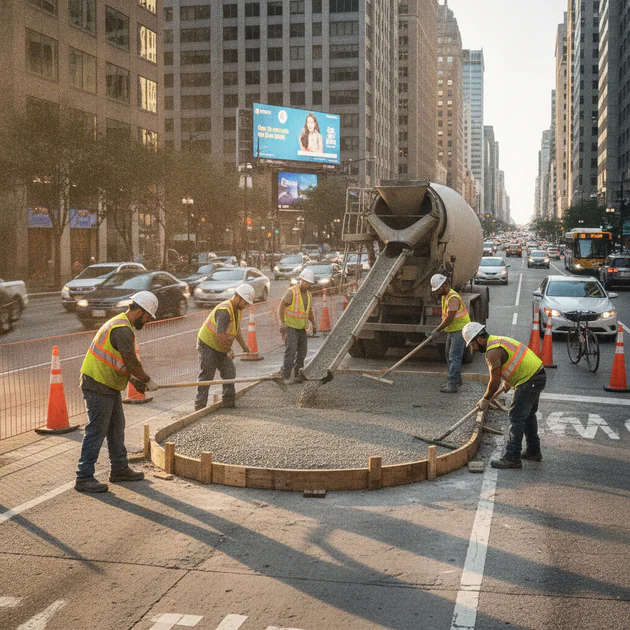
With the subgrade prepared, formwork is erected to create the mold for the concrete. For the curved noses and angles of the refuges, flexible forming materials or custom-built wooden forms are used. During this stage, any necessary electrical conduit for future lighting or signalization is placed. The grid of epoxy-coated rebar is then carefully tied in place, ensuring it has the proper concrete cover on all sides as specified in the engineering plans. The concrete pour itself is a highly coordinated event. Ready-mix trucks must be scheduled for just-in-time delivery to avoid traffic backups and ensure the concrete doesn’t begin to set prematurely. The concrete is placed into the forms and consolidated using mechanical vibrators to eliminate air pockets and ensure a dense, strong final product.
Phase 3: Finishing and Curing
Once the concrete is placed and screeded level, the finishing process begins. A light broom finish is applied to the surface to create texture, providing essential slip resistance for pedestrians in wet conditions. The most critical final step is curing. Improper curing can reduce the final strength of the concrete by up to 50%. In an open, urban environment, a liquid membrane-forming curing compound is often sprayed onto the surface. This compound creates a seal that traps moisture inside the concrete, allowing the hydration process (the chemical reaction that gives concrete its strength) to proceed properly. Finally, control joints are saw-cut into the slab within 24 hours to direct any potential shrinkage cracking in a clean, predictable manner.
Below is a list of common challenges and their solutions in these types of pedestrian safety solutions projects:
- Challenge: Minimizing Traffic Disruption.
- Solution: Phased construction allows parts of the road to remain open. Performing major work, like concrete pours, during off-peak hours or overnight can also significantly reduce impact.
- Challenge: Unforeseen Underground Utilities.
- Solution: Conducting thorough pre-construction surveys using Ground Penetrating Radar (GPR) and consulting utility maps (PA One Call) is essential to identify and avoid conflicts with gas lines, water mains, or fiber optic cables.
- Challenge: Ensuring Public Safety Around the Work Zone.
- Solution: Robust MOT plans, clear pedestrian detour signage, and secure site fencing are paramount. A dedicated on-site safety officer can also monitor conditions and address public concerns.
The Broader Impact: How These Refuges Reshape West Philly Concrete Infrastructure
The installation of these concrete pedestrian refuges has an impact that extends far beyond the immediate crossing point. They are a powerful form of “traffic calming,” a set of strategies used to reduce vehicle speeds and improve safety. By physically narrowing the roadway, the islands create a visual cue for drivers to slow down, a phenomenon known as “channelization.” This change in driver behavior is often more effective than signage alone.
These refuges also enhance the overall streetscape, contributing to a more pedestrian-friendly environment. They break up long, intimidating expanses of asphalt, making the street feel more human-scaled. When combined with other elements like trees or landscaping (where space permits), they can improve aesthetics and contribute to a stronger sense of place. This encourages more walking and cycling, which has positive knock-on effects for local businesses and public health. For a deeper dive into the proven safety benefits, the Federal Highway Administration offers extensive research on how these installations can reduce pedestrian crashes by up to 46%.
From an urban planning perspective, this project signals a commitment to prioritizing people over cars in infrastructure design. It aligns with modern trends in urbanism that seek to create more livable, walkable communities. For contractors and developers, understanding this shift is crucial. Future projects, both public and private, will likely be required to incorporate similar pedestrian-centric design elements. This trend represents a growing market for skilled tradespeople who specialize in high-quality concrete flatwork and public space construction. Keeping abreast of these trends is essential for staying competitive, a topic we explore further in our analysis of
Philadelphia’s urban development trends.
What’s Next? The Future of Pedestrian Safety Solutions in Philadelphia
The Chestnut Street project is not an isolated effort but rather a blueprint for future urban infrastructure development across Philadelphia. The success of these refuges will likely lead to their deployment in other high-priority corridors throughout the city. As construction professionals, it’s vital to anticipate the direction of these public works initiatives and the opportunities they present.
We are seeing a clear trend towards more comprehensive safety solutions. Future projects may integrate these concrete refuges with other advanced measures, such as:
- Raised Crosswalks: These act as both a crosswalk and a speed hump, physically forcing vehicles to slow down at pedestrian crossing points. They are particularly effective in residential areas or near schools.
- Curb Extensions (Bulb-Outs): These extend the sidewalk into the parking lane, shortening the crossing distance for pedestrians and improving visibility by preventing cars from parking right at the corner.
- Smart Technology: We can expect to see more integration of technology, such as Rectangular Rapid-Flashing Beacons (RRFBs) mounted on signs at crosswalks, which are activated by pedestrians and have been shown to dramatically increase driver yielding rates.
- Sustainable Materials: There is growing interest in using pervious concrete in certain applications to improve stormwater management or incorporating recycled materials into concrete mixes to reduce the environmental footprint of these projects.
This evolving landscape of pedestrian safety solutions means a continuous need for contractors who are not only skilled in traditional concrete installation techniques but are also adaptable and knowledgeable about these newer methods and technologies. The City of Philadelphia will continue to invest in making its streets safer, and the firms that can demonstrate expertise in this specialized area of public works will be best positioned to win future contracts and contribute to the city’s growth.
FAQ: Your Questions on Philadelphia’s New Pedestrian Refuges
How long does it take to install one concrete refuge island?
The timeline can vary based on several factors, including the size of the island, weather conditions, and traffic management complexity. Typically, from initial saw-cutting to final curing, a single island can be constructed in 5 to 10 working days. The work is often phased to minimize disruption, with different crews handling demolition, forming, pouring, and finishing.
What is the expected lifespan of these concrete refuges?
Thanks to the use of high-strength, air-entrained concrete and corrosion-resistant rebar, these refuges are designed for exceptional durability. With minimal maintenance, their expected structural lifespan is 30 to 50 years, making them a long-term, cost-effective safety investment for the city.
How do these refuges impact emergency vehicle access?
This is a critical design consideration. The islands are strategically placed and designed to ensure that fire trucks, ambulances, and other large emergency vehicles can still navigate the street effectively. The width of the travel lanes is maintained to meet or exceed NACTO (National Association of City Transportation Officials) and fire department standards for emergency access.
Are these projects open for bidding by local contractors?
Yes, public works initiatives like this are typically procured through a competitive bidding process managed by the City of Philadelphia or PennDOT. Local contractors with the proper qualifications, bonding capacity, and experience in municipal concrete work are encouraged to bid on these and similar projects. Staying registered as a vendor with the city is the first step.
In conclusion, the new concrete pedestrian refuges along Chestnut Street are a landmark project for West Philadelphia. They represent a sophisticated approach to urban safety, blending thoughtful design, durable materials, and precise construction techniques. For industry professionals, this initiative not only provides a case study in modern infrastructure but also signals a growing market for specialized skills in creating safer, more walkable urban environments. These refuges are more than just infrastructure; they are a commitment to a safer future for all Philadelphians.
To get a closer look at the plans and progress of this transformative project, we encourage you to read about the Chestnut Street pedestrian safety upgrades and see how these vital improvements are taking shape.
Leave a Reply