
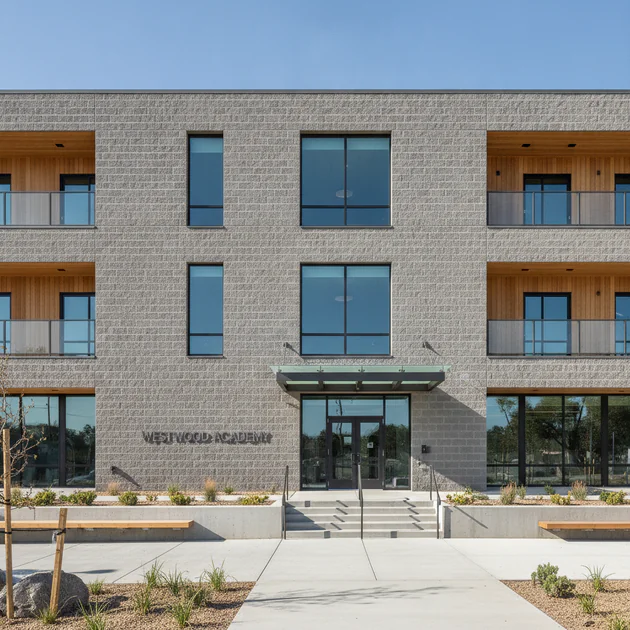
In the world of educational architecture, few projects present as many unique challenges and opportunities as the design of a special needs campus. These are not just buildings; they are carefully calibrated environments intended to nurture, protect, and empower students with diverse sensory, physical, and cognitive needs. The choice of building materials in such a project is paramount, moving beyond simple cost and aesthetics to address core issues of safety, acoustics, and long-term durability. A groundbreaking new campus in Chester County, Pennsylvania, serves as a powerful case study, demonstrating how the strategic use of concrete masonry is setting a new standard for special needs facility design and construction in the greater Philadelphia region.
This state-of-the-art facility was conceived from the ground up to be a sanctuary for learning. The design team understood that for its students, a calm, predictable, and secure environment is not a luxury—it is a prerequisite for educational success. This understanding drove their decision to anchor the project’s design in one of the world’s oldest and most reliable building materials: concrete. By leveraging the inherent strengths of concrete masonry units (CMUs), the architects and builders have created a campus that excels in fire safety, structural resilience, and, critically, acoustic control, directly addressing the sensory sensitivities common among its student population.
For construction professionals in the Philadelphia area, this Chester County project offers invaluable insights. It highlights a shift towards materials that provide multi-faceted solutions, proving that the foundational choice of concrete can influence everything from student well-being to a school district’s maintenance budget for decades to come. This article explores the specific ways this project utilizes concrete masonry to create an optimal learning environment, providing a blueprint for future educational building safety and design.
Table of Contents
- Why Concrete Masonry is the Bedrock of Modern School Design
- Enhancing Safety: How Concrete Creates a Secure Learning Environment
- The Acoustic Advantage: Concrete’s Role in a Sensory-Friendly Campus
- Building for the Future: Durability, Maintenance, and Sustainability
- A Closer Look at the Chester County Project: A Local Triumph
- Frequently Asked Questions About Concrete in Schools
Why Concrete Masonry is the Bedrock of Modern School Design
When planning any educational facility, the conversation about building materials must extend far beyond initial costs. Schools are high-traffic, high-impact environments that must serve communities for 50 years or more. The materials chosen must withstand the daily rigors of hundreds of students while ensuring a safe and conducive learning atmosphere. This is where concrete masonry school construction truly distinguishes itself.
Concrete Masonry Units (CMUs), often referred to as cinder blocks or concrete blocks, form the structural and functional backbone of many modern institutional buildings. Unlike lighter-weight alternatives like wood or steel-stud framing with drywall, a CMU wall system is inherently robust. Its mass and compressive strength provide a level of durability that is simply unmatched. This means walls that resist damage from bumps, scrapes, and the inevitable wear and tear of a bustling school, significantly reducing long-term maintenance and repair costs.
Consider the lifecycle of a school building. A painted drywall surface in a busy corridor may need to be repaired and repainted every few years. An exposed or sealed concrete block wall, however, can endure for decades with minimal upkeep. This long-term economic benefit is a crucial factor for school districts operating on tight budgets. The initial investment in a more durable material pays dividends year after year, freeing up funds for what truly matters: education.
Furthermore, the structural design possibilities with concrete are vast. It serves as structure, enclosure, and often the final finish in one efficient system. This integration simplifies the construction process and creates a building that is resilient from its very core. For the demanding environment of a school, especially one catering to special needs, this foundational strength provides a sense of permanence and security that is felt by students and staff alike.
Enhancing Safety: How Concrete Creates a Secure Learning Environment
The primary responsibility of any school is the safety of its occupants. The physical structure of the building plays a critical role in fulfilling this duty. The Chester County campus design team prioritized safety by selecting concrete masonry for its superior performance in three key areas: fire safety, structural integrity, and security.
Unyielding Fire Safety Standards
Fire safety is a non-negotiable aspect of educational building safety. Concrete is a non-combustible material, meaning it will not burn, ignite, or contribute fuel to a fire. This fundamental property is its greatest advantage. CMU walls naturally achieve high fire-resistance ratings, typically from 2 to 4 hours, without the need for additional fireproofing materials. You can find detailed specifications on these ratings from authoritative sources like the International Code Council (ICC).
This inherent fire resistance provides several critical benefits:
- Compartmentalization: Concrete walls act as robust fire barriers, effectively containing a fire to its room of origin. This prevents the rapid spread of flames and smoke, allowing more time for safe evacuation.
- Structural Stability: During a fire, concrete structures maintain their integrity for extended periods. Unlike steel, which can lose strength and buckle at high temperatures, or wood, which combusts, concrete stands firm, protecting escape routes and allowing first responders to work more safely.
- Reduced Smoke Production: Because it doesn’t burn, concrete does not produce toxic smoke or fumes, which are often the primary danger to occupants during a fire.
Structural Integrity and Storm Resistance
The Philadelphia region is no stranger to severe weather, from high winds and heavy snow to the remnants of hurricanes. A school building must serve as a safe haven during these events. The sheer mass and strength of a concrete masonry school construction provide exceptional resistance to lateral loads from high winds and impacts from flying debris. This resilience is a key reason why concrete is the material of choice for critical facilities and storm shelters.
In the context of the Chester County project, this means the building itself is a protective shield. The solid walls provide a sense of security and are capable of withstanding forces that could compromise lighter forms of construction. This structural robustness ensures the campus remains a safe and operational hub for the community, even in the face of adverse weather.
The Acoustic Advantage: Concrete’s Role in a Sensory-Friendly Campus
While safety is paramount, the learning environment’s quality is a close second, especially in a special needs facility design. Many students with autism spectrum disorder, sensory processing disorders, or other challenges are highly sensitive to noise. Unwanted sounds from hallways, adjacent classrooms, or mechanical systems can be distracting, overwhelming, and a significant barrier to learning.
This is where concrete provides a profound, often overlooked, benefit: acoustic control. The principle is simple: mass blocks sound. The high density of CMU walls makes them incredibly effective at preventing sound from traveling between spaces. This is measured by a Sound Transmission Class (STC) rating. A standard interior wall with drywall might have an STC rating of 35-40. A standard 8-inch concrete block wall, by contrast, can easily achieve an STC rating of 45-55 or higher, representing a dramatic reduction in perceived noise.
For the Chester County campus, this means:
- Quieter Classrooms: Lessons can proceed without interruption from noise in the hallway or the room next door.
- Effective Therapy Spaces: Speech therapy, occupational therapy, and counseling sessions require privacy and quiet. The solid walls ensure these spaces are acoustically isolated sanctuaries.
- Controlled Common Areas: Noise from loud areas like the gymnasium, cafeteria, or music room is effectively contained, preventing it from disrupting the entire school.
The design team took this a step further by utilizing acoustical concrete masonry units. These specialized blocks feature openings and fibrous, sound-absorbing inserts that not only block sound from passing through the wall but also absorb sound within the room itself. This reduces reverberation and echo, creating a much calmer and more intelligible acoustic environment—a critical feature for students who struggle with auditory processing.
Building for the Future: Durability, Maintenance, and Sustainability with Concrete
A school is a long-term community investment. The choice of building materials directly impacts its future operational costs and its environmental footprint. The Chester County construction team’s decision to use concrete reflects a commitment to longevity, efficiency, and responsible building practices.
Unmatched Durability and Low Maintenance
The daily life of a school is demanding. Walls in corridors, gyms, and cafeterias must withstand constant impact from backpacks, carts, and active students. CMU walls are exceptionally abuse-resistant. They don’t dent, puncture, or scuff easily like drywall. This inherent toughness translates directly into lower maintenance costs. School districts can save tens of thousands of dollars over the life of the building by avoiding the cycle of constant repair and repainting associated with less durable wall systems. This financial benefit is a powerful argument for any public-funded project.
A Healthier Indoor Environment
Student and staff health is a growing focus in school design. Concrete masonry is an excellent choice for promoting good indoor air quality. It is an inert material that does not contain volatile organic compounds (VOCs) that can off-gas into the air. Furthermore, because it is inorganic, concrete is highly resistant to mold, mildew, and rot, even in humid conditions. This creates a healthier environment, reducing potential allergens and respiratory irritants for sensitive occupants.
Sustainability and Energy Efficiency
Modern construction increasingly demands sustainable solutions, and concrete delivers on several fronts. Its most significant environmental benefit in a school setting is its thermal mass. The dense concrete walls absorb heat slowly during the day and release it slowly at night. This helps to stabilize indoor temperatures, reducing the peak loads on heating and air conditioning (HVAC) systems. The result is lower energy consumption and reduced utility bills throughout the year.
Additionally, as highlighted by industry groups like the National Concrete Masonry Association (NCMA), concrete is a durable, long-lasting material often sourced locally, which reduces transportation-related emissions. Its incredible lifespan means less material is consumed for replacements and major renovations over the building’s life, making it a fundamentally sustainable choice.
A Closer Look at the Chester County Project: A Local Triumph
The new special needs campus in Chester County is more than just a building; it’s a testament to thoughtful, purpose-driven design. Here, the theoretical benefits of concrete were applied with precision to solve real-world challenges. The architects didn’t just choose CMUs; they deployed them strategically to shape the student experience.
For instance, the main corridors feature ground-face CMUs, which provide a durable, easy-to-clean surface with a subtle, visually calming texture. In the therapy wing, acoustical CMUs were specified to create zones of quiet, ensuring that sensitive one-on-one sessions are not disturbed. The gymnasium walls are constructed of reinforced concrete block, designed to absorb the impact of sports equipment for decades without showing wear.
This project serves as a prime example for the Philadelphia construction industry. It demonstrates that material selection is a cornerstone of successful special needs facility design. It also underscores the importance of partnering with reliable local suppliers who understand the technical specifications and logistical demands of such a significant undertaking. High-quality projects depend on high-quality materials, and sourcing from trusted experts like Philadelphia Trade Experts ensures that the specified performance is delivered on-site.
The success of this Chester County construction project provides a clear, local model for other school districts and developers. It proves that by investing in superior building materials like concrete, we can create educational environments that are not only safer and more durable but also more attuned to the needs of every student.
Frequently Asked Questions About Concrete in Schools
Isn’t concrete more expensive than other building materials?
While the initial material cost for concrete masonry can sometimes be higher than for light-frame construction, it is crucial to look at the total lifecycle cost. Concrete’s superior durability drastically reduces maintenance and repair expenses over the building’s 50+ year lifespan. Furthermore, its fire resistance can lead to lower insurance premiums, and its thermal mass reduces long-term energy costs. When all factors are considered, concrete is often the more economical choice for institutional buildings.
Does using concrete limit the aesthetic design of a school?
This is a common misconception. Modern concrete masonry offers a vast array of aesthetic options. CMUs are available in a wide range of colors, textures (such as split-face, ground-face, and glazed), and sizes. This allows architects to create warm, inviting, and visually interesting spaces that defy the outdated “gray box” stereotype. Concrete can be seamlessly integrated with other materials like glass, steel, and wood to achieve any desired architectural style.
How does concrete contribute to a “green” or sustainable building?
Concrete contributes to sustainability in several key ways. Its high thermal mass improves energy efficiency, reducing the building’s carbon footprint. Its exceptional durability and long lifespan mean fewer resources are consumed for repairs and replacements. Many concrete products incorporate recycled materials, and because it’s a heavy material, it is often manufactured locally, reducing transportation emissions. Finally, its resistance to mold and its zero-VOC nature contribute to a healthier indoor environment, a key component of green building standards.
What are the key considerations for a special needs facility design?
The primary considerations are creating a safe, calm, and predictable environment. This includes superior acoustic control to minimize sensory overload, extreme durability to withstand intense use and potential impacts, unwavering safety from fire and storms, and a healthy indoor environment free from allergens and VOCs. As the Chester County project demonstrates, concrete masonry is a single material that effectively addresses all of these critical design requirements.
Conclusion: The Solid Choice for Modern Education
The new special needs campus in Chester County is more than a local success story; it is a powerful demonstration of how a foundational material choice can define the quality, safety, and effectiveness of a learning environment. The project’s reliance on concrete masonry was not a default decision but a deliberate strategy to create a building that performs on every level. From providing a fire-safe, storm-resistant structure to fostering a quiet, sensory-friendly atmosphere, concrete has proven to be an indispensable tool in the thoughtful design of this exceptional facility.
For construction and design professionals across the Philadelphia region, the lessons are clear. When building for education, especially for our most vulnerable students, the materials we choose matter immensely. The strength, durability, and multi-faceted benefits of concrete make it an intelligent, responsible, and forward-thinking investment in the future of our communities.
To see how other innovative projects are shaping our region, read our analysis of the latest Philadelphia construction trends.
Leave a Reply