
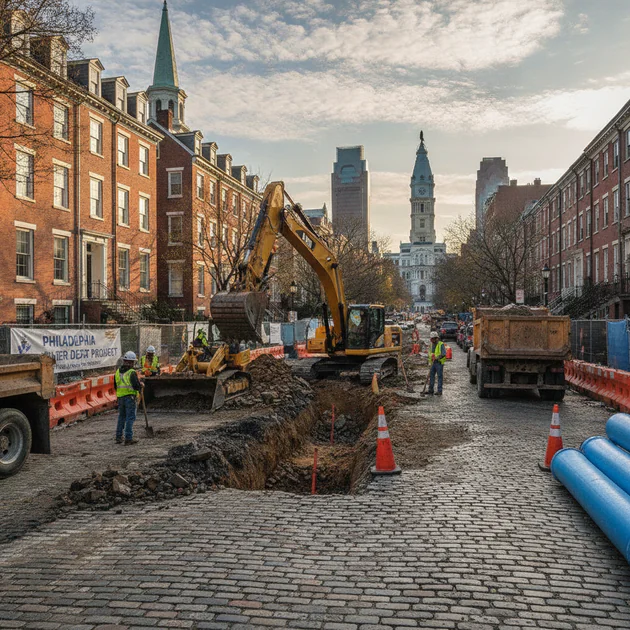
As spring breathes new life into Philadelphia, it also signals the start of a critical season for the city’s construction industry. This year, the focus sharpens on Councilmanic District 5, where the Philly PWD (Philadelphia Water Department) is launching a comprehensive series of infrastructure projects. This ambitious undertaking represents more than just routine maintenance; it’s a significant investment in the city’s future, aimed at upgrading aging systems, improving water quality, and enhancing stormwater management. For contractors, subcontractors, and suppliers across the region, this wave of development presents a wealth of opportunities.
At Philadelphia Trade Experts, we understand that navigating the landscape of public works can be complex. That’s why we’ve created this in-depth guide. We’ll break down the scope of the District 5 projects, explore the specific types of work involved, demystify the bidding process, and highlight the opportunities available for firms of all sizes. Whether you’re a prime contractor eyeing a multi-million dollar water main project or a specialty supplier providing essential materials, this article will provide the critical insights you need to position your business for success in the busy months ahead. Understanding the priorities of the Philly PWD is the first step toward securing your next major contract.
Table of Contents
- Understanding the Scope: What’s Driving the District 5 Upgrades?
- A Deep Dive into Key District 5 Projects
- Navigating the Philly PWD Bidding Process: A Contractor’s Roadmap
- The Ripple Effect: Economic Impact and Subcontracting Opportunities
- Challenges and Best Practices for Working on Philly PWD Projects
- Frequently Asked Questions about Philly PWD District 5 Projects
Understanding the Scope: What’s Driving the District 5 Upgrades?
The upcoming infrastructure blitz in District 5 is not a random occurrence. It’s a calculated part of the Philly PWD‘s broader, multi-billion dollar Capital Improvement Program. This long-term strategy is designed to systematically address the challenges posed by Philadelphia’s historic, and often aging, utility infrastructure. Much of the city’s water and sewer system dates back to the 19th and early 20th centuries, and while remarkably resilient, these systems require constant investment to ensure reliability, safety, and compliance with modern environmental standards.
District 5, which encompasses a diverse range of neighborhoods including parts of North Philadelphia, Center City, Fairhill, Fishtown, and Brewerytown, presents a unique set of challenges. The district features a high density of older cast-iron water mains, some over a century old, which are more prone to breaks and leaks. Furthermore, like much of the older city, it relies on a combined sewer system, where stormwater runoff and sanitary sewage travel in the same pipe. During heavy rain, these systems can be overwhelmed, leading to combined sewer overflows (CSOs) into local waterways. The PWD’s work directly targets these core issues.
The primary drivers for these capital improvement projects in Philadelphia include:
- Aging Infrastructure Replacement: The proactive replacement of water mains and sewer lines before they fail is a cornerstone of the PWD’s strategy. This reduces service disruptions, prevents costly emergency repairs, and improves water pressure and quality for residents and businesses.
- Regulatory Compliance: The PWD operates under consent decrees from the Environmental Protection Agency (EPA) to reduce CSOs. This legal mandate is a powerful catalyst for innovative stormwater management Philly projects and sewer system upgrades.
- System Reliability and Resilience: Modernizing the water and sewer grid enhances its ability to withstand the stresses of climate change, including more frequent and intense storm events.
- Economic Development: A reliable utility infrastructure is fundamental to supporting the city’s growth. These upgrades ensure that neighborhoods in District 5 can support new residential and commercial development.
By investing heavily in District 5, the Philly PWD is not just fixing pipes; it’s laying the groundwork for a more sustainable and resilient future for a vital part of the city. For construction professionals, this translates into a predictable pipeline of essential work rooted in a clear, long-term vision for Philadelphia infrastructure development.
A Deep Dive into Key District 5 Projects
The work planned for District 5 is multifaceted, covering a range of construction disciplines. While specific project locations and timelines are detailed in individual bid packages, the overall initiative can be broken down into three primary categories of work. Understanding the nuances of each is crucial for contractors planning to bid.
1. Extensive Water Main Construction Philly
The most visible and widespread component of the PWD’s work will be water main construction Philly. This involves the systematic replacement of old, brittle cast-iron pipes with modern, corrosion-resistant ductile iron mains. These projects are labor-intensive and require a high degree of coordination.
A typical water main replacement project involves several phases:
- Pre-Construction Surveying and Utility Mark-outs: Identifying and marking all existing underground utilities (gas, electric, telecom) is a critical first step to prevent accidental strikes.
- Excavation and Trenching: Crews will excavate trenches along city streets to access the old main. This requires robust traffic control plans and community outreach.
- Pipe Removal and Installation: The old main is removed, and new sections of ductile iron pipe are laid, connected, and tested for pressure and purity.
- Service Line Transfers: Individual water service lines for homes and businesses are disconnected from the old main and reconnected to the new one. This is a delicate operation requiring direct coordination with property owners.
- Backfilling and Restoration: Once the new main is operational, the trench is backfilled, compacted, and the street surface is temporarily, and then permanently, restored.
These projects offer significant opportunities for prime contractors with experience in utility work, as well as subcontractors specializing in excavation, paving, traffic control, and materials hauling. The sheer volume of pipe being replaced ensures a steady stream of work throughout the construction season.
2. Critical Sewer Line Replacement Philadelphia
Running parallel to the water main work is the equally important task of sewer line replacement Philadelphia. The PWD will be upgrading and rehabilitating aging sewer lines to improve capacity and reduce blockages and collapses. This work often requires deeper and more complex excavations than water main projects.
Contractors will encounter two main approaches to sewer rehabilitation:
- Open-Cut Replacement: Similar to water main work, this traditional method involves excavating a trench to remove the old sewer pipe and install a new one. It is typically used when the existing pipe is structurally compromised beyond repair.
- Trenchless Technology: To minimize disruption on busy streets, the Philly PWD increasingly utilizes trenchless methods like Cured-in-Place Pipe (CIPP) lining. In this process, a resin-saturated liner is inserted into the existing sewer line and cured with hot water or UV light, creating a new, seamless pipe within the old one. This requires specialized equipment and certified crews.
These projects are essential for maintaining public health and protecting the environment. They demand a high level of technical expertise and adherence to stringent safety protocols, creating a market for highly skilled utility contractors.
3. Innovative Green Stormwater Infrastructure (GSI)
A key element of the PWD’s strategy is its nationally recognized Green City, Clean Waters program. This initiative uses green infrastructure to manage stormwater where it falls, rather than letting it overwhelm the sewer system. GSI projects are being integrated throughout District 5 and represent a growing sector for construction firms.
Types of GSI installations include:
- Stormwater Bump-outs: Curb extensions at intersections that are filled with stone beds and vegetation to capture and absorb runoff from the street.
- Tree Trenches: Systems of interconnected underground basins and specially engineered soil that provide storage for stormwater and promote tree health.
- Permeable Pavement: Specialized asphalt or concrete surfaces that allow rainwater to soak through into an underground stone bed instead of running off into a sewer inlet.
- Rain Gardens: Depressed landscape areas designed to collect and filter stormwater runoff from roofs, sidewalks, and streets.
GSI projects require a different skill set than traditional utility work, blending civil engineering with landscaping and soil science. This opens doors for landscaping contractors, concrete specialists, and firms with expertise in earthwork and planting to participate in Philadelphia infrastructure development.
Navigating the Philly PWD Bidding Process: A Contractor’s Roadmap
Securing work with the Philly PWD requires a thorough understanding of the public procurement process. Success is not just about having the lowest price; it’s about meticulous preparation, attention to detail, and demonstrating your firm’s capability. For those new to public works or looking to refine their approach, here is a step-by-step guide to pursuing Philly utility construction bids.
- Become a Registered Vendor: Before you can bid, your company must be registered with the City of Philadelphia. This process is managed through the PHLContracts system. Ensure your vendor profile is complete and up-to-date, including all necessary tax clearances and certifications (such as MBE/WBE/DSBE if applicable).
- Actively Monitor Bid Opportunities: The primary portal for finding and tracking bid opportunities is the City’s eContract Philly website. Savvy contractors check this site daily. Set up alerts for relevant keywords like “water main,” “sewer,” or “PWD” to ensure you never miss a posting.
- Thoroughly Analyze Bid Documents: Once you identify a promising project, download all associated documents. This package typically includes plans, technical specifications, contract requirements, and bidding forms. Pay close attention to project scope, timelines, insurance requirements, and, critically, the bonding requirements. Most PWD projects require a bid bond, a performance bond, and a payment bond.
- Attend the Pre-Bid Meeting: The pre-bid meeting is one of the most valuable parts of the process. It’s your opportunity to hear directly from PWD engineers and project managers, ask clarifying questions, and assess your competition. It’s also an excellent venue for networking and identifying potential subcontracting partners.
- Develop a Precise and Competitive Estimate: Your bid must be built on a solid foundation of accurate cost estimation. Factor in all direct costs (labor, materials, equipment), indirect costs (overhead, project management), and a reasonable profit margin. Reach out to your suppliers and subcontractors early to get firm quotes. Remember, bids on public projects are sealed and final. For a deeper dive, check out our guide on winning public works contracts in Philadelphia.
- Submit a Compliant and Complete Bid Package: A single missing form or signature can get your bid disqualified. Double- and triple-check that you have completed every required document, included your bid bond, and met all submission deadlines. Most bids are now submitted electronically through the PHLContracts portal, so familiarize yourself with the system well before the deadline.
The bidding process is rigorous, but it is designed to be fair and transparent. A disciplined and systematic approach will significantly increase your chances of success.
The Ripple Effect: Economic Impact and Subcontracting Opportunities
The PWD’s investment in District 5 extends far beyond the physical infrastructure. These projects serve as powerful economic engines, creating a ripple effect that benefits the entire local construction ecosystem. While large, established prime contractors will lead these projects, a significant portion of the work and budget flows down to a diverse network of subcontractors, suppliers, and professional service firms.
A typical Philly PWD project creates a wide array of subcontracting opportunities. A prime contractor responsible for a water main replacement will need to partner with specialists for tasks such as:
- Asphalt and Concrete Paving: For final street restoration.
- Traffic Control Services: To safely manage vehicle and pedestrian flow around the work zone.
- Trucking and Hauling: For removing excavated soil and delivering backfill materials like stone and sand.
- Erosion and Sediment Control: To comply with environmental regulations.
- Landscaping: For restoring green spaces, especially in GSI projects.
- Specialty Inspections: Such as materials testing and compaction testing.
Furthermore, the demand for materials creates a robust market for local and regional suppliers. Everything from ductile iron pipe and fittings to concrete, aggregate, and safety equipment will be in high demand. This creates a prime opportunity for material suppliers to build relationships with the winning bidders.
The City of Philadelphia and the Philly PWD are also committed to promoting economic opportunity and inclusion. Many contracts have specific goals for the participation of Minority-Owned Business Enterprises (MBE), Women-Owned Business Enterprises (WBE), and Disabled-Owned Business Enterprises (DSBE). This creates a direct pathway for certified small and diverse firms to gain valuable experience and grow their business on major public works projects. Our construction consulting services can help you position your firm for these opportunities by navigating the certification and bidding process.
Challenges and Best Practices for Working on Philly PWD Projects
While the opportunities are substantial, working on urban infrastructure projects for the Philly PWD comes with a unique set of challenges. Successful contractors are those who anticipate these hurdles and implement best practices to mitigate them.
Common Challenges:
- Working in Congested Areas: District 5 is densely populated. Managing traffic, noise, and dust while maintaining access for residents and emergency services requires meticulous planning and constant communication.
- Unforeseen Subsurface Conditions: Philadelphia’s underground is a complex web of active and abandoned utilities. Despite thorough pre-construction surveys, encountering uncharted pipes, conduits, or historical structures is a common risk that can cause delays and require design changes.
- Stringent Regulatory Oversight: PWD projects are subject to rigorous inspection and quality control. All work must conform to the department’s detailed specifications, and documentation—from daily reports to material certifications—must be impeccable.
- Community Relations: Construction is inherently disruptive. Maintaining a positive relationship with the local community through clear communication, timely updates, and a responsive site team is essential for a smooth project.
Best Practices for Success:
- Prioritize Proactive Communication: Establish clear lines of communication with the PWD project manager, inspectors, and the designated community liaison. Address potential issues before they become problems.
- Invest in Technology: Utilize project management software for scheduling and documentation. Employ GPS and other modern surveying tools to improve accuracy and efficiency in the field.
- Emphasize a Safety-First Culture: Urban work sites are fraught with hazards. A relentless focus on safety through daily toolbox talks, proper personal protective equipment (PPE), and adherence to OSHA standards protects your crew and the public.
- Build a Reliable Team: Your success depends on the quality of your people, both in-house and external. Cultivate strong relationships with a network of dependable subcontractors and suppliers who understand the demands of public works.
By approaching these projects with a strategy that balances technical execution with soft skills like communication and problem-solving, contractors can build a strong reputation with the Philly PWD and secure future work.
Frequently Asked Questions about Philly PWD District 5 Projects
How can I find specific information on Philly PWD District 5 projects?
The most reliable source is the City of Philadelphia’s official procurement portal, PHLContracts (formerly eContract Philly). All public bid opportunities, including detailed plans, specifications, and pre-bid meeting information, are posted there. Additionally, the PWD often provides project updates on its official website and through community meetings in the affected neighborhoods.
What are the typical bonding requirements for PWD contracts?
Nearly all PWD construction contracts require three types of surety bonds. A Bid Bond (typically 10% of the bid amount) guarantees you will enter into the contract if you are the low bidder. A Performance Bond (100% of the contract value) guarantees you will complete the project according to the terms. A Payment Bond (100% of the contract value) guarantees you will pay your subcontractors and suppliers. Securing a line of bonding from a reputable surety company is essential before you can bid.
Are there specific certifications needed to work on PWD projects?
While general contractors need to be licensed by the City, specific trade certifications are often required for specialized work. For example, crews performing CIPP sewer lining may need manufacturer-specific certifications. Additionally, having certifications for your business, such as MBE, WBE, or DSBE, can be advantageous in meeting the economic opportunity goals set on many contracts.
How does the PWD’s Green City, Clean Waters plan create new opportunities?
The Green City, Clean Waters plan creates a distinct and growing market for contractors with expertise in “green” construction. This includes landscaping firms, permeable pavement installers, soil specialists, and civil contractors who can execute the earthwork and underground storage systems required for GSI. It diversifies the type of work available beyond traditional pipe-laying, opening doors for companies that may not have previously pursued PWD contracts.
What is the best way to stay updated on bid addendums and changes?
Once you have registered for a specific bid on the PHLContracts portal, you will typically receive automatic email notifications about any addendums or clarifications. However, it is the contractor’s ultimate responsibility to monitor the portal for updates. Make it a standard practice to check the project’s page on the portal daily in the week leading up to the bid submission deadline to ensure you have the most current information.
Your Partner in Navigating Philadelphia’s Construction Landscape
The flurry of infrastructure projects slated for District 5 this spring represents a significant moment for the Philadelphia construction industry. The investments being made by the Philly PWD will not only modernize our city’s essential services but also provide a steady stream of high-value work for contractors, subcontractors, and suppliers who are prepared to meet the challenge. From complex water main construction Philly to innovative green infrastructure, the diversity of projects offers opportunities for a wide range of specialties.
Success in this competitive environment requires more than just technical skill; it demands market intelligence, strategic planning, and a deep understanding of the public bidding process. At Philadelphia Trade Experts, we are dedicated to providing you with the insights and analysis you need to thrive. The key is to be proactive: monitor bid opportunities, build your network, and ensure your business is ready to execute when the right project comes along.
The groundwork is being laid for a busier, more prosperous construction season. By staying informed and strategically positioning your company, you can capitalize on the vital work being done by the Philly PWD and play a crucial role in rebuilding Philadelphia. To ensure you don’t miss any critical updates on District 5 projects or future bid opportunities, subscribe to our industry newsletter today.
Leave a Reply