
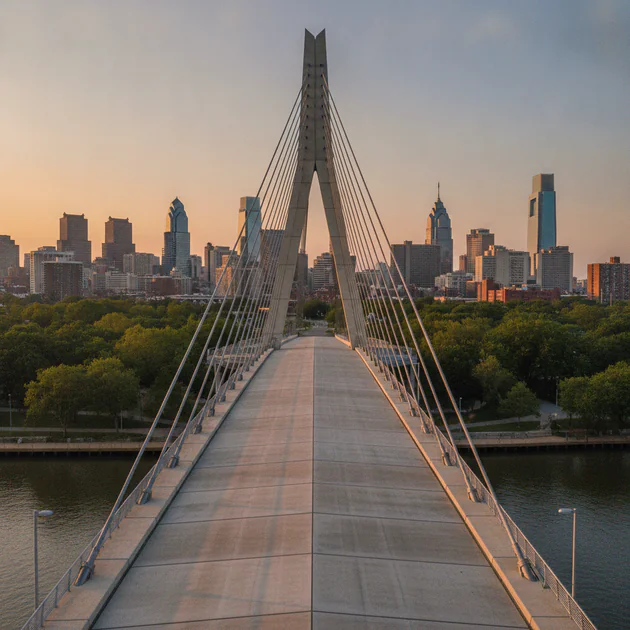
In the dynamic world of Philadelphia’s construction and engineering sector, certain projects rise above the rest, becoming not just functional infrastructure but celebrated landmarks of innovation. The recently completed Schuylkill Banks cable-stayed pedestrian bridge is one such project. This elegant structure, now a jewel of the city’s trail system, has officially received one of the industry’s highest honors: a prestigious PCI Design Award. This recognition from the Precast/Prestressed Concrete Institute (PCI) solidifies the project’s status as a benchmark for excellence, particularly in the realm of advanced PCI Bridge design and execution.
For professionals in our field, this award is more than a trophy; it’s a powerful case study in overcoming complex urban challenges through superior engineering and cutting-edge materials. The success of this PCI Bridge project offers invaluable insights into the future of Philadelphia bridge construction, showcasing the immense potential of precast concrete innovation. It demonstrates how aesthetic grace and robust structural performance can be achieved in tandem, even in the most constrained and demanding environments.
At Philadelphia Trade Experts, we believe in dissecting these landmark achievements to understand the “how” and “why” behind their success. This comprehensive article will explore the intricate details that led to the Schuylkill Banks bridge winning its PCI Design Award. We will delve into the project’s vision, the specific design elements that captured the judges’ attention, the technical mastery of its precast concrete construction, and the lasting impact this iconic structure will have on urban infrastructure projects in Philly for years to come.
Table of Contents
- The Vision: Connecting Communities with an Award-Winning Structure
- Deconstructing the Win: Why This PCI Bridge Earned Top Honors
- The Power of Precast: A Deep Dive into the Bridge’s Concrete Innovation
- Navigating the Complexities of Philadelphia Bridge Construction
- The Lasting Impact: What This Award Means for Philly’s Future
- Frequently Asked Questions About This Award-Winning PCI Bridge
The Vision: Connecting Communities with an Award-Winning Structure
Every great construction project begins with a compelling vision. For the Schuylkill Banks trail, that vision was one of seamless connectivity and enhanced public access to one of Philadelphia’s most beautiful natural resources. For years, a critical gap in the trail existed between South Street and Christian Street, forcing cyclists, runners, and pedestrians onto busy city streets to continue their journey. Closing this gap was not just a matter of convenience but of safety and community enhancement.
The challenge, however, was monumental. The proposed path had to navigate a logistical labyrinth, crossing the Schuylkill River while simultaneously clearing a highly active and critical CSX freight rail corridor. This wasn’t a simple matter of building a bridge over water; it was an exercise in threading a needle through the heart of active urban infrastructure. The project required a solution that would cause minimal to no disruption to the ceaseless flow of rail traffic below—a non-negotiable requirement from CSX.
Furthermore, the project’s stakeholders, including the Schuylkill River Development Corporation (SRDC), envisioned more than a mere utility crossing. They sought an architectural statement—a structure that would complement the city’s skyline and become an iconic destination in its own right. The design needed to be light, elegant, and visually striking, enhancing the user experience and adding to the aesthetic fabric of the city. This dual demand for high-functionality and high-aesthetics set the stage for a truly innovative approach to bridge design, ultimately leading the project team toward a sophisticated cable-stayed bridge design that could meet every demanding criterion.
Deconstructing the Win: Why This PCI Bridge Earned Top Honors
Winning a PCI Design Award is a significant achievement, placing a project among the nation’s best in terms of precast concrete design and construction. The awards program, now in its 61st year, recognizes projects that demonstrate structural engineering excellence, creative use of precast concrete, and positive contributions to the built environment. The Schuylkill Banks bridge was a standout contender, impressing the judges with its masterful blend of form and function.
The victory in the “Bridges with a Main Span from 76-149 feet” category for this specific PCI Bridge was no accident. It was the result of a deliberate design and construction strategy that leveraged the unique strengths of precast concrete to solve complex problems. Let’s break down the key elements that contributed to this win:
- Aesthetic Elegance and Slender Profile: The bridge’s signature feature is its single, dramatically angled pylon from which the cables spring. This asymmetrical cable-stayed design creates a dynamic, modern silhouette. Using high-strength precast concrete allowed for exceptionally slender deck segments and a graceful pylon, achieving a visual lightness that would be difficult to replicate with other materials.
- Innovative Segmental Construction: The bridge deck is composed of 21 precast concrete box-girder segments. This segmental approach was critical for erecting the structure over the active CSX rail lines without disrupting service. Each piece was fabricated off-site to exacting specifications and then lifted into place, a method that exemplifies the efficiency celebrated by the PCI Design Awards Philadelphia.
- Superior Quality and Durability: Precast concrete manufacturing occurs in a controlled factory environment. This ensures superior quality control over concrete mix design, reinforcement placement, and curing conditions. The result is a highly durable structure with a flawless finish, designed to withstand Philadelphia’s weather cycles and the demanding urban environment for a century or more.
- Minimized Environmental and Community Impact: By fabricating the majority of the bridge components off-site, the project drastically reduced on-site construction time, noise, and waste. This accelerated bridge construction (ABC) technique is a cornerstone of modern, sustainable infrastructure development and a key consideration for the PCI judges.
- Technical Complexity and Precision: The bridge features a unique horizontal curve, meaning the deck segments were not simple rectangles. Each piece had a complex, trapezoidal geometry that had to fit together with millimeter precision. This successful execution of a complex design showcased the highest level of technical proficiency from the precast fabricator and the installation crew.
The Power of Precast: A Deep Dive into the Bridge’s Concrete Innovation
For construction professionals, the true genius of the Schuylkill Banks project lies in its masterful application of precast, prestressed concrete. This project serves as a definitive textbook example of why precast is often the superior choice for complex urban infrastructure projects in Philly. The decision to construct this as a precast PCI Bridge was not merely a preference; it was the core solution to the project’s most significant challenges.
Precast concrete involves casting concrete in a reusable mold or “form” which is then cured in a controlled environment, transported to the construction site, and lifted into place. This is often combined with prestressing, where high-strength steel tendons are tensioned before or after the concrete sets, imparting a compressive force that dramatically increases the element’s strength and ability to span long distances.
On the Schuylkill Banks bridge, this methodology was applied with surgical precision. The 21 deck segments and the multi-part pylon were all precast. This offered a cascade of benefits:
- Unmatched Quality Control: In the precast plant, every variable—from the water-cement ratio to the ambient temperature during curing—is meticulously controlled. This eliminates the uncertainties of on-site casting, such as weather delays and inconsistent finishes. The result is a product with predictable strength, superior durability, and a high-quality aesthetic finish straight from the mold.
- Accelerated Construction Schedule: The project timeline was significantly compressed because site preparation and foundation work could occur simultaneously with the fabrication of the bridge segments. Once the foundations were ready, the superstructure could be erected rapidly, almost like assembling a high-tech Lego set. This speed was crucial for minimizing the overall project duration and associated costs.
- Enhanced Worker Safety: Building a bridge over active freight lines and a river is inherently dangerous. By manufacturing the segments in a safe, ground-level factory setting, the project dramatically reduced the number of labor hours required in high-risk, elevated locations. This focus on safety is a hallmark of well-planned, modern construction projects.
- Design Freedom and Complexity: The unique, curving alignment of the bridge required each deck segment to be slightly different. Precast technology excels at creating complex, repetitive, or unique shapes with high precision. The ability to execute this complex geometry flawlessly was a key factor in the project’s success and a testament to the versatility of precast concrete.
This project is a powerful demonstration of precast concrete innovation. It moves beyond simple beams and panels to showcase how segmental precast construction can create beautiful, complex, and highly functional structures that solve real-world urban problems. For more examples of how these techniques are shaping the city, explore our portfolio of Philadelphia infrastructure projects.
Navigating the Complexities of Philadelphia Bridge Construction
The theoretical benefits of precast concrete are one thing; executing them in a dense, active urban environment is another. The success of the Schuylkill Banks bridge is a story of meticulous planning, logistical mastery, and seamless collaboration between the entire project team, including the designers at AECOM, the general contractor Buckley & Company, Inc., and the precast supplier.
The primary challenge was the site itself. The bridge’s path was hemmed in by the river on one side and the CSX tracks on the other, leaving a very narrow corridor for construction activities. The most critical constraint was the mandate from CSX for zero interruption to their 24/7 freight operations. This eliminated any possibility of traditional on-site construction methods that would require extensive falsework or long-term lane closures.
The team’s solution was a masterclass in modern Philadelphia bridge construction techniques:
- Segmental Erection: The bridge was built using the balanced-cantilever method. Segments were lifted one by one and attached to opposing sides of the pylon, keeping the structure in balance as it extended out over the water and the tracks. This method requires immense precision but negates the need for ground-based support structures.
- Specialized Equipment: A massive crane, positioned on a temporary causeway built into the river, was used to lift and place each 80-ton segment. The crane’s reach and capacity were critical to the project’s success, allowing the crew to set segments over the tracks during carefully coordinated, short-duration windows.
- Just-in-Time Delivery: With limited on-site storage space, the delivery of the massive precast segments had to be choreographed perfectly. Each piece was transported from the fabrication plant to the site just as it was needed for erection, a logistical dance that required constant communication and planning.
- Collaborative Problem-Solving: Throughout the project, close collaboration between the engineer, contractor, and precaster was essential. For example, the connections between segments, which included post-tensioning ducts and shear keys, had to align perfectly. Any deviation could have caused significant delays. Regular meetings and shared 3D models ensured that every component fit as designed.
This project underscores a critical lesson for our industry: complex urban projects demand more than just good design. They require an integrated approach where constructability is considered from day one. The Schuylkill Banks bridge is a shining example of this integrated philosophy in action, setting a new standard for how Philadelphia can and should approach its most challenging urban infrastructure projects.
The Lasting Impact: What This Award Means for Philly’s Future
The completion and subsequent award for the Schuylkill Banks PCI Bridge represent a watershed moment for Philadelphia’s infrastructure development. Its impact extends far beyond the trail users who now enjoy a safer, more scenic route. This project serves as a powerful, tangible proof-of-concept for city planners, engineers, and construction professionals, demonstrating what is possible when we embrace innovation.
First, it sets a new aesthetic and engineering benchmark. Future infrastructure projects in the city will be measured against the elegance and efficiency of this bridge. It proves that functional infrastructure does not need to be utilitarian or unsightly. By prioritizing high-quality design and materials, the city can create public works that are also sources of civic pride and beauty. This is a critical step in building a more livable, walkable, and attractive urban environment.
Second, it champions the use of precast concrete for future projects. The undeniable success in terms of speed, quality, and minimal disruption makes a compelling case for using precast solutions for other challenging projects, such as replacing aging overpasses, building new transit infrastructure, or extending the trail system further. The lessons learned here can be directly applied to make future Philadelphia bridge construction projects faster, safer, and more cost-effective. As a firm specializing in trade solutions, we see this as a pivotal shift in material and methodology preference. Learn more about how we can support such innovative projects through our expert services.
Finally, the bridge is a catalyst for economic and community development. By closing the gap in the trail, it has created a continuous 10-mile-plus route that is a major recreational and transportation asset. This enhanced connectivity boosts local businesses, increases property values in adjacent neighborhoods, and promotes a healthier, more active lifestyle for residents. It reinforces Philadelphia’s reputation as a forward-thinking city that invests wisely in its public spaces and infrastructure. This award-winning PCI Bridge is not just a structure; it’s an investment in the future of Philadelphia.
Frequently Asked Questions About This Award-Winning PCI Bridge
What is the Precast/Prestressed Concrete Institute (PCI)?
The Precast/Prestressed Concrete Institute, or PCI, is the leading technical institute and trade association for the precast concrete industry in North America. It develops and maintains the standards for precast concrete design and fabrication, certifies plants and personnel, and funds research. The annual PCI Design Awards are considered the most prestigious honor in the industry, recognizing projects that showcase the highest levels of design, engineering, and construction excellence using precast concrete.
Why was a cable-stayed design chosen for the Schuylkill Banks bridge?
A cable-stayed bridge design was the ideal solution for several reasons. Structurally, it allows for a long, clear span with minimal need for support piers in the middle. This was essential for clearing both the wide Schuylkill River and the active CSX rail lines without obstruction. Aesthetically, the design is incredibly elegant and visually light. The single, angled pylon and the fan-like array of cables create a dramatic and modern landmark that enhances the city’s skyline.
How does precast concrete contribute to sustainable construction?
Precast concrete offers significant sustainability benefits. Fabrication in a controlled plant environment dramatically reduces on-site waste. The high-strength, dense concrete used in precast elements provides a very long service life, reducing the need for replacement and the associated lifecycle carbon footprint. Furthermore, precast production can incorporate recycled materials like slag and fly ash, reducing the amount of cement required. The efficiency of off-site manufacturing also leads to less on-site equipment usage, noise pollution, and traffic disruption, contributing to a more sustainable construction process overall.
What were the biggest construction challenges for this project?
The three biggest challenges were the site constraints, the operational requirements of the railroad, and the precision required for assembly. The team had to work within a very narrow footprint between the river and the tracks. The absolute necessity of keeping the CSX freight line fully operational meant all construction over the tracks had to be done in short, pre-approved windows. Finally, the complex, curved geometry of the bridge meant that each of the 21 precast deck segments had to be manufactured and installed with millimeter-level accuracy to ensure a perfect fit.
A Landmark Achievement in Philadelphia’s Built Environment
The Schuylkill Banks cable-stayed bridge is far more than a simple connector; it is a triumphant story of vision, innovation, and execution. Its recognition with a PCI Design Award is a well-deserved honor that validates the skill and dedication of the entire project team. For the Philadelphia construction community, this project serves as an inspiring and educational example of how to solve complex urban challenges with modern methods and materials. It is a powerful showcase for precast concrete innovation and a new benchmark for structural engineering excellence in our city.
This award-winning PCI Bridge stands as a testament to what can be achieved when ambitious design is paired with intelligent construction strategy. It has enhanced our city’s landscape, improved community connectivity, and provided a clear roadmap for the future of infrastructure development in the region. We celebrate this achievement and look forward to seeing its influence on the next generation of projects that will shape Philadelphia.
Read more about the award-winning Schuylkill Banks bridge project and how its innovative techniques are setting new standards for the industry.
Leave a Reply