
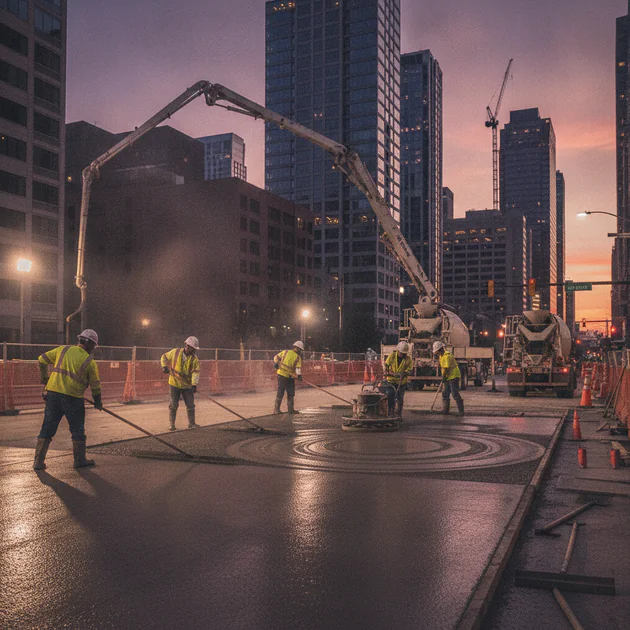
Walk through the streets of Philadelphia, and you’ll feel it—a palpable energy of growth and transformation. From the rising towers in Center City to the sprawling new developments in the Navy Yard, our city is being reshaped, rebuilt, and reimagined. At the very foundation of this progress lies one of the most essential and enduring materials known to man: concrete. The demand for skilled professionals who can master this material has never been higher, creating a massive opportunity for those seeking stable, rewarding careers in the skilled trades.
If you’re a seasoned professional or someone looking to break into the construction industry, this is your moment. Dozens of high-paying concrete finisher and laborer jobs are currently available across the Philadelphia region, driven by a construction boom that shows no signs of slowing down. This isn’t just about finding a job; it’s about building a career on the very bedrock of the city’s future. The need for experts who can pour, shape, and finish concrete is critical, making this one of the most in-demand roles in the current Philadelphia construction job market.
This comprehensive guide from Philadelphia Trade Experts is designed to give you an insider’s view of the landscape for concrete worker jobs in Philadelphia. We’ll explore why the demand is so high, break down the key roles, detail the skills employers are desperately seeking, and provide a clear roadmap for how you can secure one of these lucrative positions. Your future in Philadelphia construction starts here.
Table of Contents
- Why the Philadelphia Construction Industry is Booming for Concrete Professionals
- The Critical Difference: Concrete Laborer vs. Concrete Finisher
- Mastering the Skills: What Employers Seek in Top Concrete Jobs
- A Concrete Career Path: Opportunities for Growth and Advancement
- How to Land the Best Concrete Laborer Jobs in Philly: A Step-by-Step Guide
- Frequently Asked Questions About Concrete Jobs
Why the Philadelphia Construction Industry is Booming for Concrete Professionals
The current demand for concrete laborer jobs in Philly isn’t a temporary spike; it’s the result of a powerful convergence of economic growth, major infrastructure projects, and a thriving real estate market. Philadelphia is undergoing a renaissance, and every new skyscraper, life sciences lab, bridge repair, and residential complex requires a massive amount of foundational and structural concrete work. This sustained period of development has created a robust and resilient job market for skilled trades, especially for those in the concrete sector.
Several key factors are fueling this boom:
- Major Infrastructure Investment: The federal Infrastructure Investment and Jobs Act is funneling billions into Pennsylvania for projects that are heavily reliant on concrete. This includes the repair and replacement of aging bridges, highway expansions, and updates to public transportation systems like SEPTA. These are long-term, multi-year projects that guarantee a steady need for skilled concrete workers for the foreseeable future.
- Commercial and Life Sciences Development: Philadelphia has solidified its reputation as a “Cellicon Valley” for life sciences. The construction of state-of-the-art laboratory and R&D facilities, particularly in areas like University City and the Navy Yard, demands highly specialized concrete work. These buildings require precisely engineered foundations and flatwork to support sensitive equipment, driving demand for top-tier finishers.
- Residential Construction Surge: From luxury high-rises in Center City to multi-family housing units in Fishtown and South Philly, the residential market continues to expand. Each new building requires extensive concrete work, including foundations, parking garages, sidewalks, and structural floors. This consistent residential development provides a constant stream of opportunities.
- An Aging Workforce: Like many skilled trades, the construction industry is facing a wave of retirements. Experienced concrete finishers and foremen are leaving the workforce, creating a significant skills gap. This creates an incredible opportunity for the next generation to step in, learn the trade, and advance quickly. Companies are actively seeking new talent to train and develop into future leaders.
According to the Bureau of Labor Statistics, the employment of cement masons and concrete finishers is projected to grow steadily, and metropolitan hubs like Philadelphia are at the forefront of this demand. The sheer volume of ongoing and planned projects means that companies are competing for talent, leading to better wages, improved benefits, and more opportunities for career growth for those with the right skills.
The Critical Difference: Concrete Laborer vs. Concrete Finisher
While people often group them together, the roles of a concrete laborer and a concrete finisher are distinct, each requiring a different set of skills and offering a different entry point into the industry. Understanding this distinction is crucial for navigating the Philadelphia construction jobs market and finding the right fit for your experience and career goals.
Think of it as a team: the laborers are the powerhouse that makes the work possible, and the finishers are the artists who perfect the final product. Both are absolutely essential for a successful concrete project.
The Concrete Laborer: The Engine of the Crew
A General Construction or Concrete Laborer is the backbone of any concrete crew. This is often an entry-level position, but it is physically demanding and requires a strong work ethic and a willingness to learn. Laborers are involved in every stage of the process leading up to the finishing touches.
Key Responsibilities of a Concrete Laborer:
- Site Preparation: Clearing and grading the area, setting up forms and rebar to create the mold for the concrete.
- Mixing and Pouring: Operating concrete mixers, assisting with the pour from the truck, and ensuring the concrete is distributed evenly within the forms.
- Material Handling: Moving materials, tools, and equipment around the job site. This is a physically intensive part of the job that requires strength and stamina.
- Assisting Finishers: Shoveling excess concrete, holding tools, and providing general support to the skilled finishers on the crew.
- Demolition and Cleanup: Breaking up old concrete, cleaning forms after a pour, and maintaining a safe and organized work environment.
The Concrete Finisher: The Master of the Surface
A Concrete Finisher, also known as a Cement Mason, is a skilled tradesperson who takes the freshly poured concrete and transforms it into a smooth, durable, and functional surface. This role requires precision, technical knowledge, and an artist’s touch. Finishers are responsible for the final quality and appearance of the concrete slab.
Key Responsibilities of a Concrete Finisher:
- Screeding and Leveling: Using a screed to strike off excess concrete and create a flat, level surface.
- Floating and Troweling: Using hand floats or power trowels to compact the concrete, remove imperfections, and bring moisture to the surface for a smooth finish.
- Edging and Jointing: Creating clean, rounded edges with an edger and cutting control joints to prevent cracking as the concrete cures.
- Applying Finishes: Creating different surface textures, such as a broom finish for slip resistance or a smooth, hard trowel finish for interior floors.
- Curing and Sealing: Applying curing compounds or sealants to ensure the concrete hardens properly and is protected from the elements.
While many start as laborers and learn the trade on the job to become finishers, both roles are in high demand. If you’re looking for concrete laborer jobs in Philly, you’ll find numerous opportunities to get your foot in the door and build a foundation for a long and successful career.
Mastering the Skills: What Employers Seek in Top Concrete Jobs
Landing one of the top concrete worker jobs in Philadelphia requires more than just showing up. Employers are looking for a combination of technical proficiency (hard skills) and professional attributes (soft skills) that demonstrate you are a reliable, safe, and valuable member of the team. Developing these skills will not only help you get hired but will also set you on a path for promotion and higher pay.
Essential Hard Skills for Concrete Professionals
These are the teachable, technical abilities that are fundamental to performing the job safely and effectively.
- Tool and Equipment Proficiency: You must be comfortable and competent with the tools of the trade. For laborers, this includes shovels, wheelbarrows, and concrete mixers. For finishers, this expands to include hand trowels, floats, edgers, power trowels, and concrete saws.
- Formwork Knowledge: The ability to set, brace, and strip wooden or metal forms is a highly valued skill. Accurate formwork is essential for ensuring the final concrete structure meets project specifications.
- Blueprint and Plan Reading: While more critical for finishers and foremen, even laborers who can understand basic construction plans and layouts are more valuable. This skill allows you to anticipate needs and work more efficiently.
- Understanding Concrete Mixes: Knowing how different aggregates, water-to-cement ratios, and additives affect the concrete’s strength, set time, and workability is crucial. This knowledge is key to adapting to different weather conditions and project requirements.
- Safety Certifications: An OSHA 10-hour or 30-hour certification is often a prerequisite for working on commercial job sites. As emphasized by the Occupational Safety and Health Administration (OSHA), a demonstrated commitment to safety is non-negotiable in the modern construction industry.
Critical Soft Skills That Set You Apart
These interpersonal skills and personal attributes determine how well you work with others and handle the daily challenges of a construction site.
- Strong Work Ethic and Reliability: Concrete work waits for no one. Pours are scheduled at specific times, and crews depend on every member to be on time and ready to work hard. Your reputation for reliability is your most valuable asset.
- Teamwork and Communication: A concrete pour is a coordinated effort. You must be able to communicate clearly with your foreman, truck drivers, and fellow crew members to ensure a smooth and safe operation.
- Problem-Solving Ability: Things can go wrong on a job site—a form might leak, the weather might turn, or a tool might break. The ability to think on your feet and help find a practical solution is highly prized.
- Physical Stamina and Endurance: The work is physically demanding. It involves heavy lifting, prolonged standing, and working in all weather conditions. Being in good physical shape is essential for both performance and injury prevention.
For more insights on developing a career in the trades, explore our resources on building a successful career in skilled trades jobs in Philly.
A Concrete Career Path: Opportunities for Growth and Advancement
A job in the concrete industry is not just a job; it’s the first step on a clear and rewarding career ladder. Unlike many other fields, construction offers tangible pathways for advancement based on skill, experience, and leadership. The Philadelphia construction industry is actively looking to promote from within, meaning your hard work today directly builds your career for tomorrow.
Here is a typical progression for a career in concrete:
- Concrete Laborer: This is the starting point. You’ll learn the fundamentals of the trade, build physical strength, and prove your reliability. Pay is hourly, but with plenty of opportunities for overtime.
- Apprentice: By joining a union or a company’s apprenticeship program, you can receive formal training alongside your on-the-job experience, significantly accelerating your skill development.
- Concrete Finisher / Cement Mason: After mastering the necessary skills, you advance to a finisher role. This comes with higher pay and more responsibility for the quality of the final product.
- Foreman / Lead Hand: With proven expertise and leadership qualities, you can become a foreman. In this role, you lead a crew, manage daily tasks, read blueprints, and coordinate with other trades on the job site. This is a significant step into a management role.
- Superintendent: A superintendent oversees the entire job site, managing multiple crews, schedules, budgets, and safety protocols. This senior-level position requires extensive experience and strong management skills.
Beyond this traditional path, there are also opportunities to specialize. You could become an expert in decorative concrete, creating stamped or colored surfaces for high-end residential and commercial projects. Other specializations include concrete repair and restoration, precast concrete manufacturing, or becoming a certified concrete testing technician.
The earning potential grows substantially with each step. While an entry-level laborer might start around $18-$25 per hour in the Philadelphia market, an experienced finisher can earn $30-$45 per hour or more, especially within a union. Foremen and superintendents command significant salaries, often exceeding six figures, reflecting their critical role in a project’s success.
How to Land the Best Concrete Laborer Jobs in Philly: A Step-by-Step Guide
With such high demand, the opportunity is there for the taking. However, the best companies are still selective. Following a strategic approach will help you stand out from the competition and secure a position with a top-tier employer.
- Craft a Skills-Focused Resume: Even for a laborer position, a resume is important. Don’t just list past employers. Use bullet points to highlight your specific skills and responsibilities. Include any experience with tools, equipment operation, safety training (like OSHA 10), and your physical capabilities. Quantify your experience where possible (e.g., “Assisted in pouring over 50 residential foundations”).
- Network Within the Industry: The construction world is built on relationships. Talk to people you know in the trades. Visit local union halls. Connect with recruiters and construction managers on LinkedIn. A personal recommendation can often get your resume to the top of the pile.
- Target Your Job Search: Don’t just blast your resume everywhere. Use specialized job boards that focus on the skilled trades. Platforms like Philadelphia Trade Experts are curated specifically for the local market, connecting you directly with companies that are actively hiring for concrete worker jobs in Philadelphia.
- Ace the Interview: Be prepared to talk about your experience, your commitment to safety, and your work ethic. An interview for a construction job is often a practical assessment. Be honest about your skill level but emphasize your eagerness to learn and work hard. Ask questions about the company’s safety program and opportunities for training—it shows you’re serious about your career.
- Demonstrate Your Reliability: Your first impression starts before the interview. Show up on time (which means 15 minutes early). Have a professional demeanor. Follow up with a thank-you note or email. These simple acts demonstrate the reliability that is so crucial on a construction site.
Frequently Asked Questions About Concrete Jobs
What is the average salary for a concrete worker in Philadelphia?
Salaries can vary widely based on experience, role, and whether the position is union or non-union. An entry-level concrete laborer in the Philadelphia area can typically expect to earn between $18 and $25 per hour. A skilled concrete finisher or cement mason can earn significantly more, often in the range of $30 to $45 per hour. Foremen and supervisors can earn salaries well above this, often exceeding $80,000-$100,000 annually, especially with overtime.
Do I need a certification to get a concrete job in Philly?
While a specific “concrete certification” is not always required for entry-level laborer positions, having an OSHA 10 or OSHA 30 safety certification is highly advantageous and often required by larger commercial contractors. For more advanced roles, certifications from organizations like the American Concrete Institute (ACI), such as the ACI Certified Concrete Finisher, can significantly boost your credibility and earning potential.
What are the physical demands of a concrete laborer job?
The physical demands are significant. The job requires the ability to lift heavy materials (often 50-100 pounds), stand, kneel, and bend for extended periods, and work in extreme weather conditions, including heat, cold, and rain. Excellent physical fitness, stamina, and a commitment to safe lifting practices are essential for success and longevity in this career.
How is technology changing the concrete industry?
Technology is making a big impact. Laser screeds are used to create incredibly flat and level floors with greater efficiency. GPS technology is used for precise site layout and grading. Advanced chemical admixtures are changing the properties of concrete, allowing it to set faster or achieve higher strength. Workers who are adaptable and willing to learn how to use these new technologies will be more valuable in the modern construction environment.
Lay the Foundation for Your Future in Philadelphia
The message is clear: the demand for skilled concrete professionals in Philadelphia is at an all-time high. This is more than just a job market; it’s a career-building opportunity. The city’s growth is literally being built on the foundations you will help lay. Whether you are an experienced finisher looking for your next challenge or a hardworking individual ready to break into the skilled trades, there has never been a better time to build your future in this essential industry.
The skills you develop in the concrete trade are transferable, valuable, and in constant demand. You’ll gain the satisfaction of seeing your hard work transform the city’s landscape, creating tangible, lasting structures that will stand for decades. It’s a career that offers stability, excellent earning potential, and a clear path for advancement.
Leave a Reply