
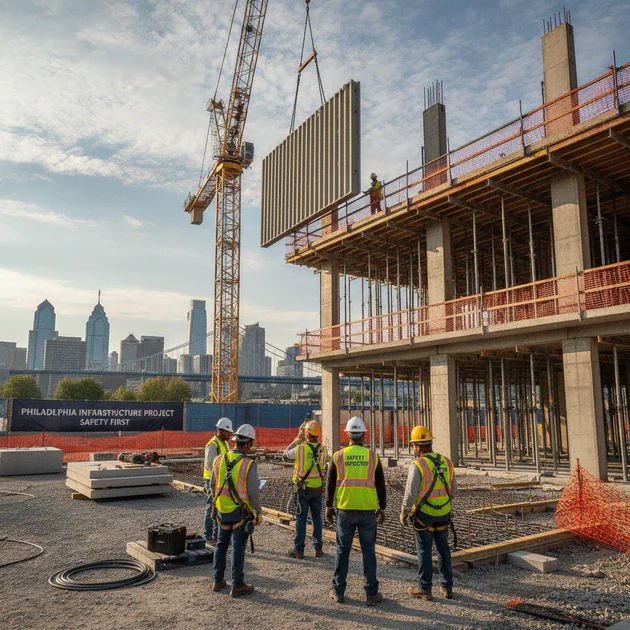
Phila Concrete Safety: Critical Lessons and Risks After the CHOP Garage Collapse
The Philadelphia construction landscape was shaken by the partial collapse of a parking garage under construction at a Children’s Hospital of Philadelphia (CHOP) facility. This tragic event, which resulted in a fatality and raised immediate, urgent questions, serves as a stark and powerful reminder of the immense responsibilities we hold within the industry. While investigations are ongoing, the incident has cast a harsh spotlight on the entire supply chain, particularly precast concrete suppliers and the rigorous processes required to ensure project safety. For every general contractor, project manager, and trade professional in the city, this is a critical moment for reflection and action, demanding a renewed focus on Phila concrete safety and risk management.
This incident is more than a headline; it’s a case study in potential systemic failures that can occur when speed and budget pressures overshadow meticulous oversight. From material sourcing and fabrication to transportation and on-site installation, every link in the chain must be fortified with uncompromising standards. The scrutiny now falling on precast concrete Philadelphia suppliers is a necessary consequence, compelling us to re-evaluate how we vet partners, verify materials, and implement quality control on our jobsites. The integrity of our buildings and the safety of our workers depend on it.
At Philadelphia Trade Experts, we believe that building a safer city starts with shared knowledge and a collective commitment to excellence. This comprehensive analysis will delve into the critical safety and regulatory risks highlighted by the CHOP garage collapse. We will explore the nuances of precast concrete, the complexities of building code compliance in Philadelphia, and provide actionable strategies for robust construction risk management. Our goal is to equip you with the insights needed to protect your projects, your people, and your reputation in this challenging environment.
The CHOP Garage Collapse: A Case Study in Structural Failure
On a seemingly routine workday, the unthinkable happened. A section of a 12-story parking garage being erected near the CHOP campus on W. Schuylkill Avenue experienced a catastrophic failure. Precast concrete slabs on multiple floors gave way in a progressive collapse, creating a scene of devastation and prompting a massive emergency response. The incident immediately halted work on the site and triggered investigations by multiple agencies, including the Occupational Safety and Health Administration (OSHA).
While the final report detailing the precise cause will take time, industry experts immediately began to analyze the potential points of failure. The focus quickly turned to the materials and methods involved, specifically the use of precast concrete components. Precast construction, where structural elements are fabricated off-site in a controlled environment and then transported for assembly, is incredibly common in projects like parking garages due to its efficiency and speed. However, this efficiency hinges on flawless execution at every stage.
The CHOP garage collapse forces us to ask difficult questions. Was this a result of a design flaw? Was there a manufacturing defect in the precast concrete panels themselves? Did damage occur during transportation to the jobsite? Or was the failure rooted in the on-site installation process, such as improper connections between the structural elements? Each of these possibilities represents a significant risk that must be managed on every project. This event is not an isolated incident to be dismissed but a critical learning opportunity for improving construction safety Philadelphia-wide. It underscores the vital importance of understanding the entire lifecycle of a structural component, from its conception in an engineering drawing to its final placement in a building.
The Spotlight on Precast Concrete Suppliers in Philadelphia
In the wake of the collapse, the role of precast concrete suppliers has come under intense scrutiny. These specialized manufacturers are responsible for producing the very bones of many modern structures. Their quality control, material science, and fabrication processes are the first line of defense in ensuring structural integrity. When a failure occurs, the investigation naturally traces back to the origin of the materials.
Precast concrete offers numerous advantages: superior strength from factory-controlled curing, faster on-site assembly, and often, lower project costs. However, these benefits are only realized when the supplier adheres to the highest standards. Potential pitfalls are numerous and can be catastrophic. A bad batch of concrete mix, improperly placed steel reinforcement, or hairline cracks developed during demolding or transport can compromise an entire structure. Therefore, the due diligence process for selecting a precast concrete Philadelphia supplier must be exhaustive and go far beyond a simple price comparison.
Project managers and general contractors must become forensic in their vetting process. It’s no longer enough to accept a supplier’s claims at face value. You must demand transparency and verification. Here are some critical questions to ask every potential precast supplier:
- Quality Assurance & Control (QA/QC): Can you provide detailed documentation of your QA/QC program? Who is responsible for oversight, and what are their qualifications? Do you have certifications from recognized industry bodies like the Precast/Prestressed Concrete Institute (PCI)?
- Material Sourcing and Testing: Where do you source your raw materials (cement, aggregate, admixtures)? What is your process for testing incoming materials and the final concrete mix? Can we review batch test reports and cylinder break results from recent, comparable projects?
- Fabrication and Curing Records: What documentation do you maintain for each piece you fabricate? This should include pour dates, curing temperatures, and strength testing results specific to the components destined for our project.
- Transportation and Logistics: What are your procedures for loading, securing, and transporting finished pieces to prevent cracking or spalling? What is your protocol if a piece is found to be damaged upon arrival at the jobsite?
- Track Record and References: Can you provide a list of 5-10 successfully completed projects of similar scale and complexity in the Philadelphia region? Are you willing to provide contacts for the general contractors and structural engineers on those projects?
Treating your supplier as a critical project partner, rather than just a vendor, is fundamental to improving Phila concrete safety. This partnership must be built on a foundation of trust, transparency, and, most importantly, verifiable data.
Navigating Philadelphia’s Building Codes and Regulatory Compliance
A structural failure of this magnitude inevitably raises questions about the efficacy of local regulations and the inspection process. In Philadelphia, the Department of Licenses and Inspections (L&I) is tasked with enforcing the city’s building codes, which are largely based on the International Building Code (IBC). These codes provide a comprehensive framework for design, materials, and construction methods intended to ensure public safety.
However, building code compliance is not a simple checkbox to be ticked off. It is a complex, dynamic process that requires diligent oversight from all parties. The code specifies minimum requirements for things like concrete strength (psi), the amount and placement of steel reinforcement, and the design of connections between structural members. The structural engineer of record is responsible for creating a design that meets or exceeds these codes, and the city’s plan review process is designed to catch potential issues before a permit is even issued.
The breakdown often occurs in the transition from paper to physical reality. L&I inspectors are responsible for visiting jobsites at critical stages of construction to verify that the work conforms to the approved plans. These inspections might include reviewing rebar placement before a pour or checking connections as precast elements are erected. The challenge is the sheer scale and complexity of modern construction. An inspector may only be on-site for a short period and cannot possibly witness every single action. This “inspection gap” places an enormous burden on the general contractor to ensure continuous compliance.
Effective regulatory compliance, therefore, becomes a matter of internal project management. This includes:
- Meticulous Shop Drawing Review: Before a single piece of precast is fabricated, the contractor and structural engineer must rigorously review the supplier’s shop drawings to ensure they align perfectly with the engineering plans.
- Third-Party Inspections: Many projects now mandate special inspections by an independent engineering firm. These inspectors provide a dedicated layer of oversight, focusing specifically on critical structural elements like concrete and steel.
- Comprehensive Documentation: Maintaining a detailed log of all inspections (both municipal and third-party), material delivery tickets, and on-site test results is non-negotiable. This creates a paper trail that demonstrates due diligence and can be invaluable in the event of an issue.
For more detailed information on local requirements, professionals should always consult the official Philadelphia L&I website. Furthermore, navigating the permitting process can be complex.
Critical Elements of Construction Risk Management for Concrete Projects
The CHOP collapse is a harsh lesson in the consequences of unmanaged risk. A truly robust approach to Phila concrete safety requires a holistic construction risk management strategy that encompasses the entire project lifecycle, from pre-construction planning to final sign-off.
Validating Concrete Material Quality
Trust, but verify. This must be the mantra when it comes to concrete material quality. While your precast supplier should provide extensive testing data, relying on it exclusively is a risk. An effective strategy includes an independent verification process. This can involve hiring a third-party testing agency to take core samples from delivered pieces or to be present during fabrication to witness testing protocols. On-site, your team must be trained to perform visual inspections. Look for excessive honeycombing, large cracks (distinguishing between minor shrinkage cracks and significant structural ones), and signs of damage from transportation. Any piece that raises suspicion should be immediately quarantined and re-evaluated by a structural engineer before installation.
Ensuring Structural Integrity Through Audits and Oversight
The structural engineer’s plans are the project’s bible. However, ensuring those plans are executed perfectly requires multiple layers of review. The general contractor’s project management team should conduct its own review of the plans and associated shop drawings to understand critical connection points and load paths. For complex projects, engaging a second, independent structural engineering firm to perform a peer review of the original design can be an invaluable, albeit costly, step. This provides a fresh set of eyes to catch potential issues that may have been missed. This level of diligence in protecting structural integrity is the hallmark of a top-tier construction firm.
Mastering Installation and Curing Best Practices
A perfectly designed and fabricated precast component can still fail if installed incorrectly. The installation phase is one of the highest-risk periods in a concrete project. Erection crews must be highly trained and follow the erection sequence drawings to the letter. Critical areas of focus include:
- Connections: Are welded connections being performed by certified welders? Are bolted connections being torqued to the specified values? Is the grout used in connections the correct type and mixed and placed properly?
- Bracing and Shoring: Is temporary bracing adequate to support the structure until all permanent connections are made and have achieved their required strength? This was a key area of investigation in many historical collapses.
- Handling: Are crews using the correct lifting points on the precast pieces? Improper handling with cranes and rigging can induce stresses that the component was not designed to handle, leading to invisible internal cracking.
This relentless focus on process and detail is the core of effective on-site risk management. Our team offers comprehensive risk management consulting to help you implement these critical strategies on your next project.
Improving Phila Concrete Safety: A Forward-Looking Approach
Moving forward from the CHOP incident requires more than just identifying what went wrong; it requires a fundamental shift in mindset. The goal must be to build a culture of safety that permeates every level of a project, from the executive office to the field. This proactive approach to Phila concrete safety can be institutionalized through a clear, actionable checklist.
Here is a five-step framework for enhancing safety protocols on your concrete construction projects:
- Rigorous and Transparent Supplier Qualification: Develop a standardized, in-depth questionnaire and audit process for all critical suppliers, especially precast fabricators. Go beyond financials and visit their plant. Review their safety records, QC documentation, and employee training programs. Make PCI certification a minimum requirement.
- Mandatory Independent Material Verification: Do not rely solely on supplier-provided data. Budget for and schedule independent, third-party testing of concrete materials at key project milestones. This provides an unbiased assessment of quality and ensures compliance with project specifications.
- Enhanced On-Site Supervision and Specialized Training: Ensure your site superintendents and foremen have specific training related to precast erection and concrete work. Consider bringing in a specialist consultant for pre-installation meetings to review procedures with the entire erection crew.
- Digital Documentation and Real-Time Reporting: Utilize modern construction management software to track every component from the factory to its final position. Digitize QC reports, inspection photos, and material tickets so that information is instantly accessible to the entire project team, promoting transparency and accountability.
- Empowerment and a “Stop Work” Culture: Every single person on the jobsite, regardless of their role, must feel empowered to raise a safety concern or initiate a “stop work” order if they see something that is not right. This culture must be championed from the very top of the organization.
Adopting these practices requires an investment of time and resources, but the cost of failure is infinitely greater. Industry bodies like the American Concrete Institute (ACI) provide a wealth of resources and standards that can serve as the foundation for your company’s enhanced safety protocols.
FAQ Section: Answering Your Top Questions on Phila Concrete Safety
What are the most common warning signs of poor precast concrete quality?
Key warning signs to look for upon delivery include excessive “honeycombing” (rocky, coarse surfaces), spalling (chipped or broken edges/corners), significant color variations which can indicate inconsistent water-cement ratios, and visible cracks. It’s crucial to distinguish minor surface shrinkage cracks from deeper, structural cracks that may follow the lines of internal reinforcement.
Who is ultimately liable in a structural collapse like the CHOP incident?
Liability in a construction collapse is extremely complex and often shared among multiple parties. Investigations typically examine the roles of the structural engineer (for design), the precast supplier (for material quality), the general contractor (for oversight and installation), and subcontractors. Ultimately, litigation determines the final allocation of legal and financial responsibility, which can take years to resolve.
How can smaller contractors improve their concrete safety protocols without a large budget?
Improving safety doesn’t always require a massive budget. Smaller firms can start by enhancing their internal processes. This includes creating detailed checklists for receiving materials, holding mandatory pre-installation safety briefings for every concrete pour or precast lift, and investing in focused training for key personnel. Partnering with a reputable, local third-party testing agency for specific, critical tasks can also be more cost-effective than hiring a full-time QC manager.
What changes to Philadelphia building codes might we see after this incident?
While it’s too early to say for certain, major incidents like this often lead to code revisions. We might see more stringent requirements for special inspections on precast structures, enhanced documentation requirements for material traceability from the fabrication plant, or even new certification standards for companies that erect precast concrete in the city.
Does using precast concrete increase the risk of a project?
Not inherently. When manufactured, handled, and installed correctly, precast concrete is an extremely safe and durable building material. The risk is not in the material itself, but in the process. Because it involves multiple stages (fabrication, transport, erection), it has more potential points of failure than traditional cast-in-place concrete if there isn’t rigorous quality control and communication throughout the entire chain of custody.
Conclusion: Building a Safer Philadelphia, One Project at a Time
The CHOP garage collapse is a solemn reminder that the structures we build are a testament not only to our ambition but also to our diligence. The incident has forced a necessary and uncomfortable conversation about the inherent risks in our industry and the standards we must uphold. For professionals across Philadelphia, the path forward is clear: we must elevate our commitment to Phila concrete safety from a matter of compliance to a core cultural value.
This means embracing a more skeptical and inquisitive approach—rigorously vetting our supply chain partners, independently verifying material quality, and fostering a jobsite culture where every team member is an active participant in risk management. By learning from this tragedy and implementing more robust protocols, we can honor the victims, restore confidence in our industry, and ensure that we are building a safer, stronger Philadelphia for generations to come.
Ensure your next project meets the highest safety standards. Learn more about concrete installation best practices in Philadelphia today.
Leave a Reply