
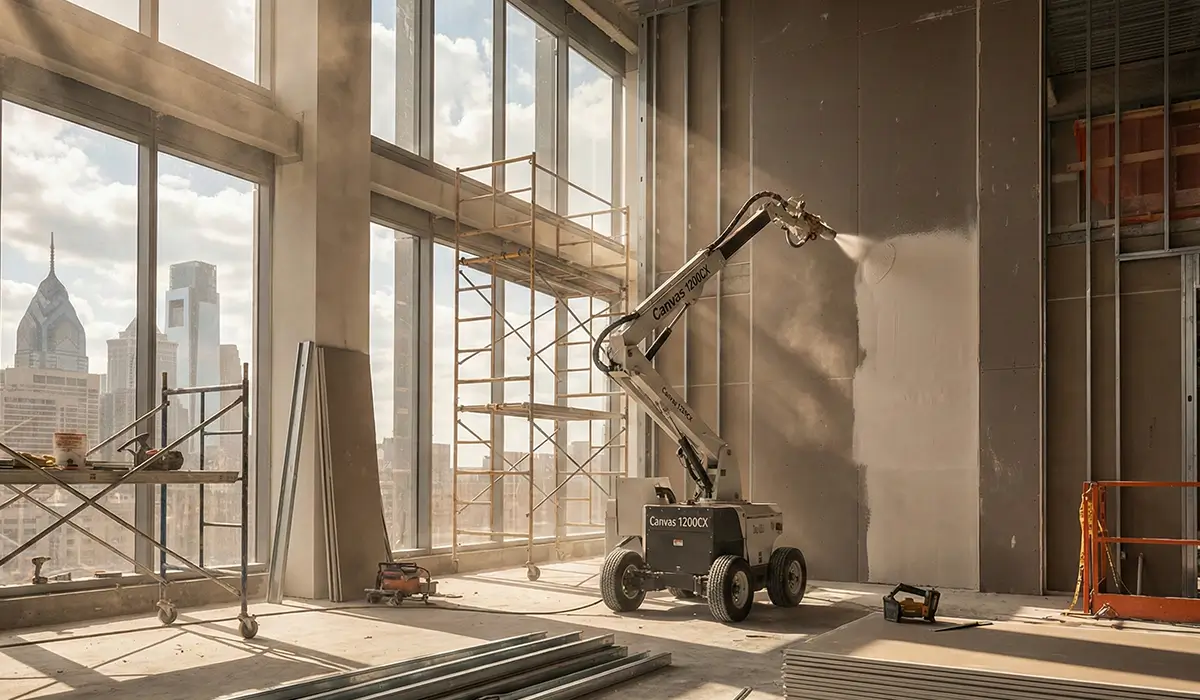
Philadelphia’s skyline is evolving fast, with new commercial towers and mixed-use developments popping up everywhere. But behind those sleek facades lies a challenge: traditional drywall finishing is labor-intensive, time-consuming, and prone to inconsistencies. Enter robotic drywall finishing in Philadelphia—a game-changer that’s streamlining processes, cutting costs, and addressing chronic labor shortages. This technology isn’t just a trend; it’s a practical solution for contractors aiming to stay competitive in a city where deadlines are tight and quality expectations are sky-high. Learn How Drywall Automation and Robotics Boost Efficiency in Philadelphia.
As urban growth surges, tools like AI-powered robots are transforming how we handle drywall installation and finishing. They promise faster turnarounds, higher precision, and better ROI, making them ideal for Philly’s bustling construction scene. Let’s dive into how these innovations are reshaping the industry right here in the City of Brotherly Love.
The Rise of Robotic Drywall Finishing in Philadelphia’s Construction Scene
Philadelphia’s construction boom shows no signs of slowing. From Center City’s high-rises to infrastructure projects like the I-95 CAP, demand for efficient drywall work is at an all-time high. Traditional methods rely heavily on skilled labor, but with a national shortage of over 400,000 construction workers, delays and cost overruns are common. Robotic drywall finishing offers a way out, blending human expertise with machine precision to deliver results faster and more reliably. That’s How Drywall Automation and Robotics Boost Efficiency.
In recent years, adoption has picked up. Local contractors are turning to automation to meet aggressive schedules on commercial jobs. For instance, the integration of robotics aligns perfectly with Philly’s push for innovative building practices, supported by vocational programs at institutions like Philadelphia Technician Training Institute (PTTI). These programs now include training on automated tools, preparing the next generation for a tech-driven workforce.
How Drywall Automation and Robotics Boost Efficiency and Why Philadelphia Needs Drywall Automation Now
The city’s unique mix of historic renovations and modern builds creates complex challenges. Narrow streets, tight job sites, and variable weather demand adaptable solutions. Automation helps by reducing on-site errors and minimizing rework, which can eat up 10-20% of project budgets. Plus, with labor costs rising—averaging $30-50 per hour for skilled finishers—robots provide a cost-effective alternative without sacrificing quality.
Philly’s regulatory environment also favors efficiency. How Drywall Automation and Robotics Boost Efficiency, Building codes emphasize safety and sustainability, areas where robotics excel by cutting dust exposure and material waste. As we are in 2026, expect more incentives for tech adoption through city initiatives like the H.O.M.E. Plan, which prioritizes affordable housing projects that could benefit from faster drywall timelines.
Key Players in the Robotic Revolution
Companies like Canvas are leading the charge. Their 1200CX robot, a compact, battery-powered machine, fits into Philly’s smaller commercial spaces like multi-family units or tower interiors. Acquired by JLG Industries in early 2026, Canvas tech now integrates with access equipment for even broader applications. Other innovators, such as Okibo, offer AI-guided robots for painting and finishing, expanding options for local firms.
Understanding Drywall Automation Technologies
At its core, drywall automation combines robotics, AI, and smart sensors to handle tasks from layout to final sanding. These systems don’t replace workers; they enhance them, allowing teams to focus on complex decisions while machines tackle repetitive work.
Robotic Arms and Automated Finishing Systems
Robotic arms, like those in the Canvas system, precisely apply joint compound, tape, and sand surfaces. The 1200CX, for example, measures just 30 by 34.5 inches and weighs 1,200 pounds, making it maneuverable in tight Philly job sites. It runs all day on a single charge and achieves wall-to-wall finishing without external references. This tech reduces physical strain, as workers oversee rather than perform grueling tasks.
Automated screw systems use lasers for perfect placement, speeding up installation by 30-50%. In commercial settings, this means fewer injuries— a big win given that hand-related issues plague traditional drywall work.
AI-Powered Layout and Installation Tools
AI shines in planning. Tools analyze spaces, optimize cutting patterns, and align panels to minimize waste. Growing at 25% annually through 2025, AI integration ensures precise measurements, cutting re-made repairs by up to 50%. For Philadelphia contractors, this is crucial on irregular sites, like retrofitting old warehouses into offices. How Drywall Automation and Robotics Boost Efficiency
Systems like HP SitePrint use robotics for layout, printing directly on floors to guide installation. Paired with AI, they reduce labor hours and boost accuracy, especially for Level 5 finishes where perfection is non-negotiable.
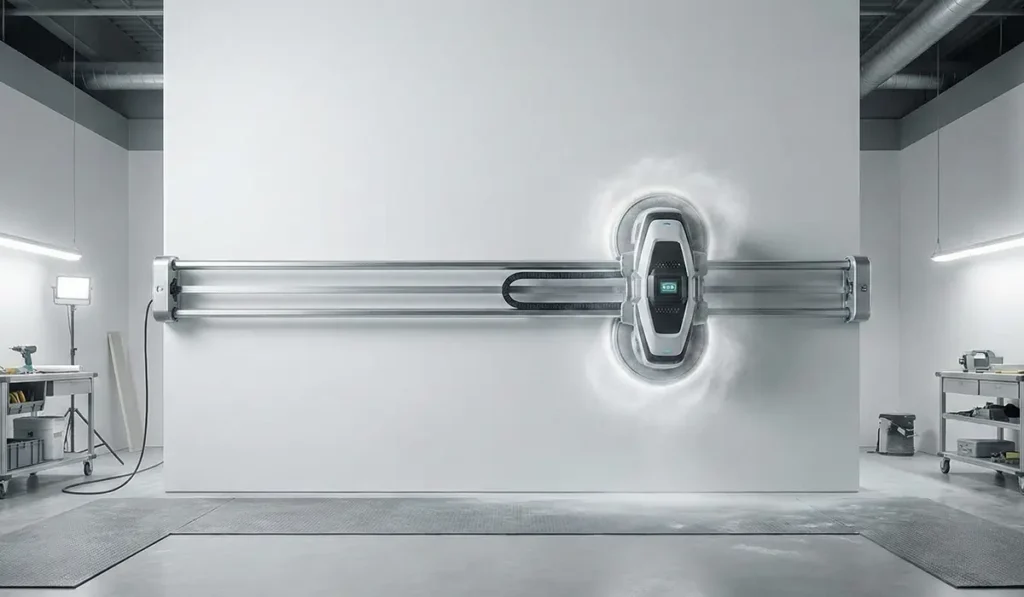
Achieving Level 5 Finishes with Robotics
Level 5 is the gold standard: a skim coat over the entire surface for a flawless, paint-ready wall. Robots excel here, delivering consistent results that manual methods struggle to match. The Canvas robot, for instance, achieves Level 5 in just two days versus five manually. This involves one day for mud application and one for sanding, with 99.9% dust capture for safer sites. In Philly’s high-end commercial projects, like luxury apartments in Center City, this level of quality sets contractors apart.
Benefits of Adopting Drywall Robots
The perks extend beyond speed. Automation delivers measurable gains in efficiency, finances, and workforce well-being.
Dramatic Schedule Reductions
Imagine slashing drywall finishing from five to seven days down to two. That’s the reality with robots like Canvas. By applying all joint compound in one precise pass, then sanding after a single dry cycle, projects accelerate by up to 60%. For Philadelphia’s megaprojects, like Penn’s Landing developments, this means trades can overlap more seamlessly, avoiding costly delays.
Real data backs this: How Drywall Automation and Robotics Boost Efficiency? Users report 40% less labor for the same square footage. In a city where time is money, these reductions translate to completing more jobs annually.
Cost Savings and Strong ROI
Initial costs vary—Canvas robots range from $40,000 to $60,000 to buy, or $12,500 monthly for a 24-month lease (with potential $60,000 savings on pre-orders). But ROI kicks in quickly. Reduced labor (40% savings), less material waste, and fewer rework expenses pay off within months on large-scale jobs.
For Philly contractors, the math adds up. A mid-sized commercial project might save $80,000 in direct costs, as seen in similar deployments. Over time, these tools future-proof businesses against rising wages and shortages.
Tackling Labor Shortages and Improving Safety
With fewer young workers entering trades, automation bridges the gap. Robots handle repetitive tasks, freeing skilled pros for oversight and customization. Training is faster too—an apprentice masters robot-assisted finishing in four months versus four years manually.
Safety improves dramatically. How Drywall Automation and Robotics Boost Efficiency ? Less exposure to dust, heights, and strain reduces injuries. In Philadelphia, where union partnerships emphasize worker health, companies like Daley’s Drywall have leased Canvas units to enhance ergonomics and productivity.
Real-World Applications and Case Studies in Philly
Philadelphia is already seeing traction. On the Netflix House project in King of Prussia (just outside city limits), Okibo robots handled drywall and painting, demonstrating autonomy in confined spaces. Local firm PCI used AI-guided systems for precision, cutting timelines significantly.
Commercial Projects Leading the Way
In Center City, mixed-use developments like those tracked by the Center City District are prime candidates. Robots fit into tower construction, where space is limited. A hypothetical 2025 high-rise could use Canvas for Level 5 finishes on interiors, reducing overall build time by weeks.
Integration with Philadelphia’s Trade Programs
PTTI and similar schools offer courses on automation, including robotic drywall tools. This upskilling ensures local workers stay relevant, blending tech with traditional skills for hybrid roles. That’s How Drywall Automation and Robotics Boost Efficiency in Philadelphia.
Challenges and How to Overcome Them
No tech is perfect. Adoption hurdles exist, but they’re manageable.
Initial Investment and Training
Upfront costs deter some, but leasing options soften the blow. Start small: Pilot on one project to prove ROI. Training, often provided by manufacturers, takes days, not weeks.
Site-Specific Considerations
Philly’s older buildings may need adaptations, like all-wheel steering robots for tight spots. Plan ahead with site scans to ensure compatibility.
The Future of Drywall Automation in Philadelphia
Looking ahead, expect more AI advancements, like fully autonomous systems. With JLG’s acquisition of Canvas, integration with lifts will expand reach. Philly’s focus on sustainable, efficient building will drive growth, potentially through city grants for tech adopters.
In conclusion, robotic drywall finishing in Philadelphia isn’t just innovative—it’s essential for staying ahead. By embracing these tools, contractors can deliver superior results faster and safer. If you’re ready to elevate your next project, Philly Trade Experts can help. Our team specializes in integrating automation for commercial and residential jobs. Contact us at [email protected] or call (215) 555-1234 to discuss how we can optimize your drywall needs and boost your efficiency.
FAQs
What is the cost of a Canvas drywall robot in 2026?
Canvas robots typically cost $40,000 to $60,000 to purchase. Leasing options start at $12,500 per month for 24 months, with potential savings of up to $60,000 on early reservations.
How does robotic drywall finishing reduce project schedules?
Robots like the Canvas 1200CX cut finishing time from five days to two by applying compound in one pass and sanding after a single dry cycle, achieving up to 60% schedule reductions.
Can robots achieve a Level 5 drywall finish?
Yes, advanced systems like Canvas deliver consistent Level 5 finishes, the highest quality standard, with precision that minimizes imperfections.
How does AI help in drywall installation?
AI optimizes layouts, reduces material waste, and ensures accurate alignments, growing at 25% annually and making processes 30-50% more efficient.
Leave a Reply