
Philadelphia’s construction season pushes into winter. Many townhome projects continue despite the cold. Winter concrete pouring in Philadelphia tests builders every year. Mastering Winter Concrete Pours.
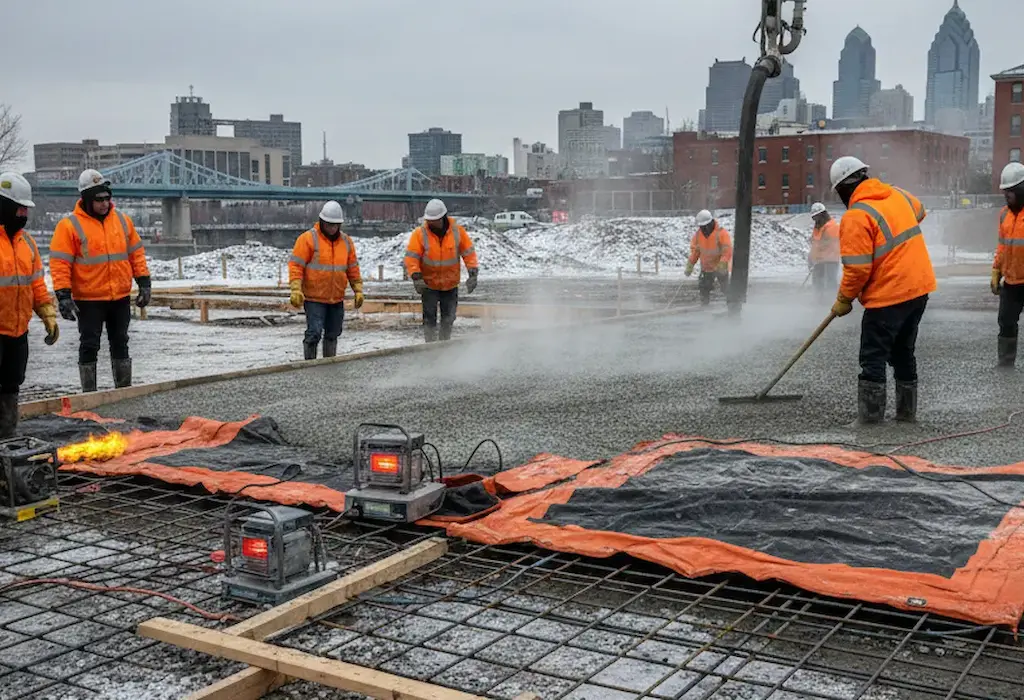
Temperatures often drop below freezing. Snow and ice add complications. Yet, with proper methods, contractors achieve strong, durable results.
Developers keep schedules on track. Homeowners get reliable foundations. Everyone benefits from understanding these techniques.
Why Winter Mastering Winter Concrete Pours Demands Special Care
Cold weather slows hydration. Concrete gains strength more gradually.
Freezing causes bigger problems. Water expands inside the mix. This leads to cracks and weakness.
Philadelphia’s Cold Weather Challenges for Construction
Philly winters bring average lows around 25°F. Wind off the Delaware River makes it feel colder.
Townhome builds cluster in neighborhoods like Fishtown and Point Breeze. Sites stay exposed to elements.
Risks of Freezing on Fresh Concrete
Early freezing cuts strength by up to 50%. Surfaces scale or spall later.
Long-term durability suffers. Rework costs rise quickly. Mastering Winter Concrete Pours.
Understanding ACI Cold Weather Concrete Standards
The American Concrete Institute guides the industry. ACI 306R defines cold weather concreting.
It applies when air temperatures stay below 40°F for three days. Protection becomes essential.
Guidelines stress preventing freeze damage. They promote proper strength gain.
Contractors follow these rules in Philadelphia. Local codes align closely.
Preparing for a Successful Mastering Winter Concrete Pours
Planning starts early. Check forecasts carefully.
Clear snow and ice from the site. Thaw frozen ground if needed.
Site Preparation in Freezing Conditions
Remove debris completely. Warm subgrade with heaters.
Avoid pouring on frozen soil. Settlement causes cracks later.
Choosing the Right Cold Weather Concrete Mix Admixtures
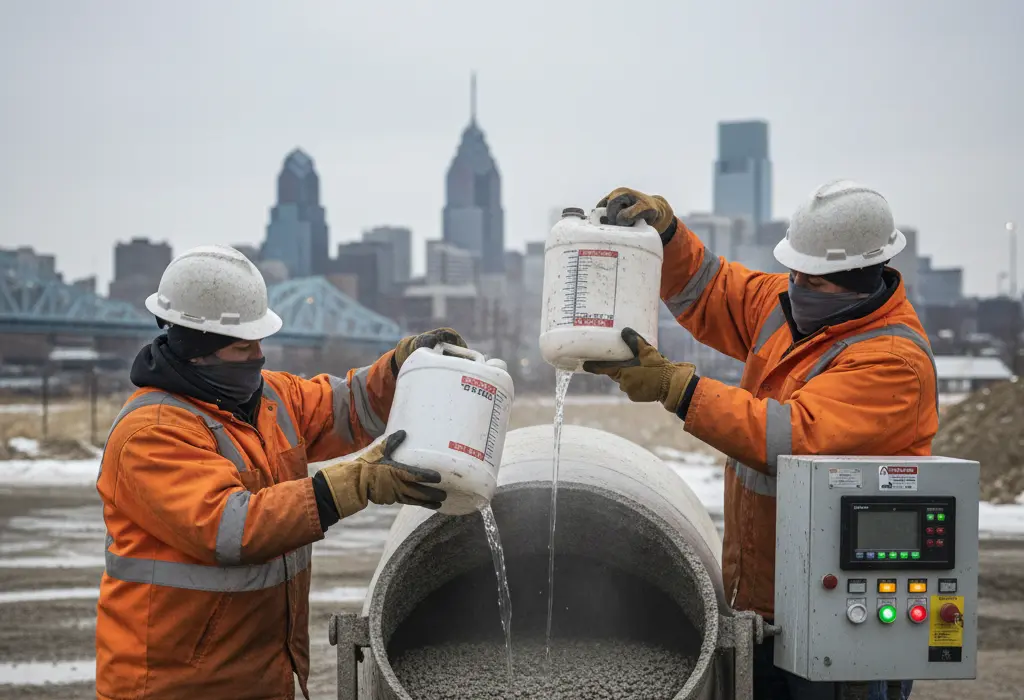
Use accelerating admixtures. Non-chloride types prevent corrosion.
Hot water heats the mix. Higher cement content helps too.
Ready-mix suppliers offer winter blends. They arrive at optimal temperatures. Mastering Winter Concrete Pours.
Best Practices During the Pour
Schedule for warmer parts of the day. Monitor concrete temperature on arrival.
Place quickly but carefully. Vibrate thoroughly.
Heating Materials and Maintaining Temperatures
Preheat aggregates and water. Keep everything above 50°F.
Pouring Concrete in Freezing Temperatures Safely
Protect edges and corners first. They cool fastest.
Crew safety matters too. Provide warm breaks and gear.
Curing and Protection Techniques
Curing extends longer in cold. Maintain heat and moisture.
Start protection immediately after finishing.
Using Insulated Blankets for Concrete Curing
Blankets trap hydration heat. They prevent rapid cooling.
Layer them securely. Overlap edges well.
Enclosures and Heaters for Extended Protection
Build temporary enclosures for larger pours. Use safe heaters inside.
Monitor internal temperatures regularly. Adjust as needed.
Common Mistakes to Avoid in Philadelphia Winters
Never add extra water on site. It weakens the mix.
Don’t remove protection too soon. Wait for adequate strength.
Skipping admixtures saves little upfront. It costs more later.
Real-World Applications in Philly Townhome Construction
New townhomes rise across the city. Foundations pour in December and January.
Contractors rely on these methods. Slabs cure strong despite the chill.
Projects stay on schedule. Buyers move in confidently.
Conclusion: Ensure Strong Results with Expert Support
Winter concrete pouring in Philadelphia succeeds with preparation. Follow ACI standards and proven practices for lasting quality.
At PhillyTradeExperts, we supply skilled concrete professionals ready for cold weather challenges. Our team knows local conditions inside out.
We staff your winter projects reliably. Contact us at [email protected] or (215) 555-1234. Build confidently through the season.
Let’s Find Out How We Can Help
FAQs
Can you pour concrete in freezing temperatures in Philadelphia?
Yes, with precautions like heated mixes, accelerators, and protection. ACI standards allow it when properly managed.
What are the best cold weather concrete mix admixtures for winter pouring?
Non-chloride accelerators speed setting. Hot water and extra cement maintain heat and strength.
How do insulated blankets help with concrete curing in cold weather?
They retain hydration heat, prevent freezing, and ensure even curing for stronger slabs.
What ACI cold weather concrete standards apply in Philadelphia?
ACI 306R requires protection below 40°F. Maintain temperatures to avoid strength loss.
Is pouring concrete in winter safe for Philadelphia townhome foundations?
Absolutely, when following best practices. Many successful projects prove durable results.
Leave a Reply