
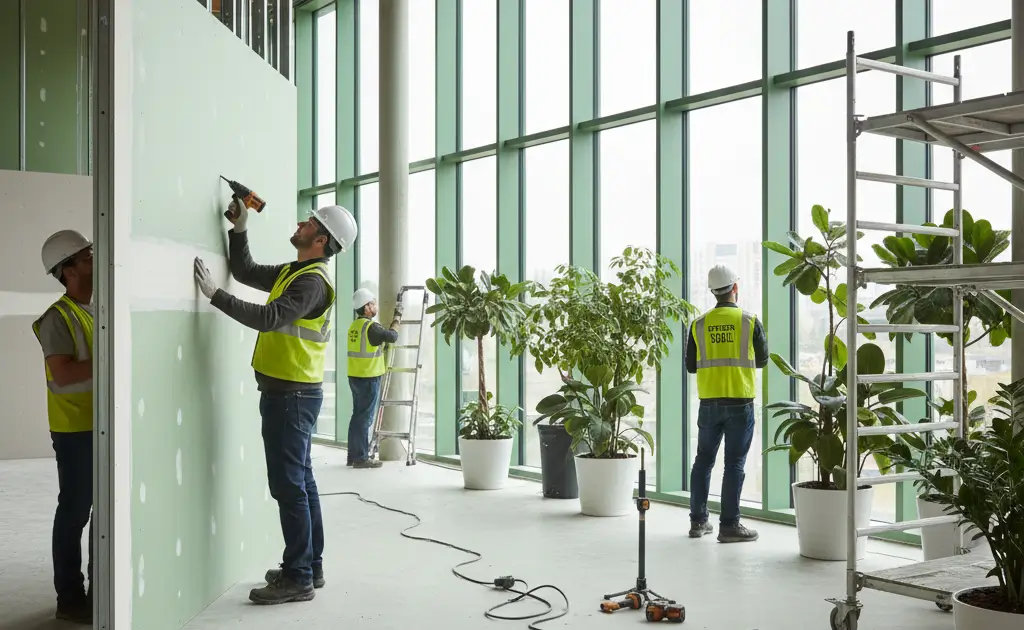
The drywall market trends in 2025 highlight a transformative shift toward sustainability, driven by green building demands and innovative technologies. As construction adapts to stricter environmental regulations, eco-friendly drywall solutions are reshaping the industry. This in-depth guide explores market growth, sustainable innovations, and technological advancements in the US drywall sector, providing actionable insights for builders and contractors.
Key Drywall Market Trends Fueled by the Green Building Boom
Drywall Market Trends 2025: The drywall industry is booming, propelled by a surge in eco-conscious construction. The global drywall market, valued at approximately $25 billion in 2024, is expected to grow at a 5.8% CAGR, reaching over $35 billion by 2030. In the US, robust demand stems from commercial renovations and infrastructure projects, even as residential construction faces headwinds from high interest rates.
Market Size and Growth Projections for 2025
In 2025, US drywall consumption is projected to reach 7.5 billion square feet, with sustainable drywall accounting for 25% of the market. North America’s market value is forecasted to grow at 5.5% annually, driven by increased construction activity. Commercial and institutional sectors, such as offices and schools, contribute nearly 60% of demand.
Drywall prices remain stable, with standard gypsum boards averaging $0.50 per square foot. Sustainable options, however, may cost 10-15% more due to specialized production processes. Federal incentives for green building are boosting adoption, making eco-friendly drywall a key growth driver.
Role of Green Building Certifications in Demand
Green building certifications like LEED and WELL significantly influence drywall demand. In 2025, over 40% of new commercial projects prioritize sustainable drywall to meet these standards, a jump from 30% in 2023. These certifications emphasize low-emission materials and energy-efficient production, aligning with both consumer preferences and regulatory mandates.
Urban areas, in particular, enforce sustainable practices through local policies. Projects targeting net-zero certifications increasingly specify recycled-content drywall. This trend encourages manufacturers to innovate, balancing compliance with affordability to capture market share.
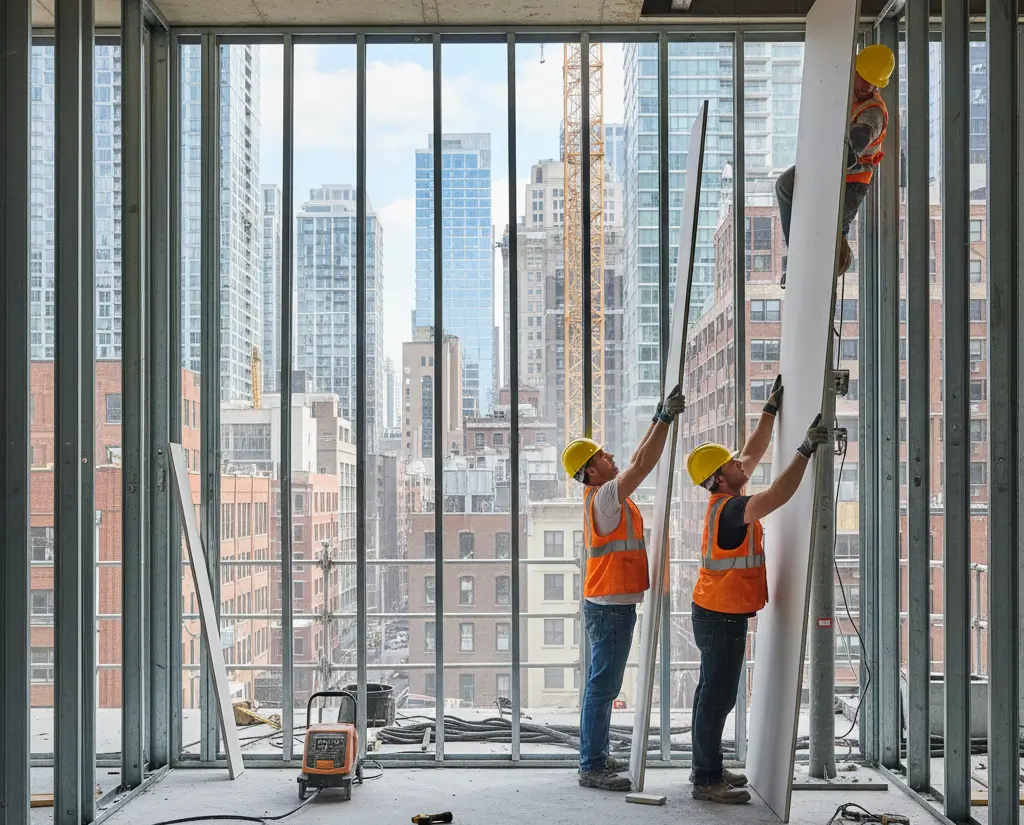
Innovations in Sustainable Drywall Materials
Sustainability is redefining drywall production. Manufacturers are rolling out eco-friendly solutions to align with environmental goals, transforming construction practices.
Recycled and Low-Carbon Drywall Solutions
Recycled-content drywall, using up to 20% post-consumer materials like gypsum and paper, cuts waste and emissions by 15-20%. Low-carbon gypsum boards, produced with alternative fuels, are gaining popularity. These products embrace circular economy principles by incorporating industrial byproducts like fly ash.
Currently, 25% of US drywall projects use recycled boards, with adoption rising as costs decline. While sustainable drywall remains pricier, economies of scale are narrowing the gap, making it a viable option for more projects.
Rise of Lightweight and Low-VOC Drywall
Lightweight drywall, 30% lighter than traditional panels, reduces transportation emissions and simplifies installation. It’s particularly popular in urban projects where efficiency is critical. Low-VOC drywall, designed to enhance indoor air quality, meets health-focused standards like WELL, appealing to commercial developers.
Emerging options like magnesium oxide boards offer fire resistance and sustainability but face cost barriers. By 2027, lightweight and low-VOC drywall could claim 35% of the market, driven by regulatory incentives and builder demand for greener materials.
The Role of AI and Technology in Drywall Manufacturing and Installation
Technology is revolutionizing drywall production and installation. AI and automation address labor shortages and enhance sustainability, reshaping industry practices.
AI-Driven Manufacturing Efficiency
AI streamlines drywall manufacturing by predicting material needs, reducing waste by up to 10%. Smart sensors ensure gypsum quality consistency, while automated cutting systems lower energy use and production costs. In 2025, 20% of major manufacturers adopt AI-driven processes, with adoption expected to grow as technology becomes more affordable.
These advancements support sustainability by minimizing resource waste. They also help manufacturers meet rising demand while keeping costs competitive, a critical factor in a price-sensitive market.
Robotics and AR in Drywall Installation
On construction sites, robotics enhance efficiency. Automated taping and finishing tools cut labor time by 25%, addressing ongoing worker shortages. Drones and 3D scanning provide precise measurements, reducing errors in large-scale projects.
Augmented reality (AR) is gaining traction, with contractors using AR glasses to visualize drywall layouts, improving accuracy. In 2025, 15% of large contractors use AR tools, with adoption projected to double by 2028. These technologies boost both efficiency and sustainability by reducing material waste.
Challenges and Opportunities in the 2025 Drywall Market
The drywall industry faces challenges like rising material costs, labor shortages, and supply chain disruptions. Sustainable drywall’s higher upfront costs can deter smaller contractors, though long-term savings through energy efficiency and incentives help offset this. Limited availability of recycled materials also poses supply chain constraints.
Yet, opportunities are plentiful. Federal green building incentives and urban construction booms drive demand. Technological advancements are lowering costs, making sustainable drywall more accessible. The industry is well-positioned for growth if it can navigate these hurdles
Conclusion:
The 2025 drywall market is at a turning point, with sustainability and technology driving unprecedented growth. From recycled-content boards to AI-optimized production, the industry offers opportunities for builders to align with green building standards while staying competitive. Despite challenges like rising costs and labor shortages, the future is bright for those embracing eco-friendly and efficient solutions.
For contractors and developers in the Philadelphia area and beyond, PhillyTradeExperts is your trusted partner for navigating these trends. We provide high-quality, sustainable drywall solutions tailored to your project needs, ensuring compliance with LEED and WELL standards. Our team leverages cutting-edge technologies to deliver cost-effective, eco-conscious results. Contact us today at [email protected] or call 215-381-9403 to discuss how we can support your next construction project with innovative drywall solutions. Got a project coming up? Reach out for a free consultation—we’ve got you covered.
FAQs
Sustainability, lightweight panels, and AI-driven technologies lead, fueled by green building demands.
It reduces emissions, meets certification standards, and accounts for 25% of US drywall use.
AI cuts waste, optimizes production, and ensures quality, reducing costs and emissions.
It lowers emissions, speeds installation, and suits urban projects with tight timelines.
High costs, labor shortages, and supply chain issues persist, though technology offers solutions.
Leave a Reply